Global Steel Supply & Processing
Specify P265GH (1.0425) plate for boiler shells, steam equipment and welded pressure components. Source the required thickness, normalized condition and heat-specific documents together, with room-temperature and elevated-temperature properties checked to EN 10028-2.
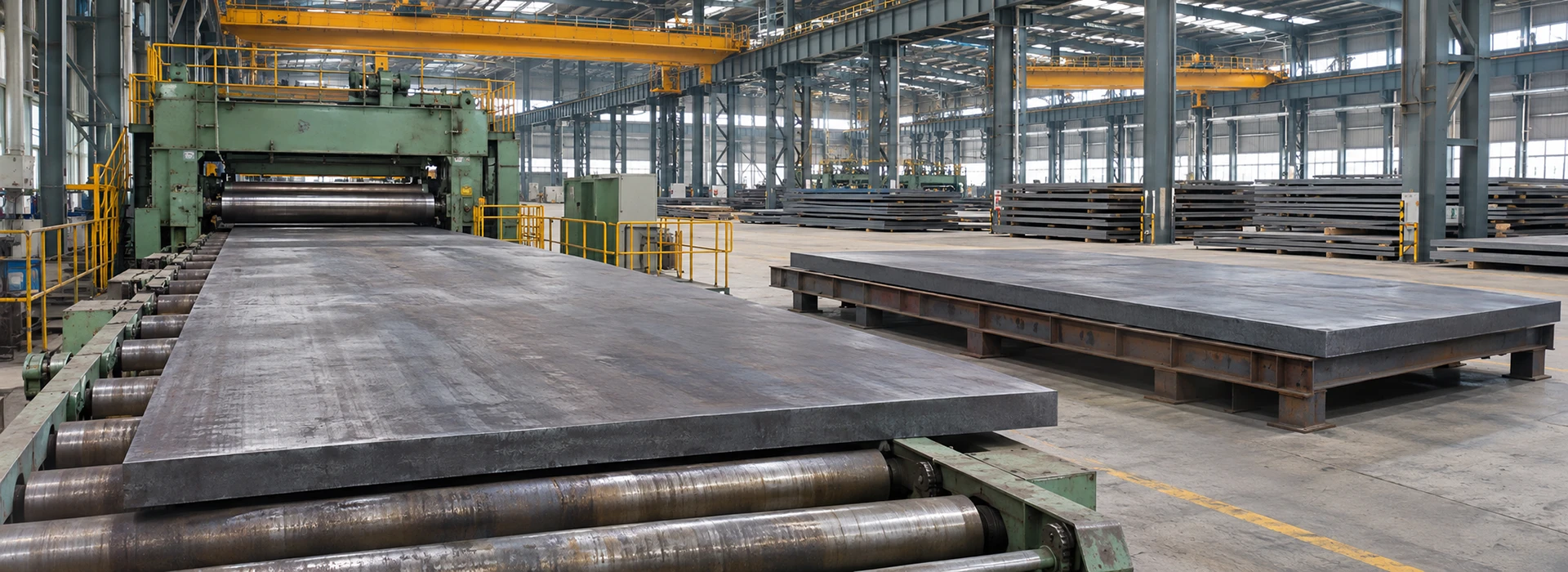
Build the RFQ around the exact grade, geometry, delivery state and required inspection documents.
| Order item | Procurement / MTC requirement |
|---|---|
| Designation | P265GH (1.0425) — quote the material number and exact standard edition. |
| Material category | Non-alloy steel for pressure purposes with specified elevated-temperature properties; fabrication/design code remains project-specific. |
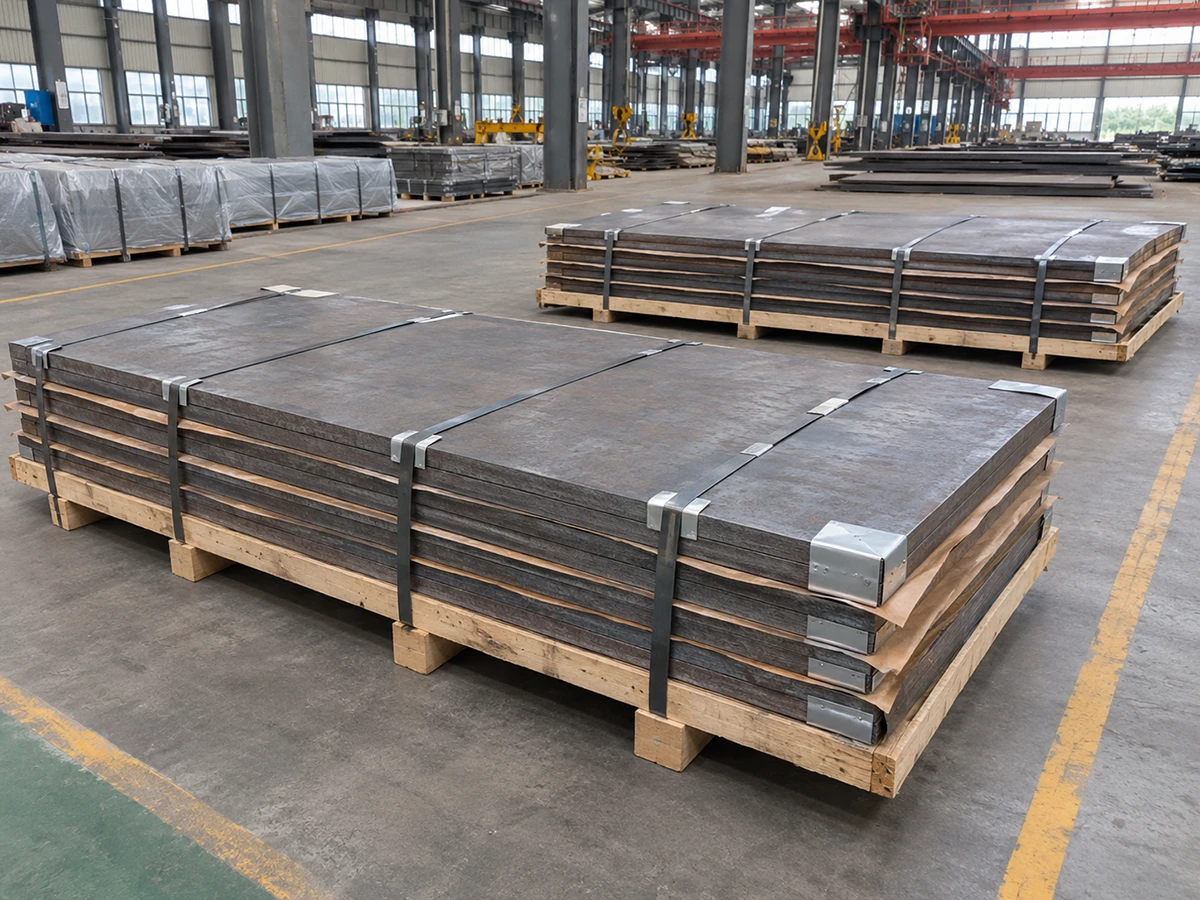
| Product form | Hot-rolled plate or cut plate supplied with specified flatness and edge conditions. |
| Thickness and size | Six EN Table 3 mechanical-property bands cover nominal thicknesses to 250 mm. Actual rolling sizes, lead time and availability require confirmation. |
| Dimensions and tolerances | Thickness × width × length, edge type, flatness, surface and tolerance standard stated on enquiry. |
| Delivery condition | Usually normalized (+N). Normalizing rolling or untreated delivery follows the standard and purchaser agreement as applicable. |
| Inspection documents | EN 10204 3.1 or 3.2 when ordered and supported; agree the required witnessing and signatory route. |
| Additional tests | UT acceptance class, impact temperature, high-temperature tensile, HIC, simulated heat treatment and third-party requirements where specified. |
Use the row matching the ordered nominal thickness rather than quoting the 265 MPa minimum across all sizes.
| Nominal plate thickness | Min. yield ReH | Tensile Rm | Min. elongation A |
|---|---|---|---|
| ≤16 mm | 265 MPa | 410–530 MPa | 22% |
| >16–40 mm | 255 MPa | 410–530 MPa | 22% |
| >40–60 mm | 245 MPa | 410–530 MPa | 22% |
| >60–100 mm | 215 MPa | 410–530 MPa | 22% |
| >100–150 mm | 200 MPa | 400–530 MPa | 22% |
| >150–250 mm | 185 MPa | 390–530 MPa | 22% |
This yield requirement applies to the first thickness band rather than every P265GH size.
The correct minimum yield and the measured test results should appear in the order and MTC.
Check availability, delivery condition and applicable product-inspection provisions before quoting heavy plate.
EN 10028-2:2017 Table 3, transverse test direction. Actual test specimens, thickness tolerances and results follow the applicable product and order requirements.
Verify the minimum proof stress for the actual plate thickness and design temperature before material acceptance.
| Nominal thickness | Rp0.2 at 100°C | Rp0.2 at 200°C | Rp0.2 at 300°C | Rp0.2 at 400°C |
|---|---|---|---|---|
| ≤16 mm | 241 MPa | 205 MPa | 173 MPa | 150 MPa |
| >16–40 mm | 232 MPa | 197 MPa | 166 MPa | 145 MPa |
| >40–60 mm | 223 MPa | 190 MPa | 160 MPa | 139 MPa |
| >60–100 mm | 196 MPa | 167 MPa | 140 MPa | 122 MPa |
| >100–150 mm | 182 MPa | 155 MPa | 130 MPa | 114 MPa |
| >150–250 mm | 168 MPa | 143 MPa | 121 MPa | 105 MPa |
For the ≤16 mm band, the minimum 0.2% proof stress decreases from 241 MPa at 100°C to 150 MPa at 400°C. Use the temperature that matches your design specification.
Table 4 values are material proof-stress requirements, not vessel allowable stresses. Determine design stress, corrosion allowance, operating life and code acceptance through the equipment designer.
The material number 1.0425 has its own manganese, carbon, residual and deoxidation requirements; each supplied heat should be checked.
| Cast-analysis element | Mass fraction requirement |
|---|---|
| Carbon (C) | ≤0.20% |
| Silicon (Si) | ≤0.40% |
| Manganese (Mn) | 0.80–1.40% |
| Phosphorus (P) | ≤0.025% |
| Sulfur (S) | ≤0.010% |
| Total aluminum (Al) | ≥0.020% |
| Nitrogen (N) | ≤0.012% |
| Chromium (Cr) | ≤0.30% |
| Molybdenum (Mo) | ≤0.08% |
| Nickel (Ni) | ≤0.30% |
| Copper (Cu) | ≤0.30% |
| Niobium (Nb) | ≤0.030% |
| Vanadium (V) | ≤0.02% |
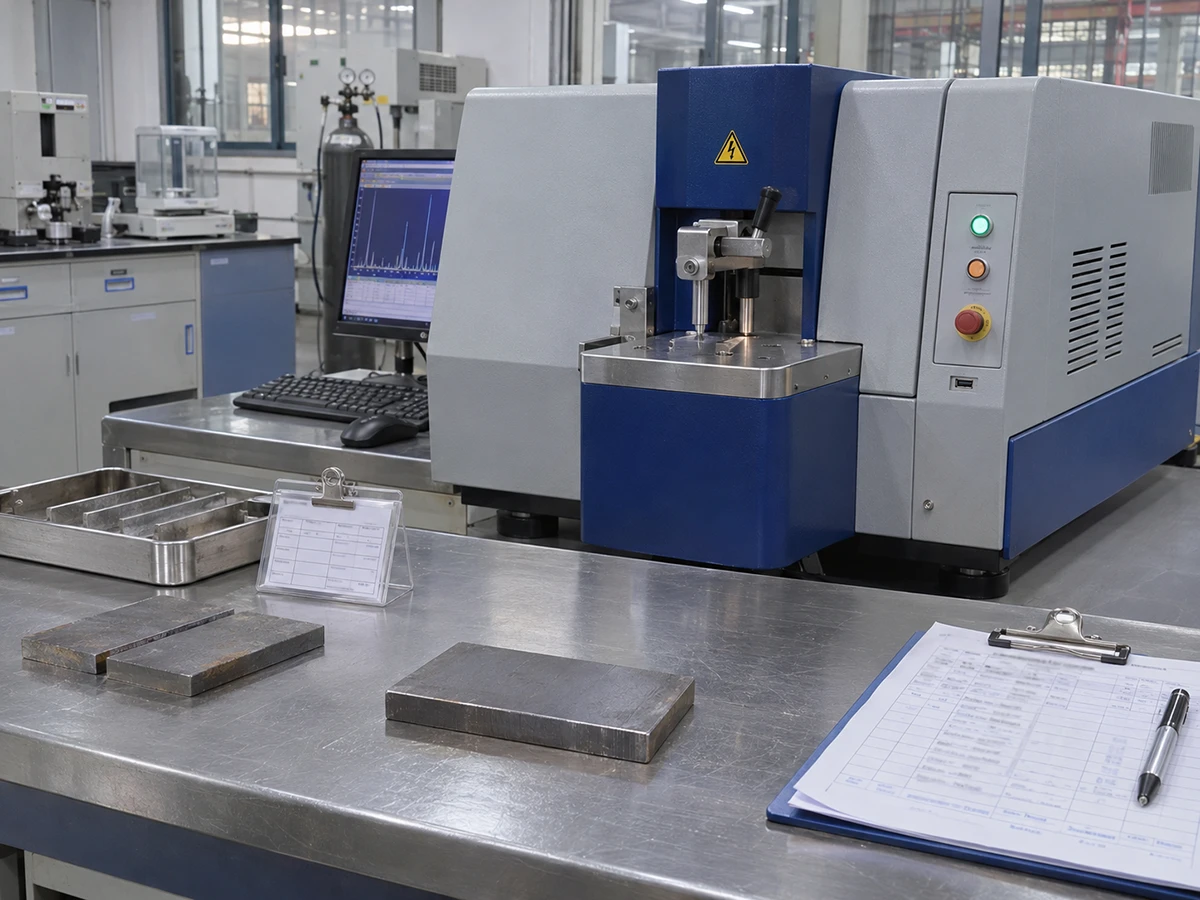
Request the actual heat chemistry and carbon equivalent when required by the project. EN 10028-2 permits an agreed maximum carbon equivalent for P265GH; it must be set at the enquiry stage.
The standard lists several test temperatures; the purchase order and design code must identify which testing and reports are needed.
The transverse Charpy V-notch value at +20°C is 40 J in EN 10028-2 Table 3. Use the specified test route and specimen rules.
EN 10028-2 also provides a transverse 34 J figure at 0°C. Confirm whether testing at this temperature is required for your equipment.
The table provides a transverse value of 27 J at −20°C. State the specified acceptance temperature, direction and witness requirements in the order.
Send your design temperature, Charpy specimen orientation, minimum energy, test temperature and required certificate type.
Identify the supplied plate condition separately from any downstream forming, stress relief or fabrication heat treatment.
Specify normalized steel plate when required by the drawing and review the declared condition on the mill certificate.
For P265GH, normalizing rolling can replace normalizing under EN 10028-2. Additional simulated-normalizing testing may be agreed in the purchase order.
Untreated supply is possible only by agreement; test pieces must then demonstrate the properties in the usual prescribed delivery condition.
Include +N, normalizing-rolled or specifically agreed untreated condition, and any post-forming or PWHT simulation.
Match the grade, temperature capability, weld procedure and inspection plan to the equipment designer’s acceptance requirements.
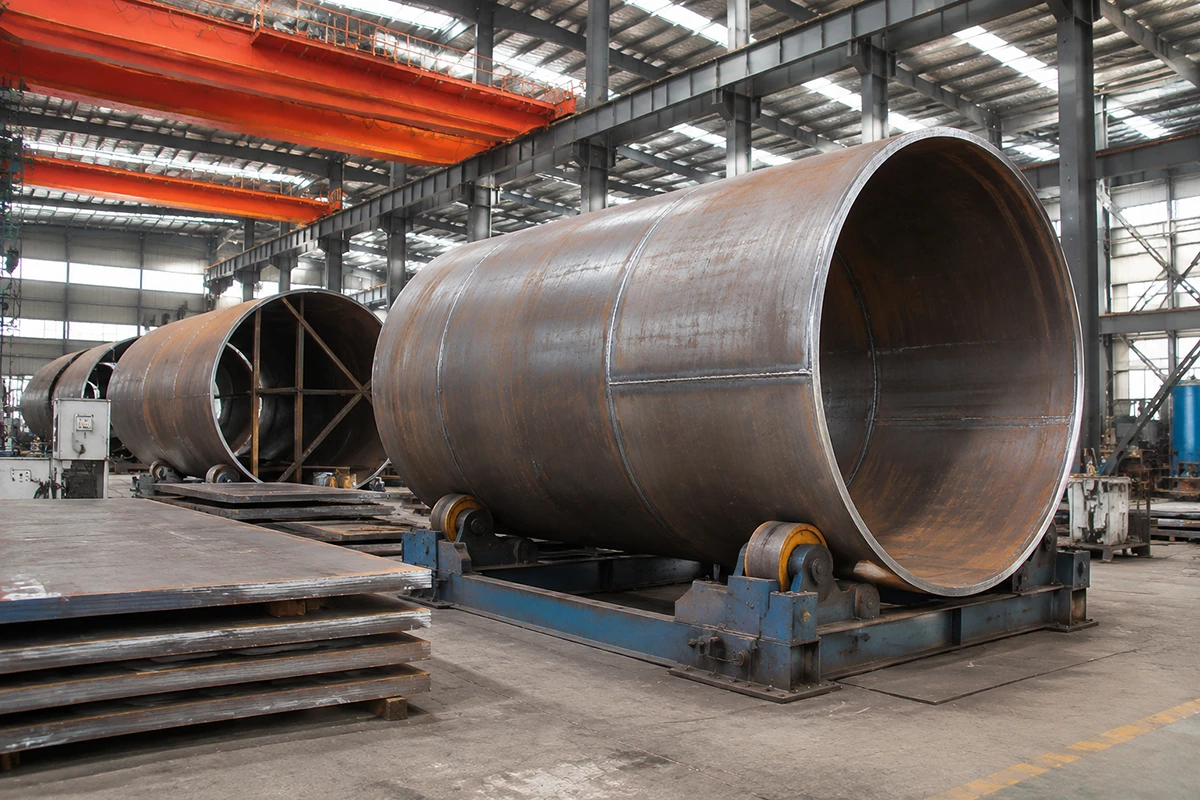
Select P265GH for an approved pressure-equipment design where thickness, elevated-temperature strength and fabrication procedures meet project requirements.
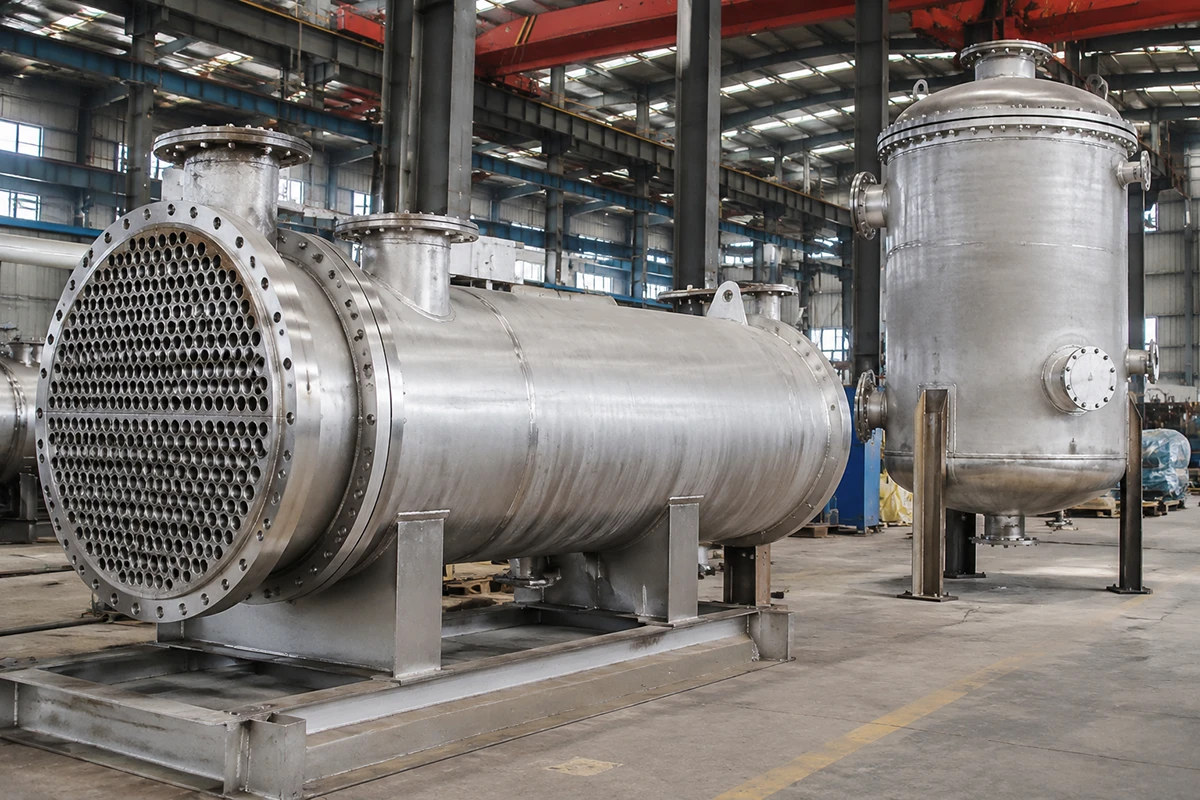
Order plates by design condition, rolling and welding route, inspection level and the actual equipment drawing.
Boiler shell and pressure-containing parts, subject to verified design conditions and the applicable material standard.
Welded vessels and hot-fluid units where the approved bill of materials specifies P265GH.
Order matched grades and material records for boiler refurbishment and planned pressure-equipment repairs.
Your purchasing process needs a confirmed mill source, actual dimensions, the correct EN delivery route and matched document release.
We coordinate steel number 1.0425, thickness-specific properties and the required +N route with the proposed supply mill.
Check heat chemistry, mechanical results, inspection category and optional tests against your equipment material schedule.
Our broader steel operations support plate sourcing, processing coordination and export order preparation.
Plate counts, markings, packing lists and requested certificates can be tied to the shipment release procedure.
Company-wide figures describe BAOSTEEL METAL operations, not the guaranteed output, inventory or mill approval of a specific P265GH grade or lot.
Specific P265GH availability is checked per mill and order; company inventory totals are not a stock commitment for this grade.
BAOSTEEL METAL reviews P265GH requirements against the actual producing mill’s capabilities and available plate lots. We confirm production schedule, rolling range, surface condition, delivery condition and document support before issuing a firm offer.
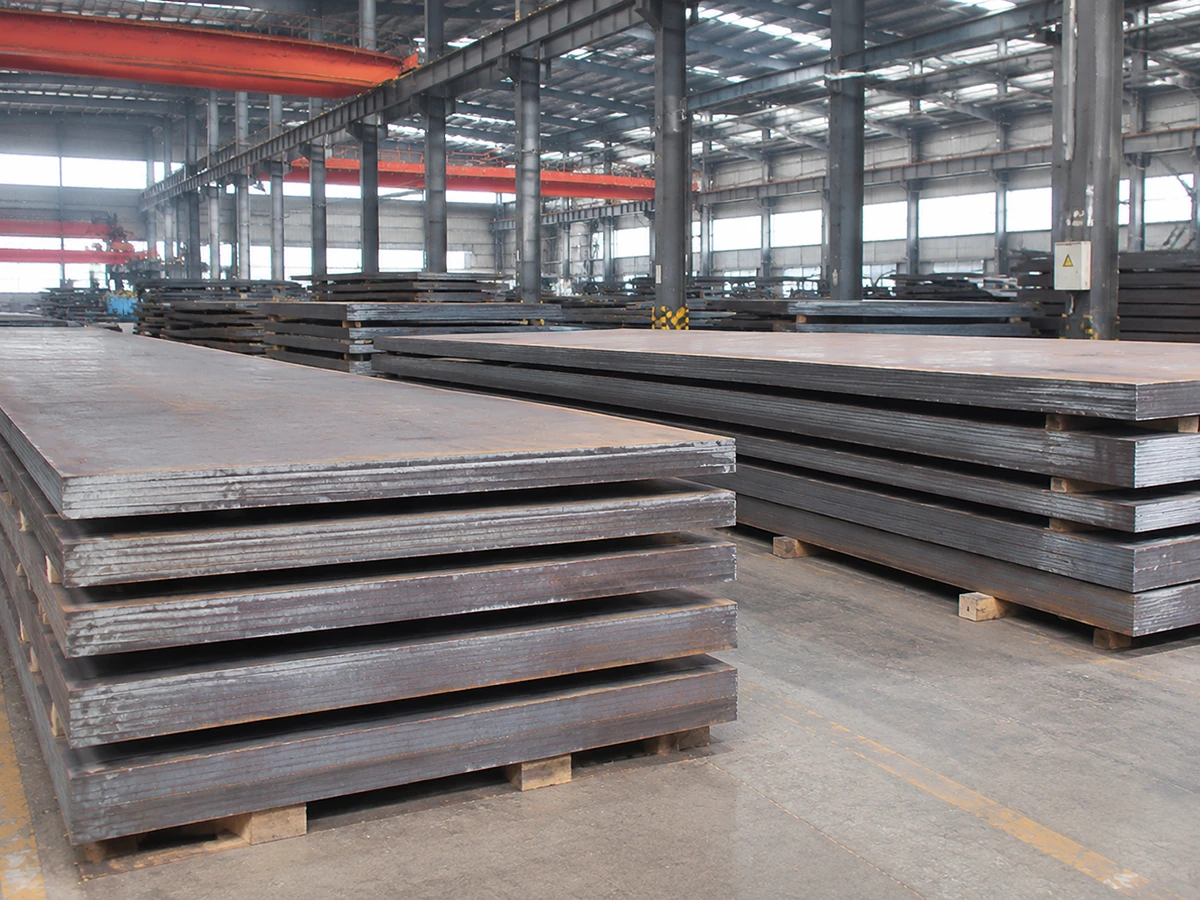
Review the proposed mill’s documentary scope before purchase and retain plate-to-heat traceability after processing.
Material certificates should identify the steel grade, heat number, inspection category, plate size and mechanical test results. Add supplementary tests according to the vessel design and buyer approval process.
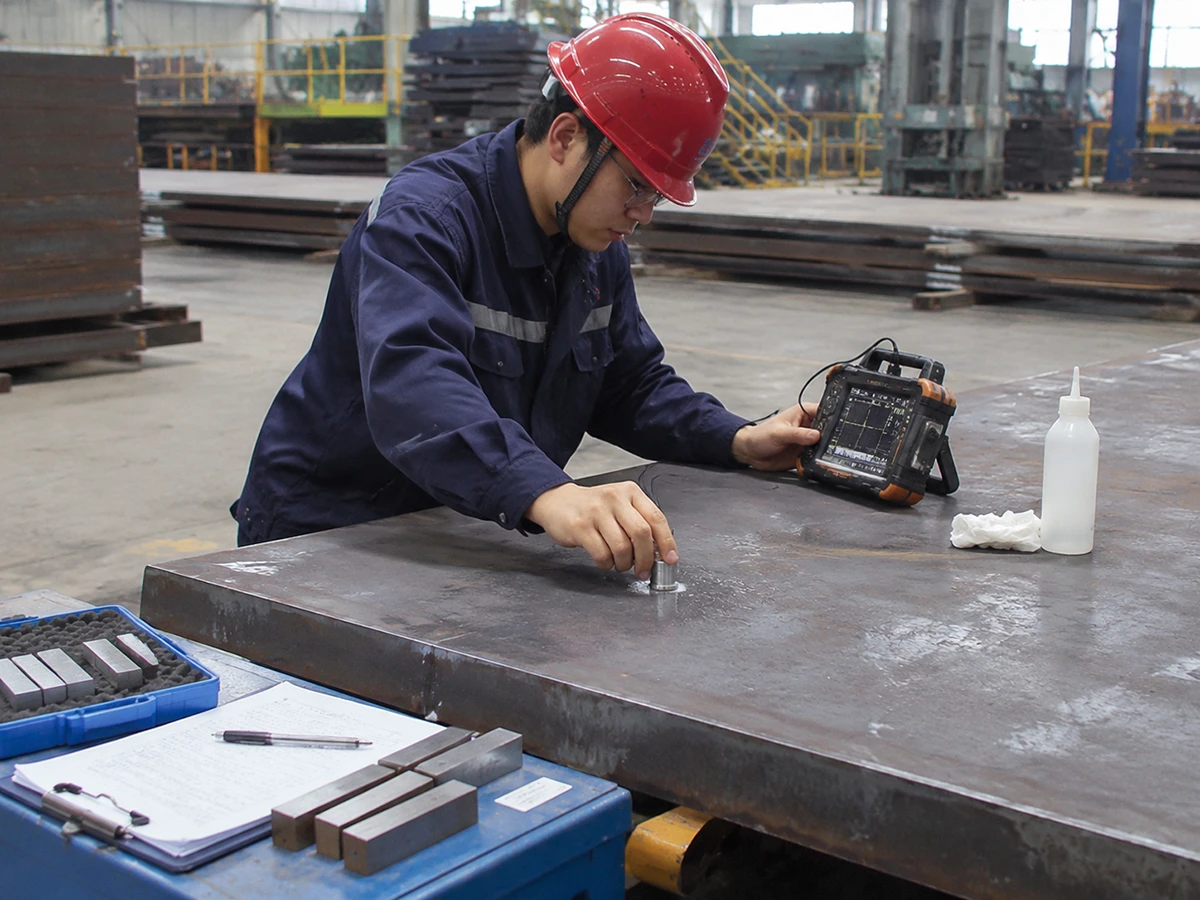
Share the fabrication and design-temperature requirements so the proposed plate and its inspection package are suitable for the intended boiler component.
Specify plate thickness, carbon equivalent if required, filler metal, heat input and preheat against the project procedure.
Confirm forming temperature, bend radii, dimensional changes and any required subsequent heat treatment before fabrication.
Define the equipment-code PWHT procedure, supplementary testing and retained material properties for the actual welded assembly.
Use nominal dimensions and 7,850 kg/m³ density for initial material and freight calculations.
Enter nominal finished plate dimensions and count. Shipping and settlement weights are confirmed by the contract.
Indicative density 7,850 kg/m³. Calculated values exclude tolerances, kerf, additional processing and packaging.
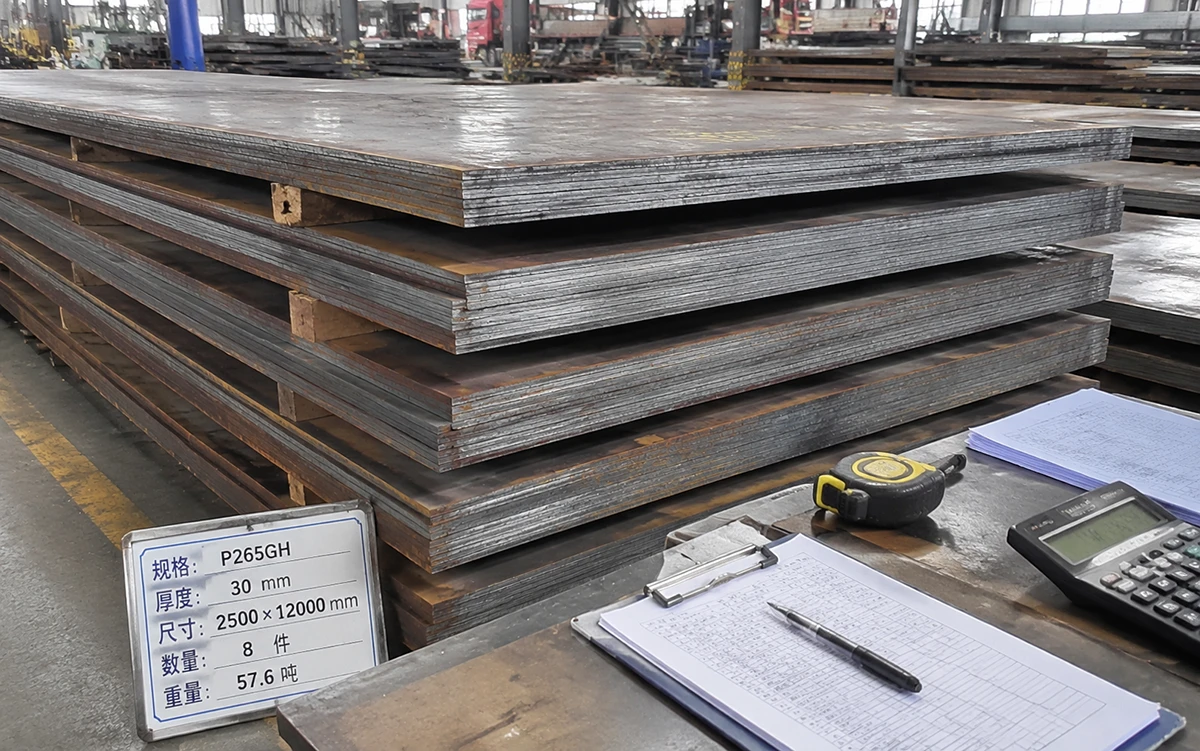
Include dimensions, quantity, cutting tolerances, EN material designation, heat-treatment state, test scope and destination port for a usable quotation.
Specify edge finish, cut drawing, quantity and marking transfer together with any code-specific fabrication restriction.
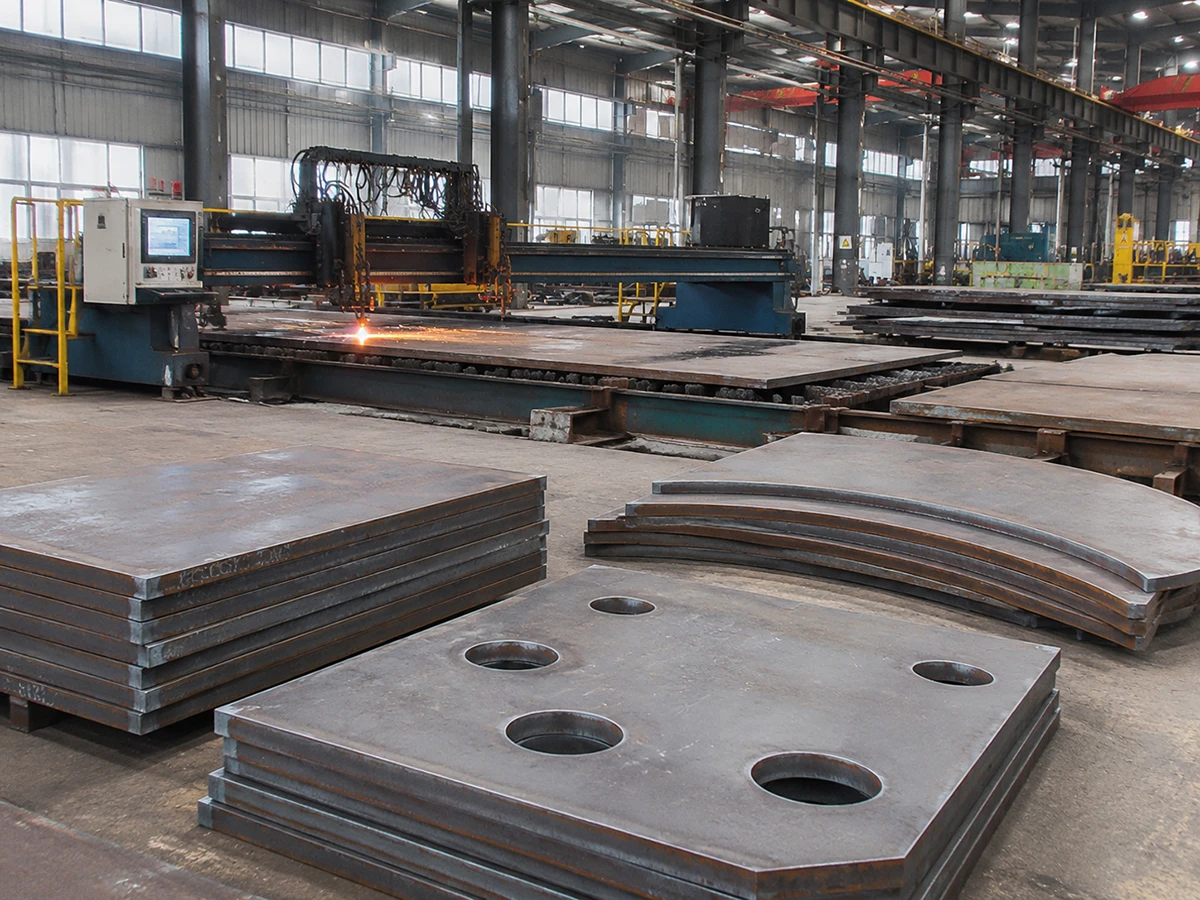
Where available for the requested thickness, we coordinate cut-to-size blanks and routine plate preparation without changing the material acceptance requirements.
Agree Incoterms, destination, export packaging, unloading limitations and documentation release before dispatch.
Export shipping is coordinated against each batch’s weight, size and document release, including special loading arrangements for large plate dimensions.
Use the applicable material designation and contract standard; similar use cases do not establish equivalence.
ASTM carbon-silicon plate; a separate product standard and mechanical acceptance route.
Different base chemistry, tensile requirements and product standard.
Higher ASTM A515 tensile class; verify code acceptance rather than matching by strength alone.
EN 10028-2 steel number 1.5415, with specified molybdenum alloy content.
GB chromium-molybdenum pressure steel; separate alloy and heat-treatment requirements.
Cr-Mo-V alloy boiler material, with its own specification and approval route.
Grade cards remain informational while site drafts are unpublished. Enable links only to verified live WordPress URLs. The equipment designer must approve material selection and substitutions.
Use the exact plate thickness, equipment code and material-document requirements when comparing quotations.
P265GH (1.0425) is a non-alloy EN 10028-2 pressure-purpose steel grade with specified elevated-temperature properties, used in code-approved boilers and welded pressure equipment.
EN 10028-2 specifies 265 MPa for thicknesses up to 16 mm. The required minimum decreases with thickness, reaching 185 MPa above 150 mm up to 250 mm.
For plate up to 16 mm, EN 10028-2 Table 4 gives minimum Rp0.2 of 205 MPa at 200°C. At room temperature the minimum yield ReH is 265 MPa for that thickness band.
The usual condition is normalized (+N). Normalizing rolling may replace normalizing under the standard; untreated supply requires agreement and prescribed test conditions.
The EN table lists transverse values of 40 J at +20°C, 34 J at 0°C and 27 J at −20°C. Confirm the contracted impact test temperature, specimen size and acceptance route.
No. The certificates involve different inspection and endorsement arrangements. Specify the required document and independent witness scope during the enquiry.
No. That is characteristic of 16Mo3. EN 10028-2 lists a maximum 0.08% Mo cast-analysis limit for P265GH.
Only after review and approval under the relevant vessel design code and buyer specification. These grades do not share identical chemical and mechanical requirements.
UT and basic plate cutting may be arranged where supported by the actual producing mill and order. State the test method, acceptance class, cut list and marking requirements.
Send P265GH / 1.0425, standard edition, thickness, width, length, total quantity, +N or agreed delivery, test scope, certificate type, Incoterm and destination.
Provide plate dimensions, total tonnage, delivery condition, design temperature, certification type, impact and UT requirements, processing needs and shipment destination. We review the matching mill route and purchase terms.
Send your required grade, dimensions, quantity and destination. Our team will review the inquiry.
