
Carbon Steel
Common machining grades for pins, fasteners, shafts and general-purpose components. Confirm the exact chemistry, cold-drawn condition and required properties.
Main reference: ASTM A108-24 or EN ISO 683-7:2024, as applicable.
Round · Square · Hexagonal · Flat | Carbon, Alloy & Stainless Grades
Source cold drawn bars for machining, shafts, fasteners and precision-fit parts. Send the grade, cross-section, final dimensions, tolerance, condition and quantity for a practical factory quotation.
Browse bar shapes and buying specifications ↓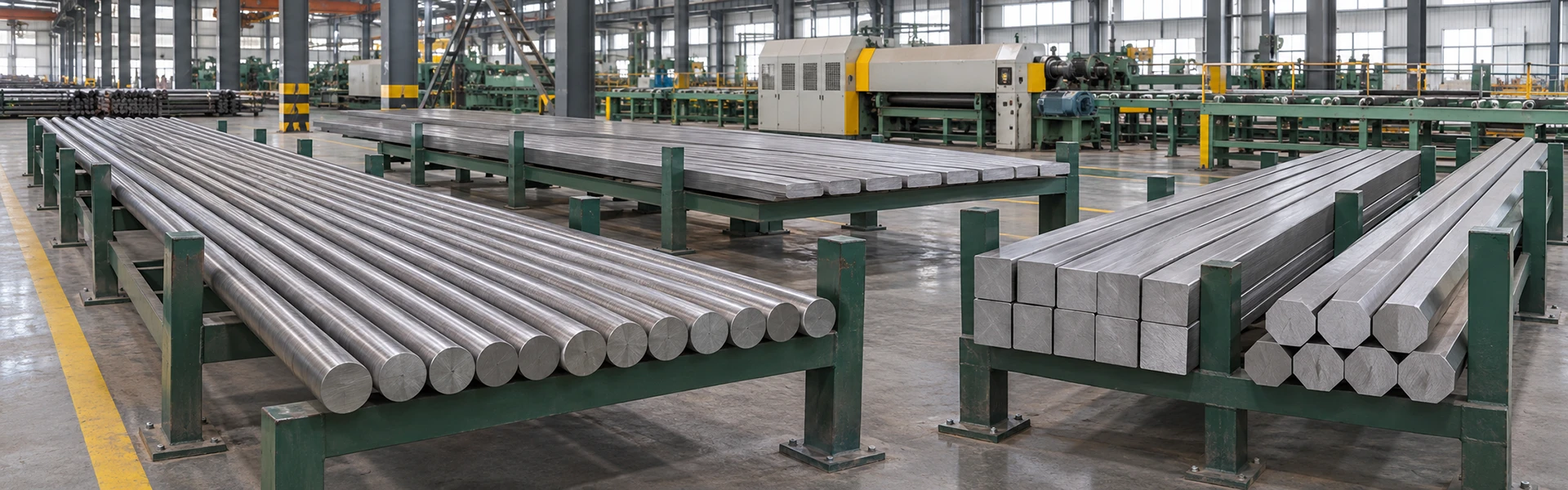
Select the material before defining the final shape and tolerance. Cold drawing affects each grade differently, so the supplied condition is reviewed with the order.
Common machining grades for pins, fasteners, shafts and general-purpose components. Confirm the exact chemistry, cold-drawn condition and required properties.
Selected Cr-Mo and Ni-Cr-Mo bars for machined and heat-treated parts. Cold drawing and heat-treatment availability depend on grade, section and final condition.
304 and 316L bars for equipment, corrosion-resistant machined components and fittings. Cold working can change tensile properties; specify the condition.
Select the section that suits your drawing. Each profile has a different dimension convention and theoretical-weight formula.
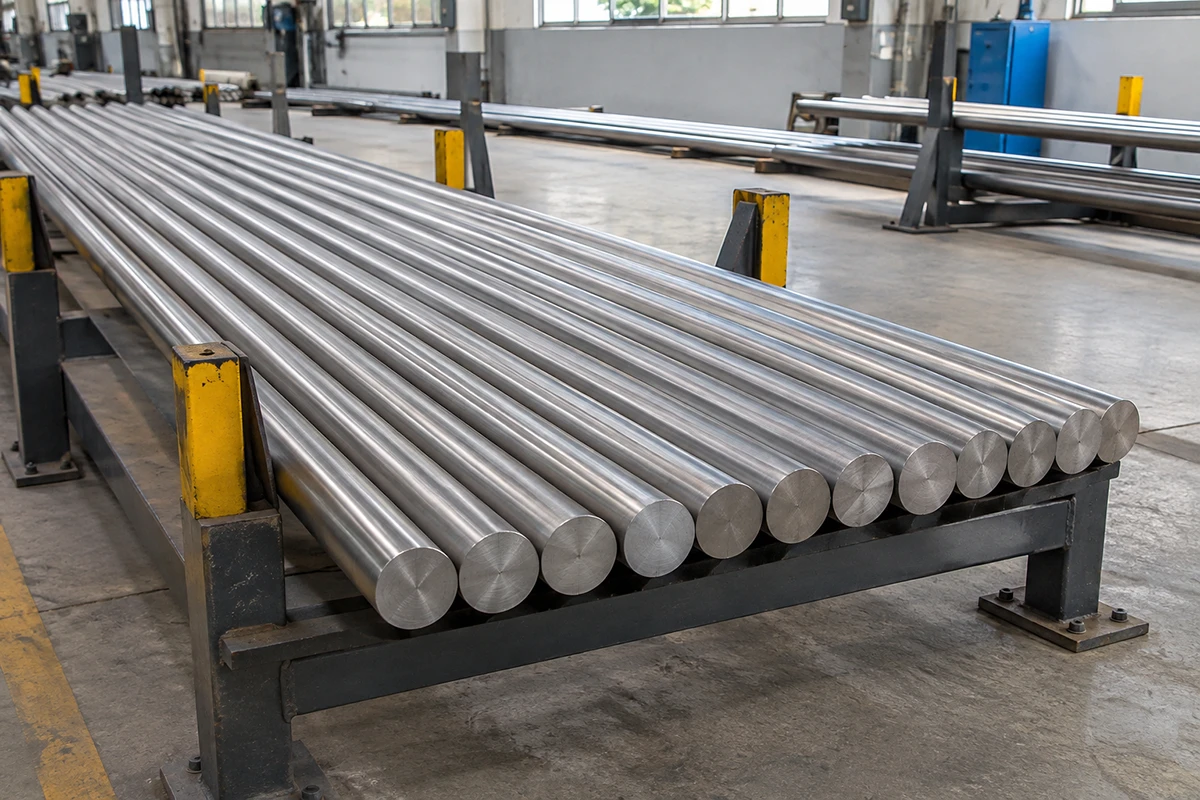
Used for shafts, pins, spacers and machined components.
ORDER DIMENSION: Diameter Ød (mm)Related bar range ↗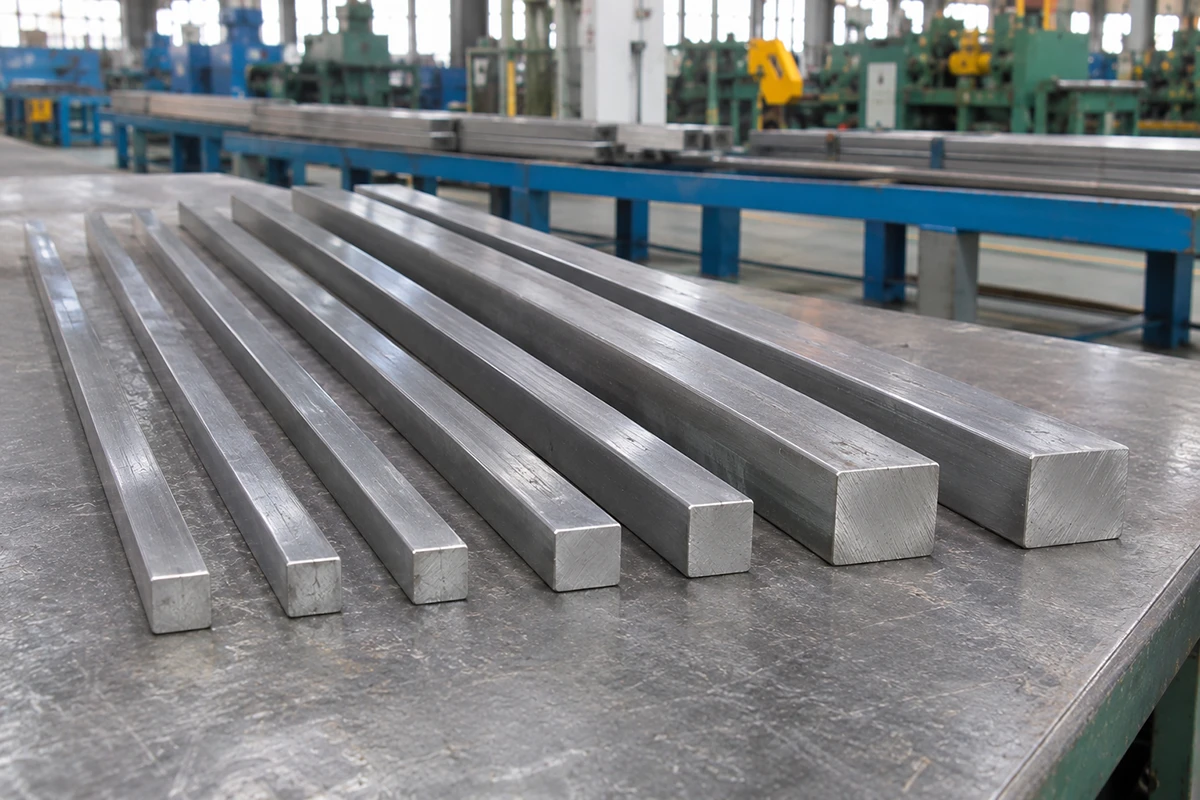
Solid square stock for guide pieces, keys and machined blocks.
ORDER DIMENSION: Side a × a (mm)Related bar range ↗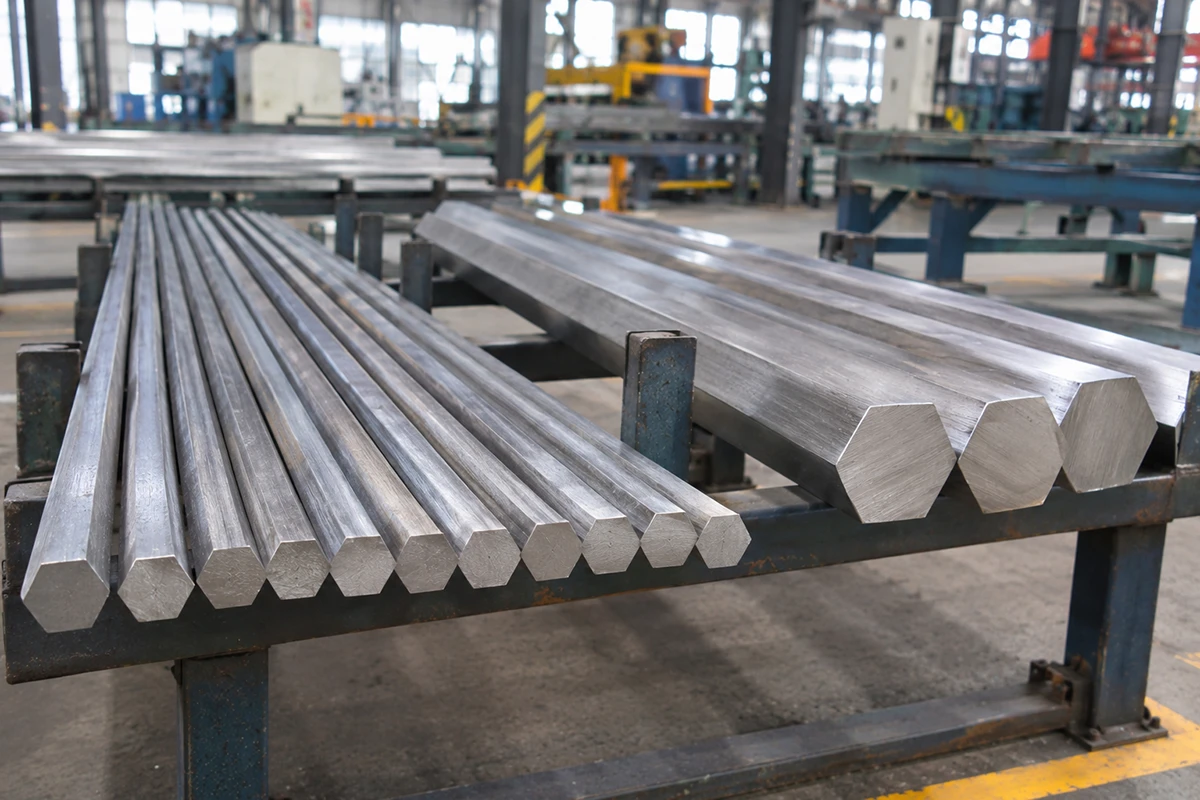
Six-sided bar stock for fasteners, adapters and fittings.
ORDER DIMENSION: Across flats AF (mm)Related bar range ↗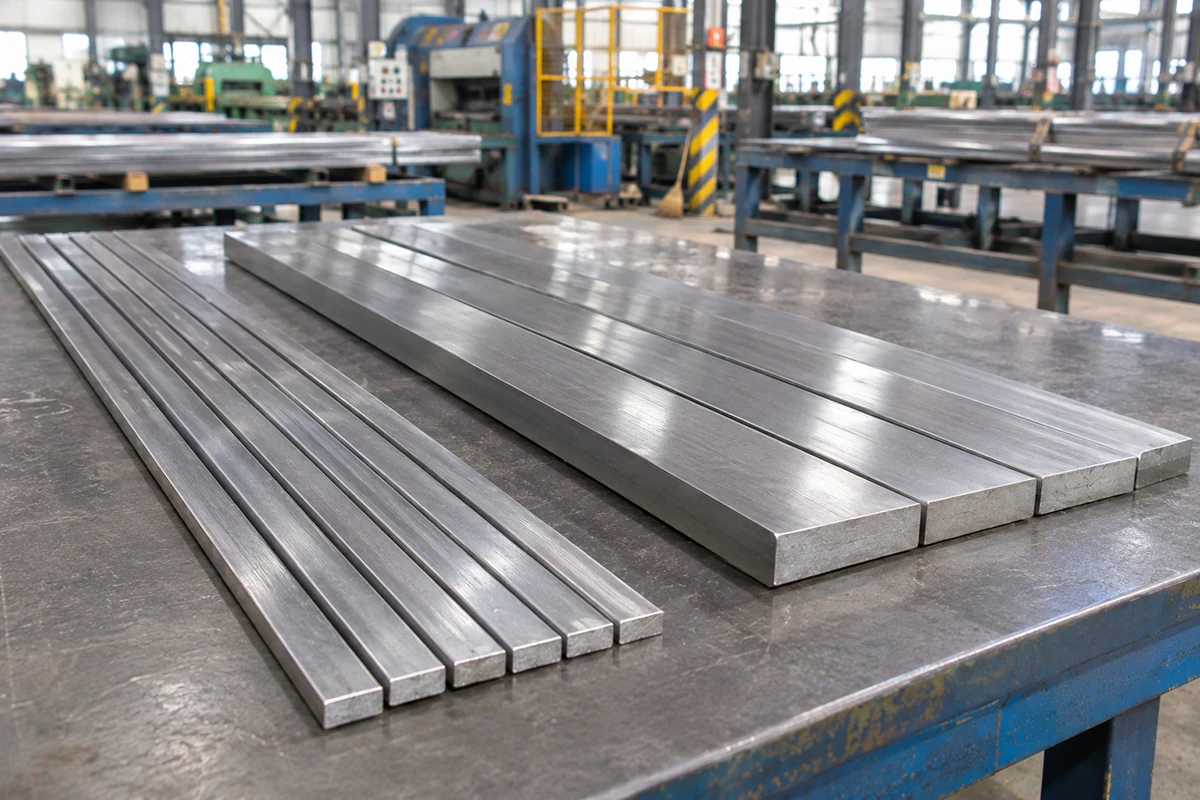
Rectangular stock for machined strips, brackets and precision blanks.
ORDER DIMENSION: Width b × thickness t (mm)Related bar range ↗A complete purchase order identifies both the base steel grade and the finished bar requirements.
| Product | Solid cold drawn steel bars supplied as straight lengths, subject to order confirmation |
|---|---|
| Materials | Carbon, alloy and stainless steel grades specified by the buyer |
| Profiles | Round / square / hexagonal / flat |
| Dimensions | Ø diameter, square side, hex across-flats (AF), or width × thickness |
| Lengths | Nominal mill length or ordered cut length; length tolerance to be agreed |
| Finish / process | Cold drawn; optional subsequent straightening, cutting or approved finishing |
| Delivery condition | As-drawn, annealed or heat treated, where permitted by the relevant grade standard and order |
| Tolerances | Specify actual permitted dimensional deviation, straightness, surface and corner requirements |
| Documentation | Material certificate, heat traceability and agreed inspection scope |
| Order details | Grade, section, dimension, length, quantity, destination and delivery terms |
Cold drawn describes a manufacturing route. The correct product standard also depends on whether the bar is carbon, alloy or stainless steel.
| Steel family | Relevant standard | What to confirm |
|---|---|---|
| Carbon & alloy steel | ASTM A108-24 | Cold-finished bar requirements; note that cold-finished includes more than the drawing process |
| European carbon & alloy bright products | EN ISO 683-7:2024 | Technical delivery conditions for drawn, peeled/turned or additionally ground products; replaces EN 10277:2018 |
| Stainless steel bars | ASTM A276/A276M-25 | Grade, cold-finished condition, profile and required mechanical properties |
| European stainless bars | EN 10088-3:2023 | Corrosion-resistant grades and technical delivery condition |
| Bright stainless dimensional tolerance | EN 10278:2023 | Dimensions/tolerances for stainless and other special bright bars within its scope |
Cold drawing can improve dimensional consistency and surface quality. A declared tolerance is an order requirement, not a universal property of every cold-drawn bar.
| Shape | Dimension on Drawing | Measurement |
|---|---|---|
| Round | Ød | Outside diameter |
| Square | a × a | Across opposite faces |
| Hexagon | AF | Distance across two parallel flats |
| Flat | b × t | Width and thickness independently |
For a drawing calling out h9 or h11, specify the nominal size, the applicable product/tolerance standard and any special straightness requirements. The resulting numerical limits depend on size and standard.
Drawing a suitably prepared bar through a die reduces its section and improves surface consistency. The finished result depends on material, drawing reduction and processing route.
Identify grade and starting condition; prepare surface for the planned route.
Reduce to the target profile and nominal cross-section under controlled processing.
Prepare required lengths and straightness, subject to agreed tolerances.
Inspect dimensions and finish; link accepted material to the ordered certificate.
Compare process characteristics before selecting a supply route. Exact dimensional and mechanical acceptance limits remain contract-specific.
Mill-finished bar stock for fabrication or later machining. Surface and size variation are assessed against hot-rolled product requirements.
Reduced through a die at relatively low temperature. Typically provides a cleaner surface and closer size control, with possible work-hardening effects.
Material removed by machining or grinding. Specify the final dimensional tolerance and surface condition separately from the cold drawing process.
Strength, hardness, elongation and residual stress can change during cold working. Required values must be linked to the grade, section size and agreed delivery condition.
Cold reduction may increase strength and hardness while reducing ductility. Final tensile or hardness values require the correct grade-specific specification and tested condition.
Where suitable for the selected grade, additional heat treatment can be ordered to meet mechanical and processing requirements. Heat treatment can affect dimensions and the final surface finish.
Choose profile and steel grade for the component load, corrosion conditions and finished-part drawing.
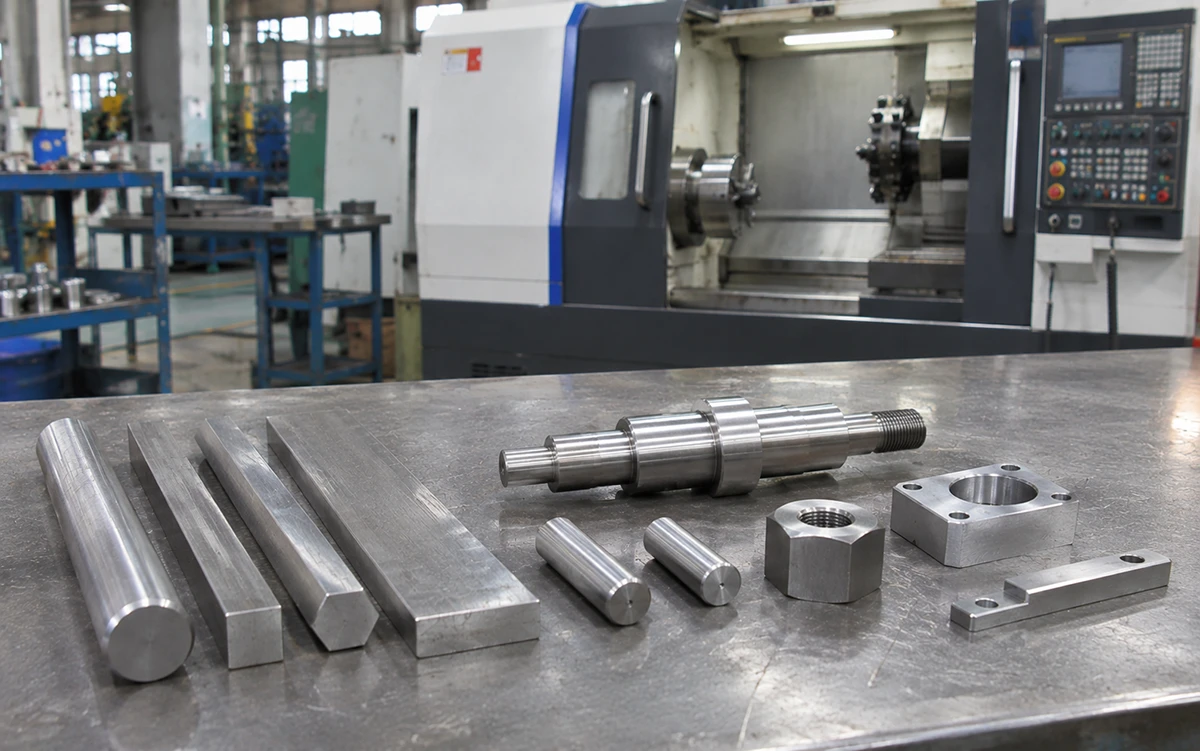
Round stock for turned parts and motion components.
Hex and round blanks for machined fasteners and connectors.
Close-dimension bar blanks for turned or drilled parts.
Square and flat sections for fitted machine parts.
Material-specific blanks for equipment assemblies.
Repeat sections and cut lengths for scheduled machining.
Use one steel supply contact for material selection, agreed manufacturing specifications, quality paperwork and export logistics.
8 million metric tons of actual annual steel output across the company’s wider steel operations.
Manufacturing overview ↗Carbon, alloy and stainless steel procurement supported by grade- and section-specific supply confirmation.
Explore steel bars ↗Agree on dimensional inspections, material certificates, traceability and test scope before production.
Quality control ↗Prepare packing, length schedule and shipment details around your order and destination.
Order-based dispatch planningSelect the profile, nominal dimensions and material density. Calculations use solid ideal sections; actual shipping mass may differ with tolerance, corner geometry and processing.
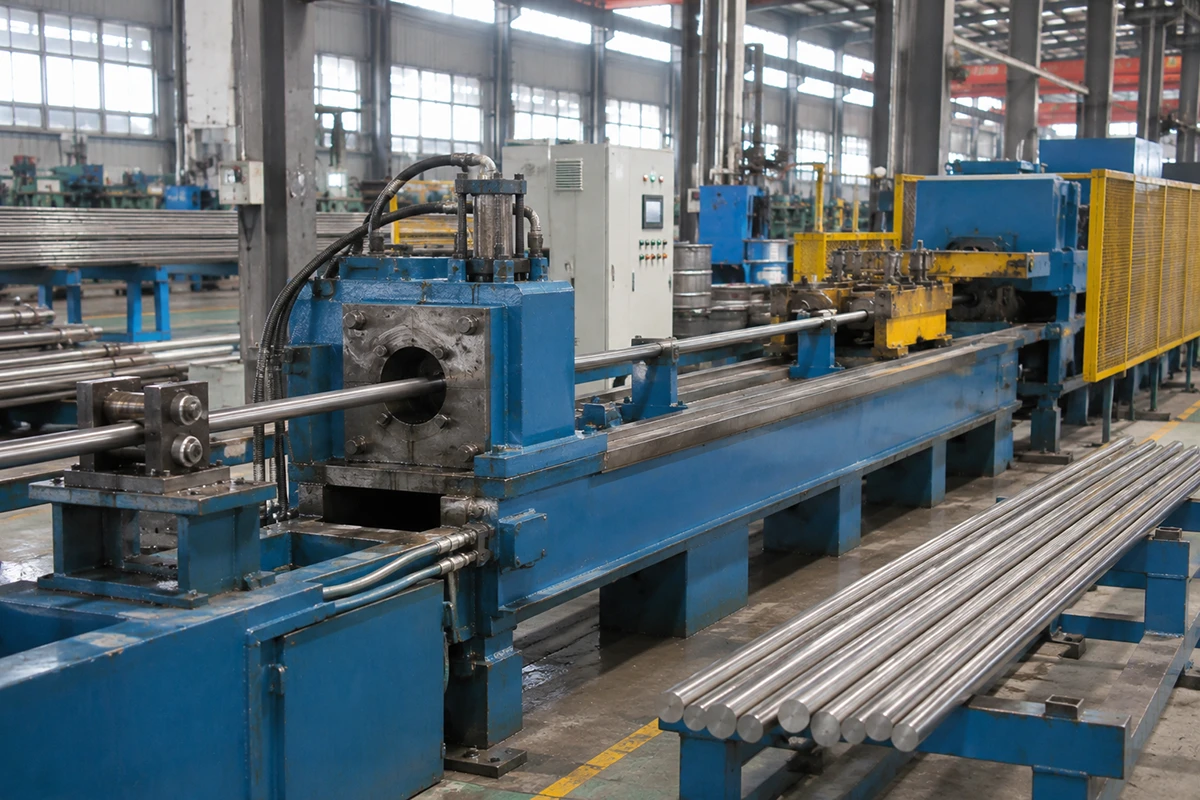
BAOSTEEL METAL supports bulk steel enquiries through its broader manufacturing and procurement operations. Final cold-drawing capability, section sizes, surface condition and production schedule are confirmed for the requested grade.
Company-wide inventory is substantial, but availability of a particular cold drawn section must be checked by grade, profile, tolerance and quantity.
Our regular company-wide steel inventory is approximately 1 million metric tons across product categories. This is not a product-specific cold-drawn bar stock claim.
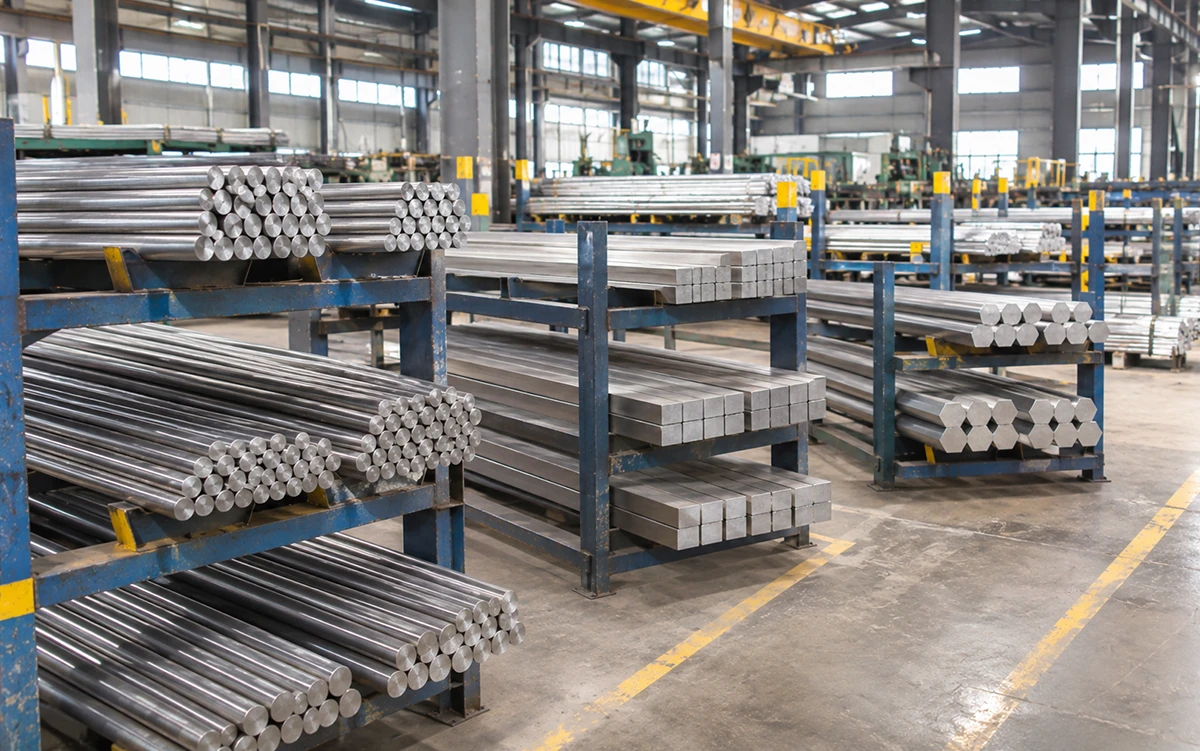
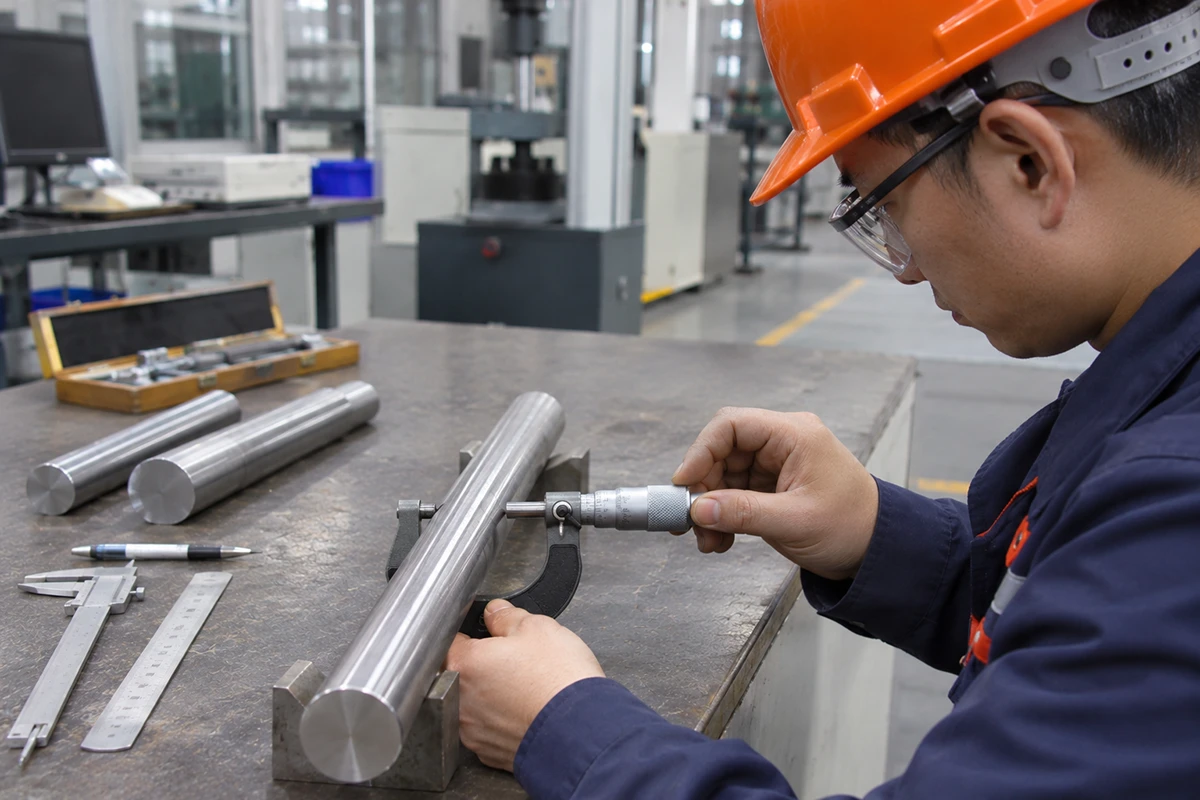
Specify the checks that matter for your machining line. Material certificates and test scope should correspond to the agreed steel standard and final bar condition.
Supply your cut list or part drawing to request basic preparation with the steel bar order. Each operation and achievable tolerance is checked before quotation.
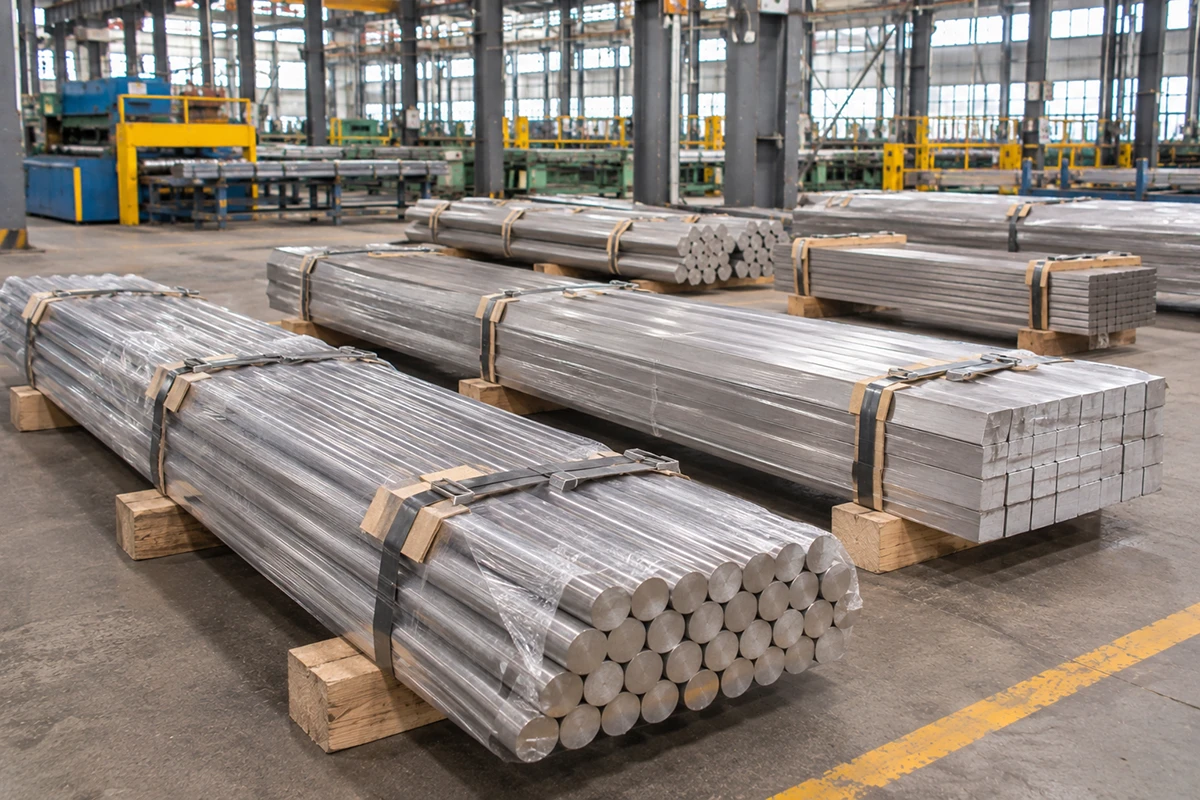
Bundle and protect straight lengths to suit handling, material finish, shipment mode and destination. Confirm protective wrapping needs for finished surfaces.
Move from finishing requirements to the appropriate steel grade or bar profile.
Answers for engineering buyers, machinists, steel stockists and manufacturing procurement teams.
A bar produced by drawing prepared steel through a die to reduce the section and achieve a specified shape, size and surface. Final properties depend on grade, reduction and subsequent treatments.
Cold drawing is one cold-finishing process. The broader term cold-finished may also cover turned, ground, polished or other finishing routes, depending on the standard.
ASTM A108-24 covers cold-finished carbon and alloy steel bars. EN ISO 683-7:2024 covers applicable bright non-alloy and alloy steel products and supersedes EN 10277:2018.
No. State the actual tolerance class and nominal dimension together with the applicable product standard. Available tolerances vary with grade, section, processing route and order.
Cold work may increase strength and hardness and may lower ductility. The amount depends on the grade, reduction and delivery condition; request tested values or agreed mechanical criteria.
Cold-finished stainless bar enquiries, including 304 and 316L, can be assessed under applicable stainless specifications such as ASTM A276/A276M and EN 10088-3. Availability is subject to confirmation.
For a solid regular hexagon, area in mm² is approximately 0.866025 × AF², where AF is the distance across parallel flats. Multiply area by density and length to obtain theoretical mass.
Provide grade, steel standard, shape, nominal dimensions, tolerance, delivery condition, bar length, quantity, MTC requirements and destination. Include drawings for cut or processed parts.
Send your required grade, dimensions, quantity and destination. Our team will review the inquiry.