Global Steel Supply & Processing
Source S690QL (1.8928) quenched-and-tempered high-strength steel plate to EN 10025-6:2019+A1:2022. Review the correct thickness-related yield strength, −40°C impact toughness, carbon equivalent and actual mill documents before placing your project order.
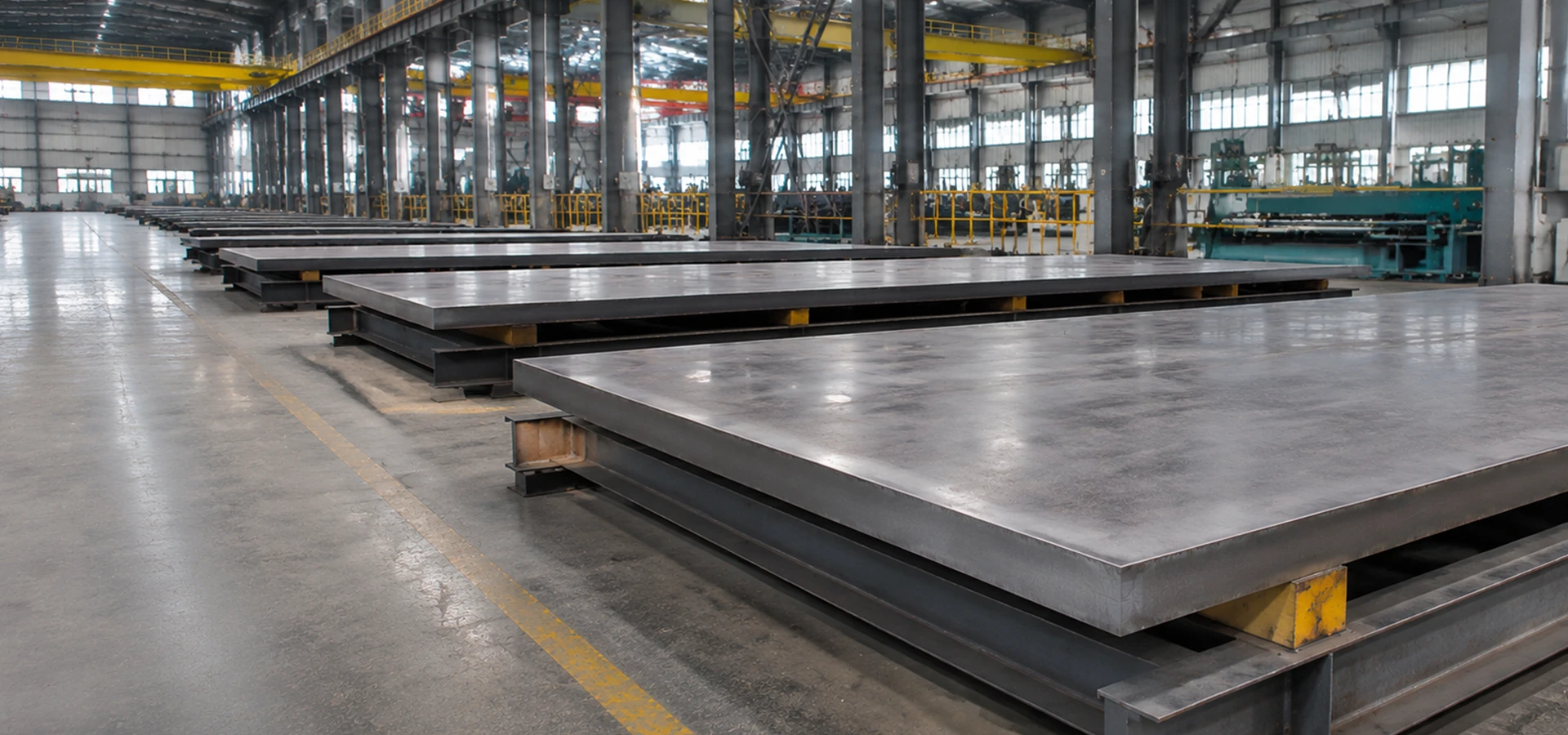
Specify S690QL together with plate thickness, QL impact quality, delivery state and test certificate. The 690 MPa grade figure applies only through 50 mm.
| Purchase field | What to specify / verify |
|---|---|
| Grade / material number | S690QL / 1.8928, high-yield-strength alloy structural steel plate. |
| Governing specification | EN 10025-6:2019+A1:2022; hot-rolled flat products in the quenched and tempered condition. |
| Thickness scope | Standard nominal range 3–200 mm for S690; actual thickness, width, length, production and stock availability are mill-dependent. |
| Minimum yield strength | 690 MPa at 3–50 mm; 650 MPa at >50–100 mm; 630 MPa at >100–200 mm. |
| Tensile strength | 770–940 / 760–930 / 710–900 MPa for the respective thickness ranges. |
| Minimum elongation | 14% at the standard proportional gauge length, subject to applicable sample conditions. |
| QL impact quality | Minimum longitudinal average Charpy V energy 30 J at −40°C using full-size specimens; verify sample orientation and thickness-dependent specimen rules. |
| Carbon equivalent | CEV maximum 0.65% (≤50 mm); 0.77% (>50–100 mm); 0.83% (>100–200 mm). |
| Delivery condition | Quenched and tempered (+Q&T); retain the producer’s certified heat-treatment and material test evidence. |
| Dimensional / inspection documents | Specify EN 10029 tolerance class, EN 10204 certificate (3.1 or 3.2 if ordered), UT option, Z-quality and third-party inspection if required. |
Use 690, 650 or 630 MPa minimum yield according to the ordered thickness. Plate strength is not a single value for the full 3–200 mm standard scope.
| Nominal thickness | Min. yield (MPa) | Tensile (MPa) | Min. elongation |
|---|---|---|---|
| 3–50 mm | 690 | 770–940 | 14% |
| >50–100 mm | 650 | 760–930 | 14% |
| >100–200 mm | 630 | 710–900 | 14% |
Mechanical-property bands follow the EN 10025-6 S690QL grade and a published mill Declaration of Performance. Where project or source-mill limits are narrower than the standard, the actual purchase contract and mill test certificate govern.
Send the full plate list, required minimum yield, tensile range, working temperature and total order weight. We will check the actual producing mill and certified lot.
S690QL uses controlled alloy chemistry and carbon equivalent to balance strength, toughness and weldability. Verify actual heat analysis instead of assuming every mill has the same nominal element content.
| Element | Max. content (%) |
|---|---|
| Carbon (C) | 0.20 |
| Silicon (Si) | 0.80 |
| Manganese (Mn) | 1.70 |
| Phosphorus (P) | 0.020 |
| Sulfur (S) | 0.010 |
| Nitrogen (N) | 0.015 |
| Chromium (Cr) | 1.50 |
| Element | Max. content (%) |
|---|---|
| Nickel (Ni) | 4.00 |
| Molybdenum (Mo) | 0.70 |
| Copper (Cu) | 0.50 |
| Vanadium (V) | 0.12 |
| Niobium (Nb) | 0.06 |
| Titanium (Ti) | 0.05 |
| Boron (B) | 0.0050 |
These listed heat-analysis ceilings follow a published S690QL producer Declaration of Performance for EN 10025-6. They show permitted maximums, not nominal alloy additions or guaranteed values for every mill. Confirm the contracted EN standard and the actual heat analysis; fine-grain practices and optional alloy additions vary by source.
| Nominal thickness | Maximum CEV | Fabrication review |
|---|---|---|
| ≤50 mm | 0.65% | Obtain heat-specific CEV when qualifying the weld procedure. |
| >50–100 mm | 0.77% | Review preheat, consumables and restraint for heavier sections. |
| >100–200 mm | 0.83% | Verify HAZ toughness and project-approved thermal cycle. |
IIW carbon equivalent: CEV = C + Mn/6 + (Cr + Mo + V)/5 + (Ni + Cu)/15. Request the actual calculated heat CEV and, where necessary, CET/Pcm for the proposed welding method and material thickness.
Compare Q, QL and QL1 carefully. These suffixes identify separate impact-temperature qualities; the base S690 strength class alone does not define low-temperature toughness.
30 J longitudinal Charpy at −20°C for full-size specimens.
30 J longitudinal Charpy at −40°C; this is the subject of the page.
30 J longitudinal Charpy at −60°C when that tougher subgrade is specified.
The standard grade designation is normally communicated with longitudinal impact values. Where the contract requires transverse coupons, state the test orientation and acceptance energy explicitly; a published mill declaration reports 27 J at −40°C in the transverse direction for an S690QL product.
Impact specimen size and acceptance follow the applicable EN standard, plate thickness and purchase options. Set the minimum energy, test temperature, orientation, frequency and certificate level at the enquiry stage.
Specify −40°C, 30 J longitudinal or your project’s transverse requirement, sample size, test frequency and inspection document.
S690QL must retain its specified strength and −40°C toughness after the contracted manufacturing route. Confirm the actual treatment and applicable test results for each heat.
EN 10025-6 covers high-strength flat products supplied in the quenched-and-tempered delivery condition. Production controls quenching and tempering to meet the specified strength and low-temperature toughness at the ordered thickness.
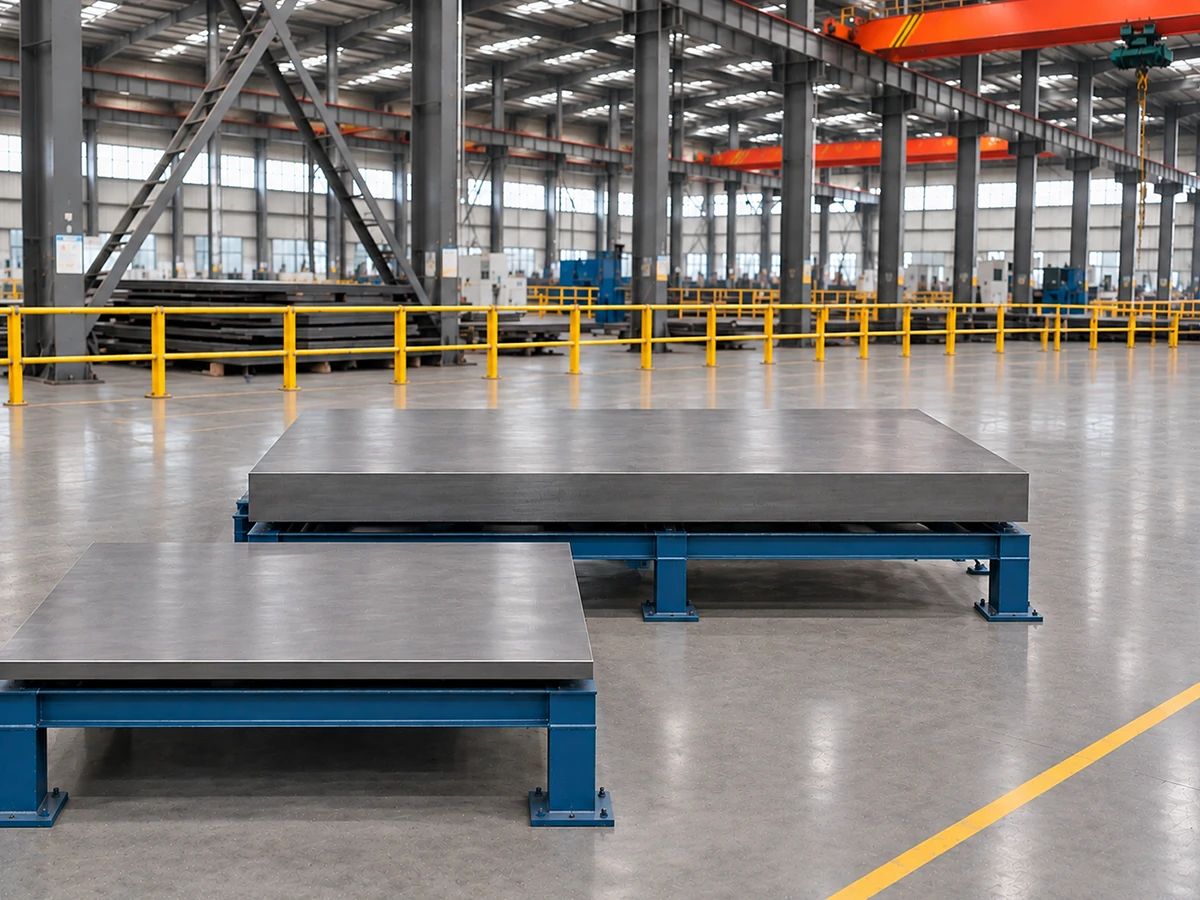
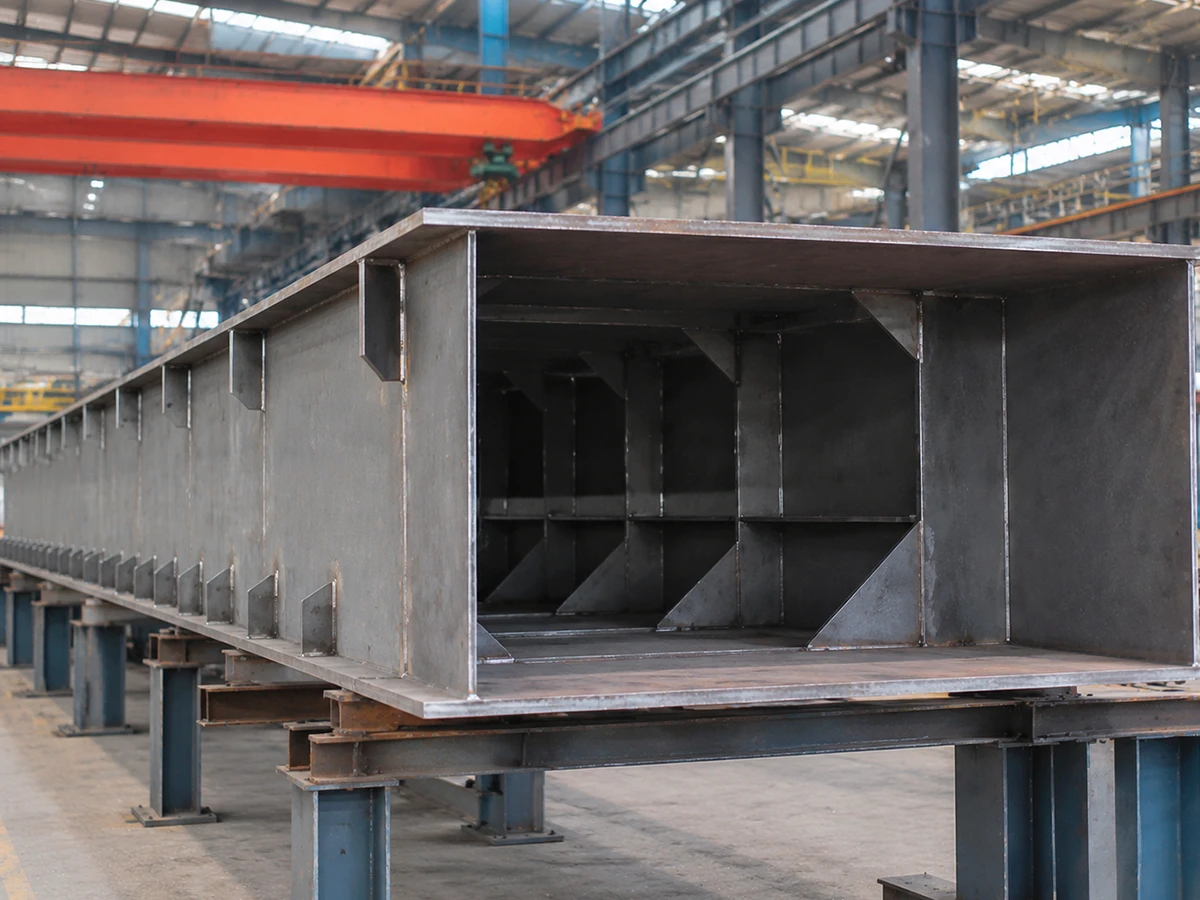
S690QL is selected for demanding load-bearing structures where the engineer requires high yield strength and verified −40°C toughness. Plate selection must also account for welds, buckling and fatigue.
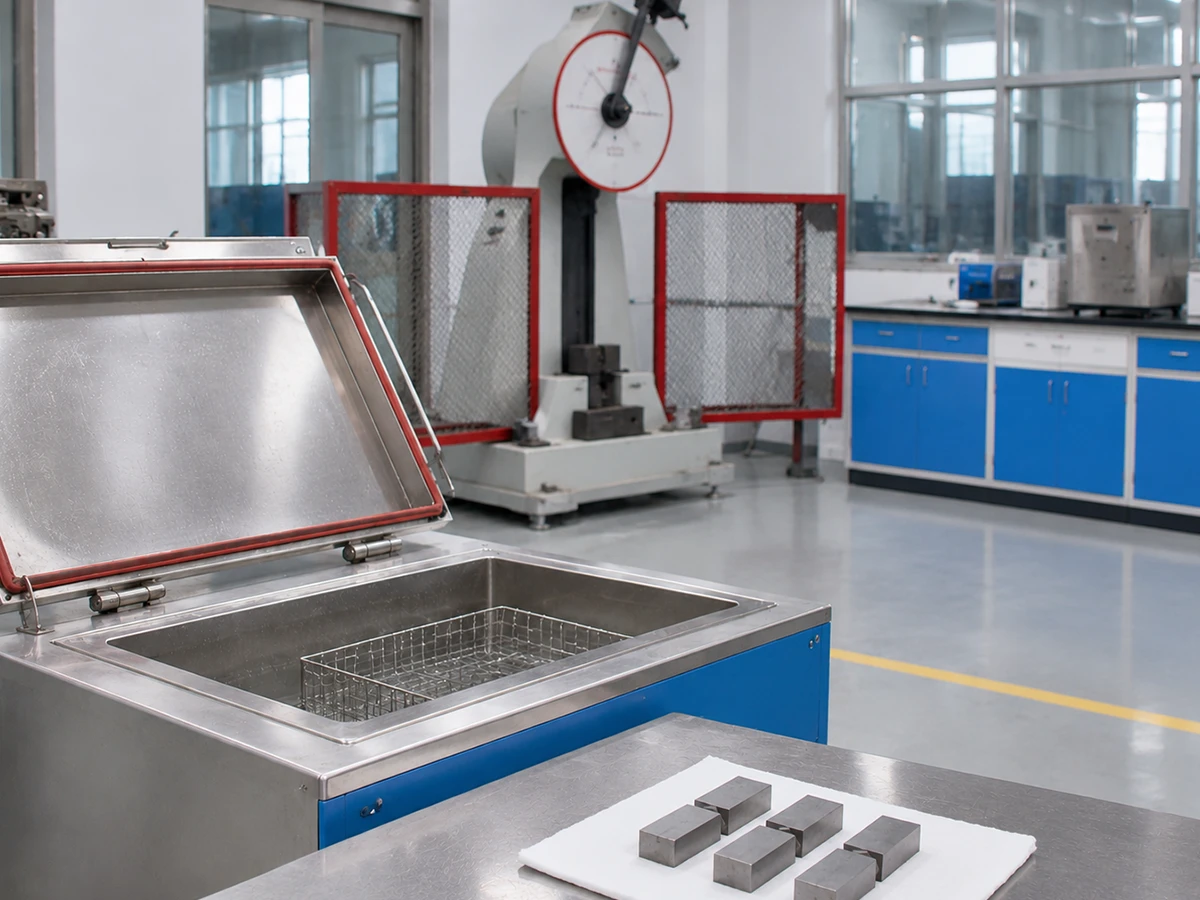
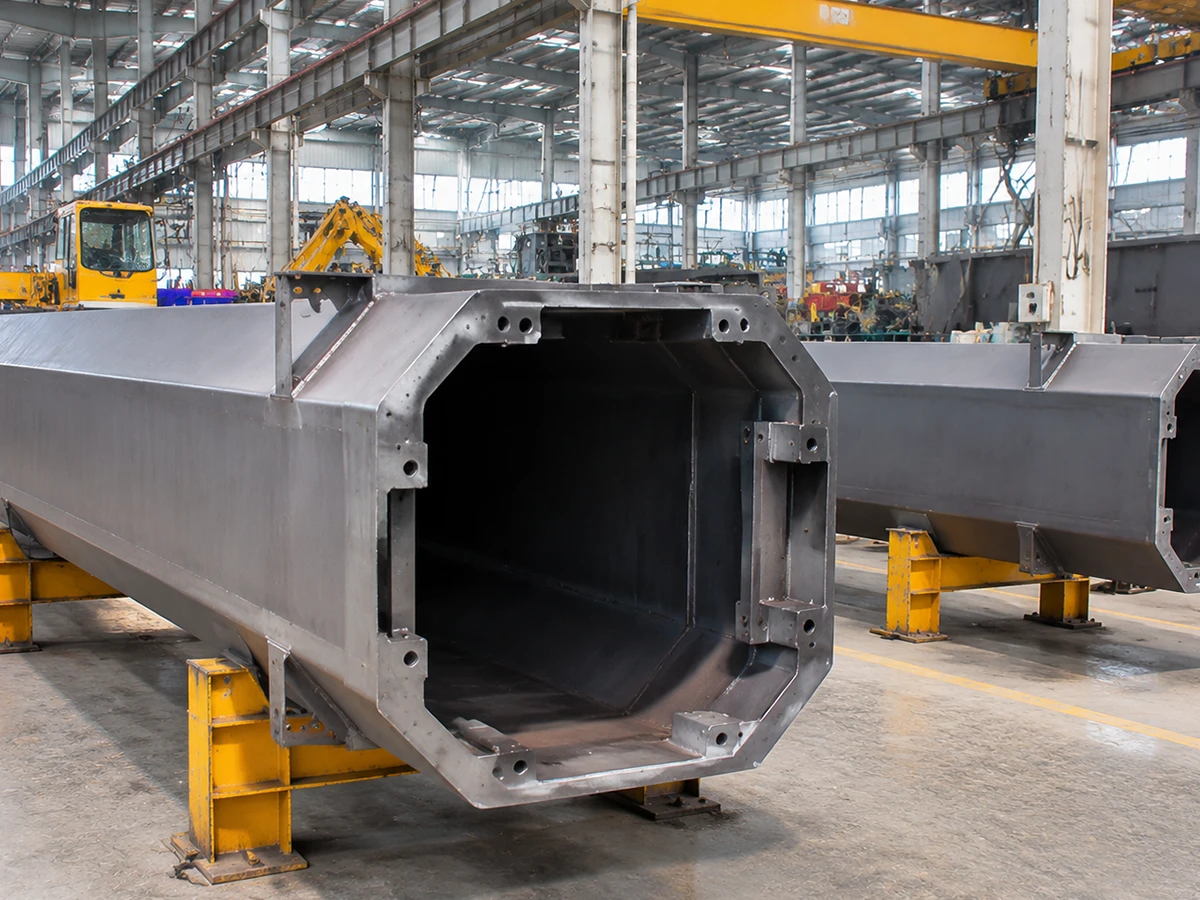
Structural plate for crane booms, box sections and highly loaded welded supports where qualified strength, fatigue and fabrication criteria are met.
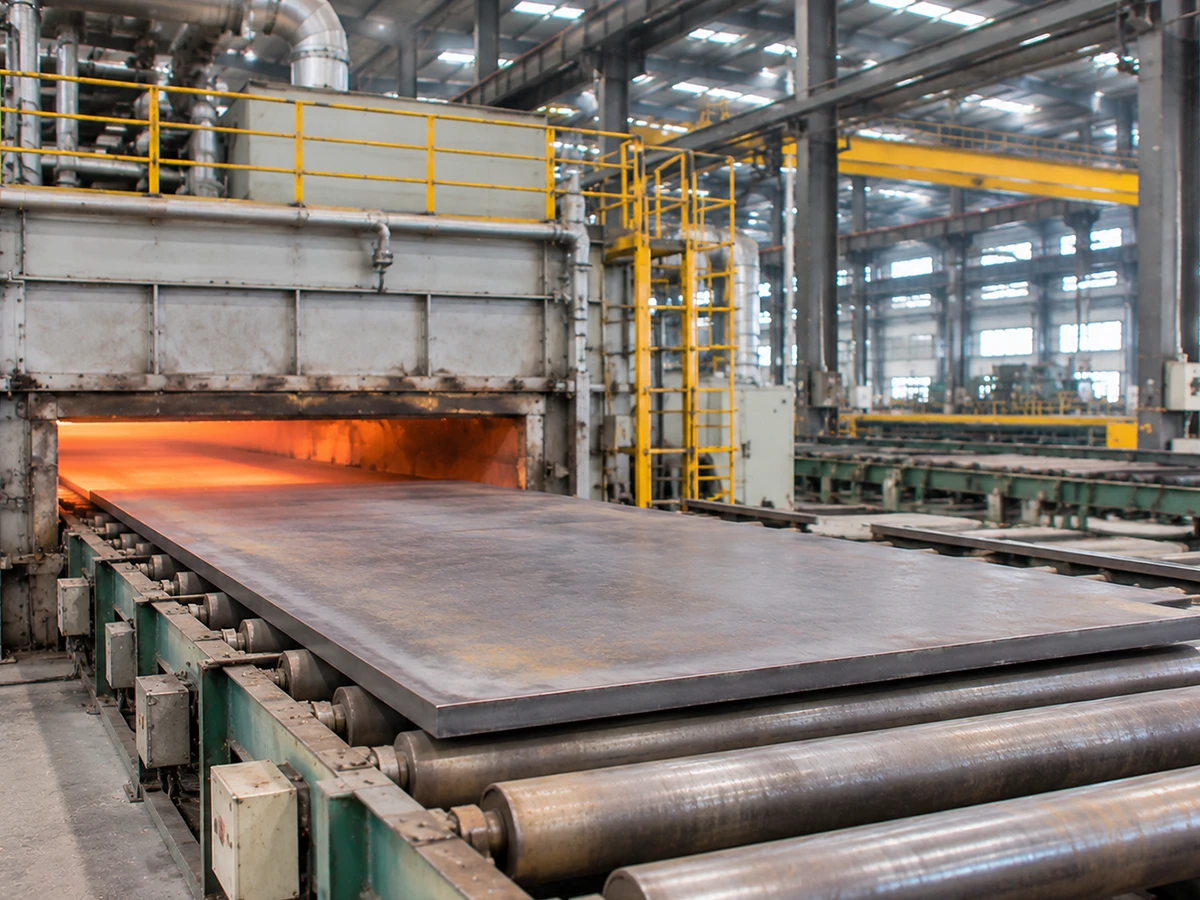
Selected bridge, marine-support or infrastructure members where EN design requirements, impact toughness and inspection scope approve S690QL.
High-load frames and support components with verified section strength and a qualified welding route.
Weight-sensitive carrier frames and attachments where engineering approval supports high-strength plate use.
Fabricated plate boxes and welded girder members with joint design and toughness requirements.
Selected structural components under project-approved EN specifications and any additional certification.
For high-strength plate, verify the exact standard, source, QL impact test and shipment documentation before placing a project order.
Align S690QL / 1.8928, the exact EN edition, thickness band, Q&T condition and QL toughness before issuing a price.
Check source steelworks, rolled plate sizes, current available heat lots and required testing instead of treating all supplier specifications as identical.
Coordinate heat chemistry, CEV, tensile, impact, test direction, dimensions and EN 10204 certificate scope.
Match plate packing, identification, agreed cut list and shipping paperwork with the buyer’s production schedule.
BAOSTEEL METAL company-wide operating profile: annual output 8 million MT, regular inventory 1 million MT, 500,000 m² operating area and 1,000+ employees. These figures describe the overall business, not a guarantee of S690QL-specific production or stock.
Supplying S690QL requires rolled plate availability, Q&T production, tensile and impact testing, and traceable release documents. Our team checks these items with the actual producer before a supply commitment.
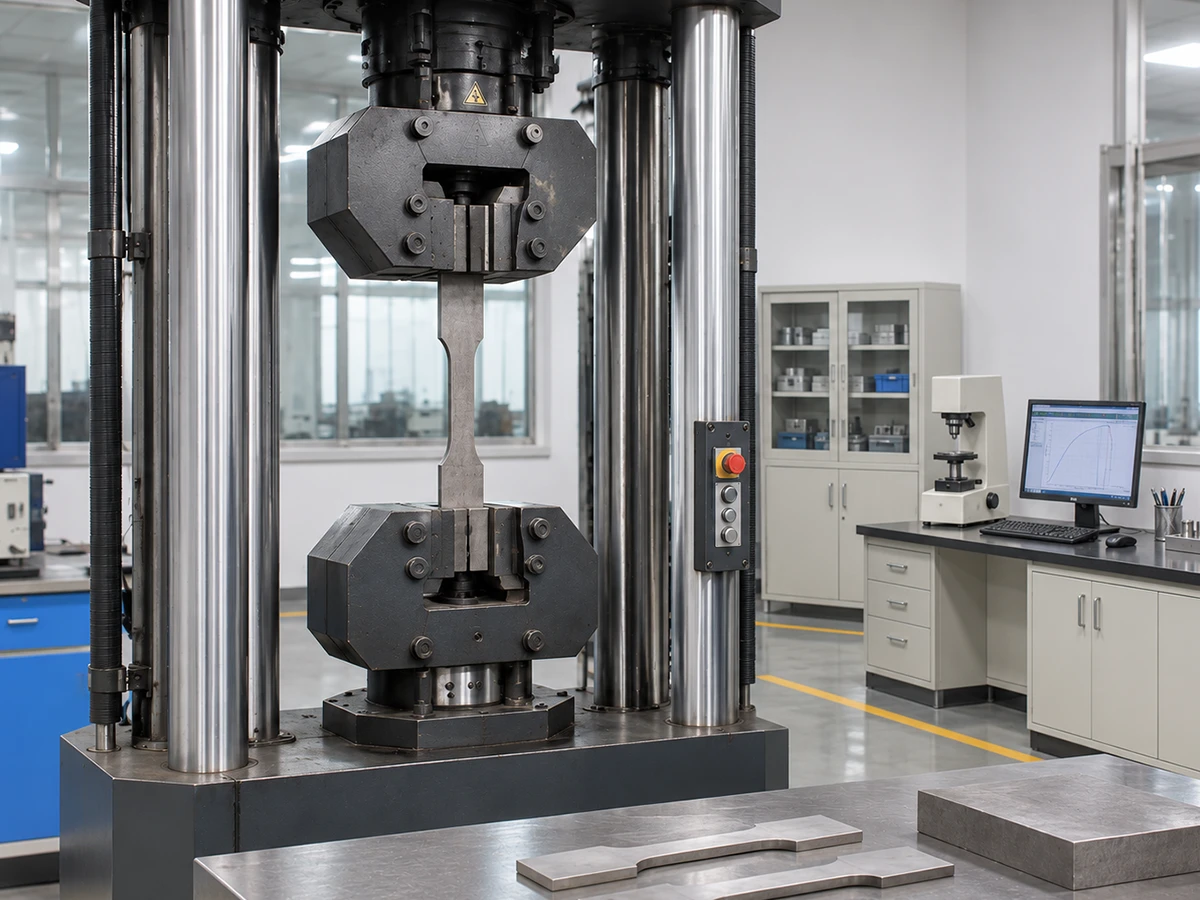
A complete inspection package connects each supplied plate to the correct EN standard, actual producer, heat chemistry, mechanical results and −40°C toughness.
| Inspection point | What the buyer checks |
|---|---|
| Grade and heat identification | S690QL / 1.8928; EN 10025-6 edition, producing mill, plate number and traceable heat. |
| Mechanical tests | Yield, tensile and elongation for ordered nominal thickness, with specimen direction recorded. |
| Impact test records | −40°C longitudinal Charpy energy; test direction, specimen size, individual values and any additional impact requirement. |
| Heat analysis and CEV | C, P, S and relevant alloy additions; calculated CEV checked against the correct thickness band. |
| Q&T delivery | Quenched and tempered condition and the mill treatment record if contractually requested. |
| Dimensions / tolerances | EN 10029 thickness/flatness class; measured dimensions, surface, edge and plate marks. |
| Inspection certificate | EN 10204 3.1, or 3.2 when specifically ordered, with independent witnessing where agreed. |
| Optional tests | UT to EN 10160, Z15/Z25/Z35 to EN 10164 or supplementary low-temperature testing as specified. |
EN 10204 document type does not replace product-standard compliance. Check the stated producer, heat identity, applicable test results and any 3.2 witnessing route before material release.
Send your requested certificate type, UT acceptance, impact direction and third-party inspection scope with the purchase list.
Review the actual CEV and heat treatment before setting a welding procedure. Preheat, filler choice, interpass limit and heat input depend on restraint, thickness and hydrogen control; a single universal preheat temperature is inappropriate.
Steel plate procurement should specify nominal dimensions, finished thickness, tolerance/flatness class and required identification prior to cutting or export.
Specify the required EN 10029 edition, thickness-tolerance class, flatness criterion and ordered dimensions; standard material scope is not a promise of source-mill stocked sizes.
Agree mill edges or thermal cut edges, fabrication allowances, labels, heat-number transfer and optional UT or surface inspection.
Estimate theoretical steel mass from plate thickness, width, length and quantity. The calculation is for procurement planning and packing estimates.
Planning density: 7,850 kg/m³. Formula (mm dimensions): thickness × width × length × 7.85×10⁻⁶ = kg per plate. Divide the total kg by 1,000 for metric tonnes. Actual invoiced mass follows the contract.
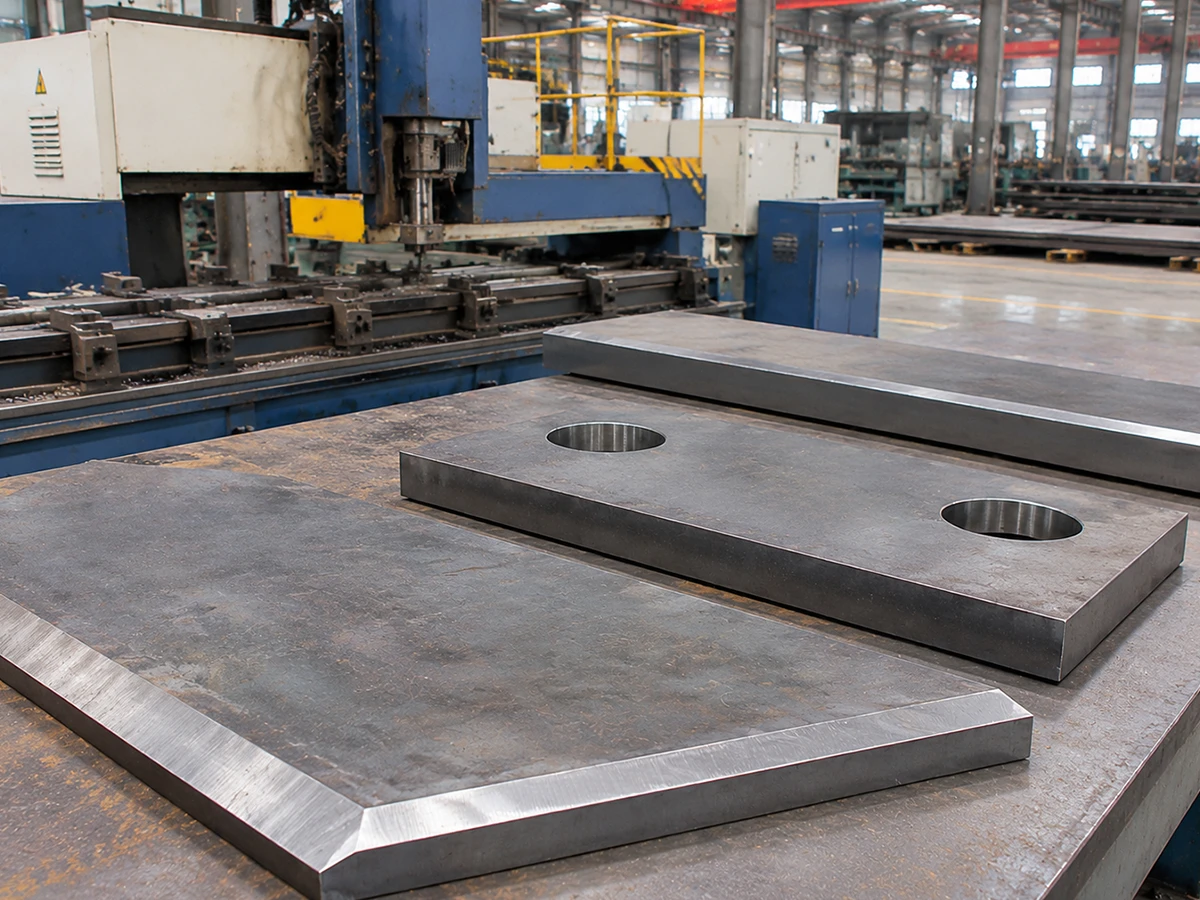
Send drawings, piece quantities, bevel requirements, tolerance class and any inspection required after cutting.
Processing is available subject to material thickness, fabrication drawings and workshop capacity. The finished pieces should retain heat and plate identity.
Review thermal effects, kerf and tolerances for high-strength Q&T plate.
Where thickness and equipment permit, evaluate CNC processing to approved drawings.
Agree edge preparation, holes, identification transfer and inspections after processing.
The method, cut-edge hardness and any need for post-cut treatment should be qualified by the fabricator for the real material thickness and design; workshop capacity and processing availability are confirmed with each order.
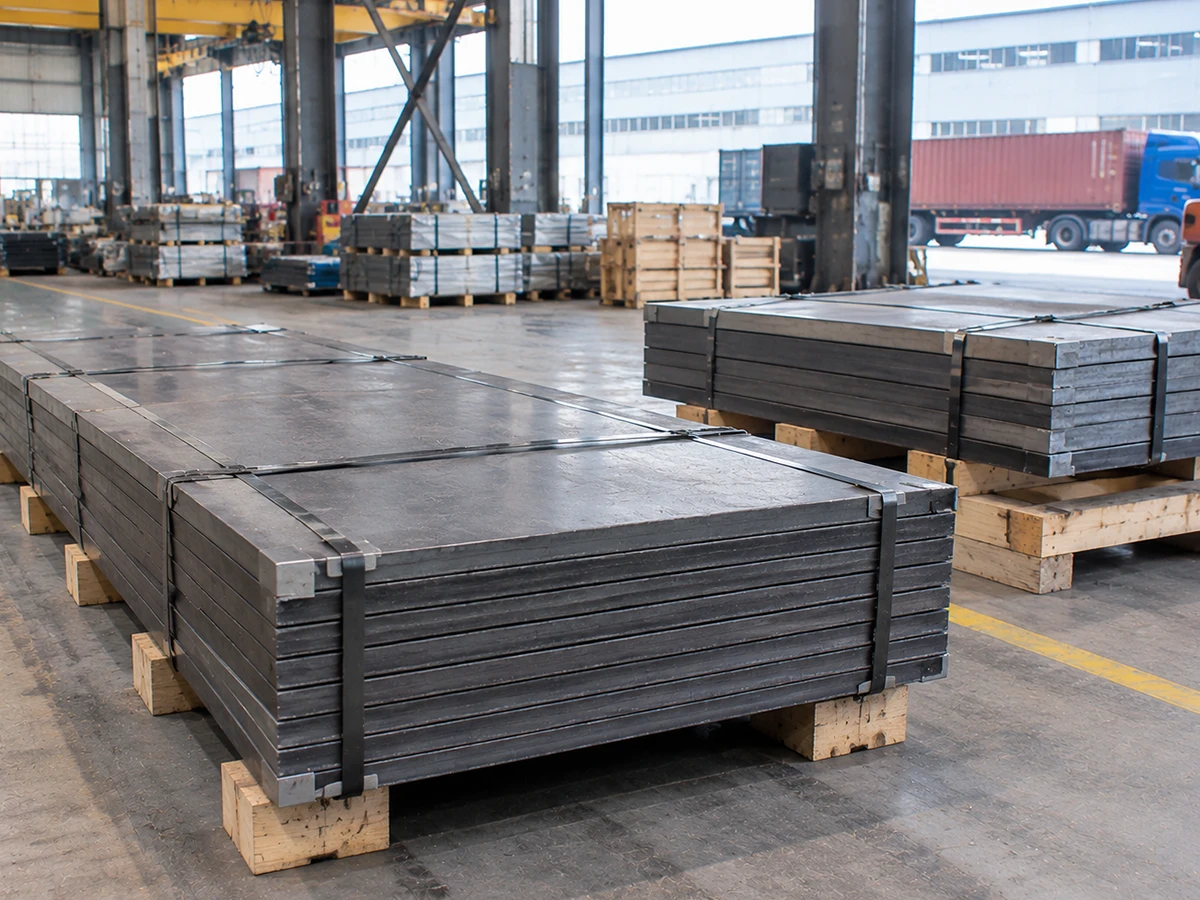
Export packing depends on plate weight and dimensions. We coordinate lot identity, document release and agreed logistics around the purchaser’s production schedule.
Compare Q460C, Q550D, Q690D, S690QL and ASTM A514 by governing specification, delivery condition, thickness, toughness and certification.
GB/T 16270, 460 MPa Q&T class, distinct impact and strength bands.
GB/T 16270, 550 MPa D-quality Q&T with −20°C impact requirements.
GB/T 16270 Q&T steel plate; −20°C D-quality impact, distinct from EN S690QL.
ASTM structural Q&T plate with its own chemical and mechanical rules.
Within EN 10025-6, alternative −20°C and −60°C impact-grade routes.
Explore steel grades by design strength and manufacturing specification.
These are procurement comparisons rather than interchangeable grades. Activate internal links only after the matching WordPress pages are published.
Specify the exact EN grade, QL toughness and Q&T delivery route before issuing a steel plate purchase order.
S690QL is a quenched-and-tempered, high-yield-strength flat structural steel product to EN 10025-6. The QL suffix designates the −40°C impact quality; its EN material number is 1.8928.
This page uses EN 10025-6:2019+A1:2022. State the exact edition and the required options on the purchase order and compare them with the producing mill certificate.
No. The minimum yield values are 690 MPa for 3–50 mm, 650 MPa for above 50–100 mm and 630 MPa for above 100–200 mm.
770–940 MPa for 3–50 mm, 760–930 MPa for above 50–100 mm, and 710–900 MPa for above 100–200 mm, with 14% minimum elongation.
The QL quality is specified with a minimum average 30 J longitudinal Charpy V energy at −40°C using full-size specimens. Additional transverse performance needs explicit contract and test requirements.
The Q, QL and QL1 qualities refer to minimum longitudinal Charpy energy of 30 J at −20°C, −40°C and −60°C respectively. Strength class alone does not establish impact quality.
Yes. The EN 10025-6 delivery route is quenched and tempered; the material certificate should identify the heat, grade, test results and processing condition required by the order.
They are separate EN and GB material systems. Engineering must review strength, chemistry, heat treatment, impact tests, plate dimensions, weld procedure and acceptance rules before approving any substitution.
Specify the required EN 10204 3.1 or 3.2 certificate type, as well as any UT, Z-direction property, third-party inspection or other project tests in the RFQ.
Send EN 10025-6 S690QL / 1.8928, all plate dimensions and tonnes, required −40°C impact orientation, EN 10204 certificate type, optional tests, cutting drawings and shipping destination.
Send grade S690QL (1.8928), EN 10025-6 edition, dimensions, tonnes, −40°C impact requirements, EN 10204 certificate type, additional inspection, processing list and destination. Actual supplying mill, grade documents and current quantity are checked before quotation.
Send your required grade, dimensions, quantity and destination. Our team will review the inquiry.
