Global Steel Supply & Processing
Specify Q355NH atmospheric corrosion-resistant structural steel plate by thickness, quality class, test documents and the actual exposure environment. BAOSTEEL METAL coordinates mill sourcing, processing and export quotations for project purchase lists.
State the full quality designation such as Q355NHC or Q355NHD when impact toughness matters. The 355 MPa yield minimum applies to the ≤16 mm band, not every plate thickness.
Share thickness, width, length, tonnage, impact grade, surface route, test documents and delivery destination for a material-specific offer.
Mill availability and any additional CVN, UT, blast-cleaning or preweathering scope are checked for each order.
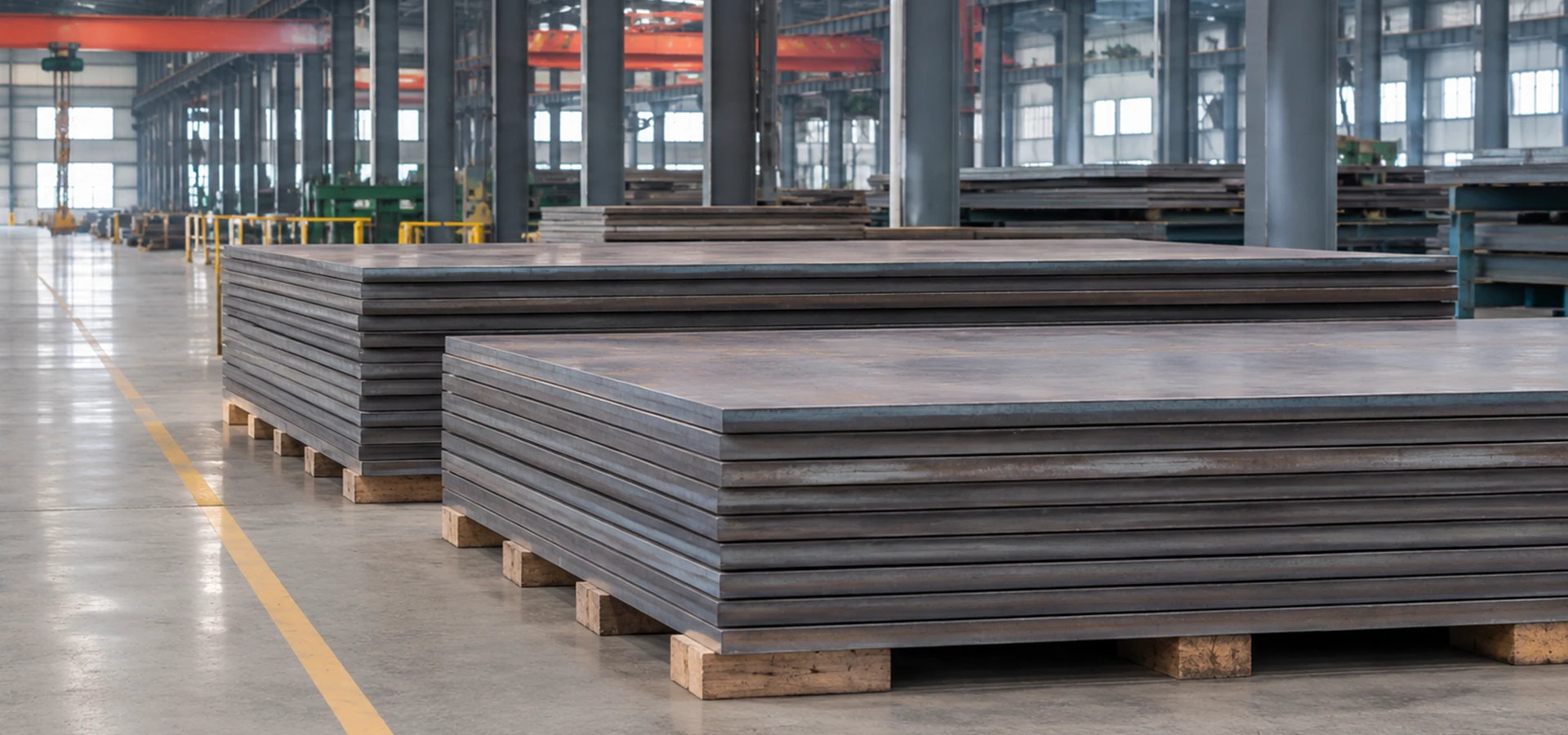
Start with the full designation, mechanical thickness band and required quality class—not only the phrase “Corten steel”.
| Purchase item | Q355NH material / procurement specification |
|---|---|
| Exact product | Q355NH Weathering Steel Plate; specify quality class A, B, C, D or E for required impact properties |
| Governing specification | GB/T 4171-2008 — Atmospheric corrosion resisting structural steel |
| Product form | Hot-rolled plate; the standard covers Q355NH hot-rolled plate and strip up to 100 mm nominal thickness |
| Tensile / yield | 490–630 MPa tensile; minimum yield 355/345/335/325 MPa across four thickness bands |
| Quality designation | For example, Q355NHC (0°C, ≥34 J longitudinal CVN where applicable); confirm full grade on PO and certificate |
| Delivery condition | Hot rolled (AR), controlled rolled (CR) or normalized (N) as ordered and accepted under GB/T 4171 |
| Dimension and tolerances | Thickness × width × length; applicable GB/T 709 or agreed dimensional and flatness tolerances |
| Finish / edges | As-rolled, blast cleaned, painted or separately agreed preweathered finish; cut edges and flatness by purchase order |
| Inspection documents | Heat number, producer, chemistry, mechanical test results, requested impact-grade records and optional supplementary tests |
The standard’s product range and tabulated properties are not a claim that any particular Q355NH thickness, width, quality class or finish is in stock. The producing mill and certified heat must be checked.
GB/T 4171-2008 Table 4 sets four yield-strength and elongation bands. Use the actual plate thickness when qualifying drawings and incoming inspection.
| Thickness, t | Minimum yield (ReL) | Tensile strength (Rm) | Minimum elongation (A) |
|---|---|---|---|
| ≤16 mm | 355 MPa | 490–630 MPa | 22% |
| >16–40 mm | 345 MPa | 490–630 MPa | 22% |
| >40–60 mm | 335 MPa | 490–630 MPa | 21% |
| >60–100 mm | 325 MPa | 490–630 MPa | 20% |
Q355NH plate above 60 mm is specified at 325 MPa minimum yield. A thinner plate up to 16 mm is specified at 355 MPa; the plate schedule must identify each thickness.
Request yield, tensile, elongation and test-lot identification on the mill test certificate. Other dimensional or bend-test requirements should be written into the purchase specification.
Share your drawing or bill of materials and the relevant quality class.
Copper and chromium support atmospheric corrosion resistance. Review the full heat analysis and weld procedure for the particular supplied plate.
| Element | Heat analysis, mass % | Notes |
|---|---|---|
| Carbon, C | ≤0.16 | Maximum |
| Silicon, Si | ≤0.50 | Maximum |
| Manganese, Mn | 0.50–1.50 | Range |
| Phosphorus, P | ≤0.030 | Maximum |
| Sulfur, S | ≤0.030 | Maximum |
| Copper, Cu | 0.25–0.55 | Weathering alloy |
| Chromium, Cr | 0.40–0.80 | Weathering alloy |
| Nickel, Ni | ≤0.65 | Maximum |
GB/T 4171 permits relevant controlled additions such as Nb, V and Ti within prescribed ranges; Mo and Zr may also be added within defined limits. The material certificate records the actual heat analysis.
Use the certified chemistry to evaluate CEV or Pcm for the qualified welding procedure. Specify a project carbon-equivalent ceiling when required; no single universal Q355NH CEV guarantee is assumed on this page.
Q355NH and Q355GNH are distinct GB/T 4171 grades. Do not apply Q355GNH chemical limits, plate thickness scope or equivalent-designation claims to this page.
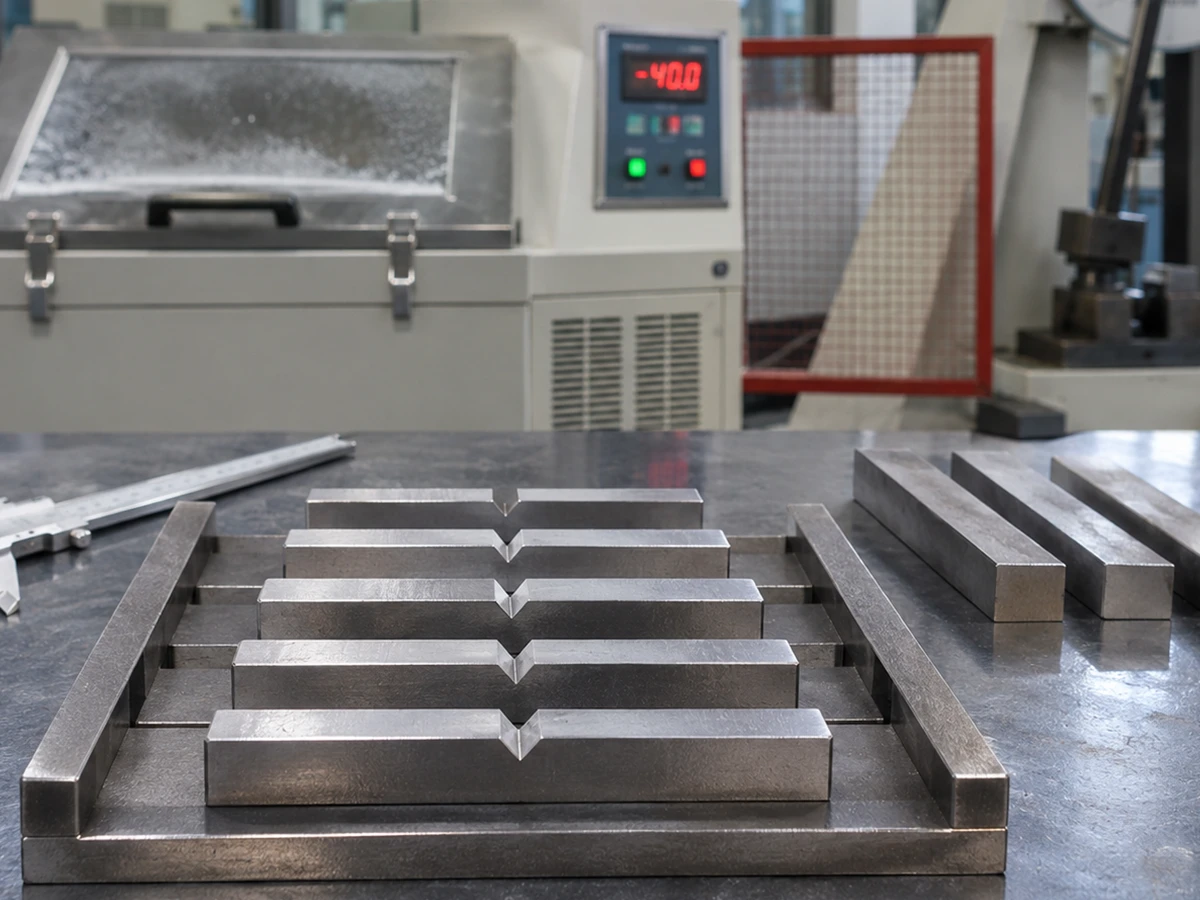
The A/B/C/D/E letter affects impact-temperature and energy acceptance. The purchase order and MTC should identify the full grade, such as Q355NHC or Q355NHD.
| Quality | Test temperature | Minimum KV₂ (average) | Test direction |
|---|---|---|---|
| A | No basic CVN energy specified | — | No standard Charpy minimum |
| B | +20°C | ≥47 J | Longitudinal |
| C | 0°C | ≥34 J | Longitudinal |
| D | −20°C | ≥34 J | Longitudinal |
| E | −40°C | ≥27 J | Longitudinal |
For standard impact testing, steel thickness of 6 mm or more triggers the applicable impact rules. Reduced-size specimens are used for certain gauges below 12 mm, with the relevant reduced-energy acceptance.
Grade C at 0°C and Grade D at −20°C are different contracted qualities. Select the required class and verify the certified test temperature, sample orientation, heat and plate gauge.
Send the full quality grade, plate gauge, required impact energy and any inspection-witnessing request.
A stable protective oxide may develop in suitable air-exposed environments. Site drainage, salts and wet/dry cycling determine whether an unpainted solution is appropriate.
Q355NH is supplied to a weathering-alloy material specification. Newly rolled plate may show scale and uneven surface color. The familiar brown patina forms progressively under suitable exposure rather than arriving fully developed by default.
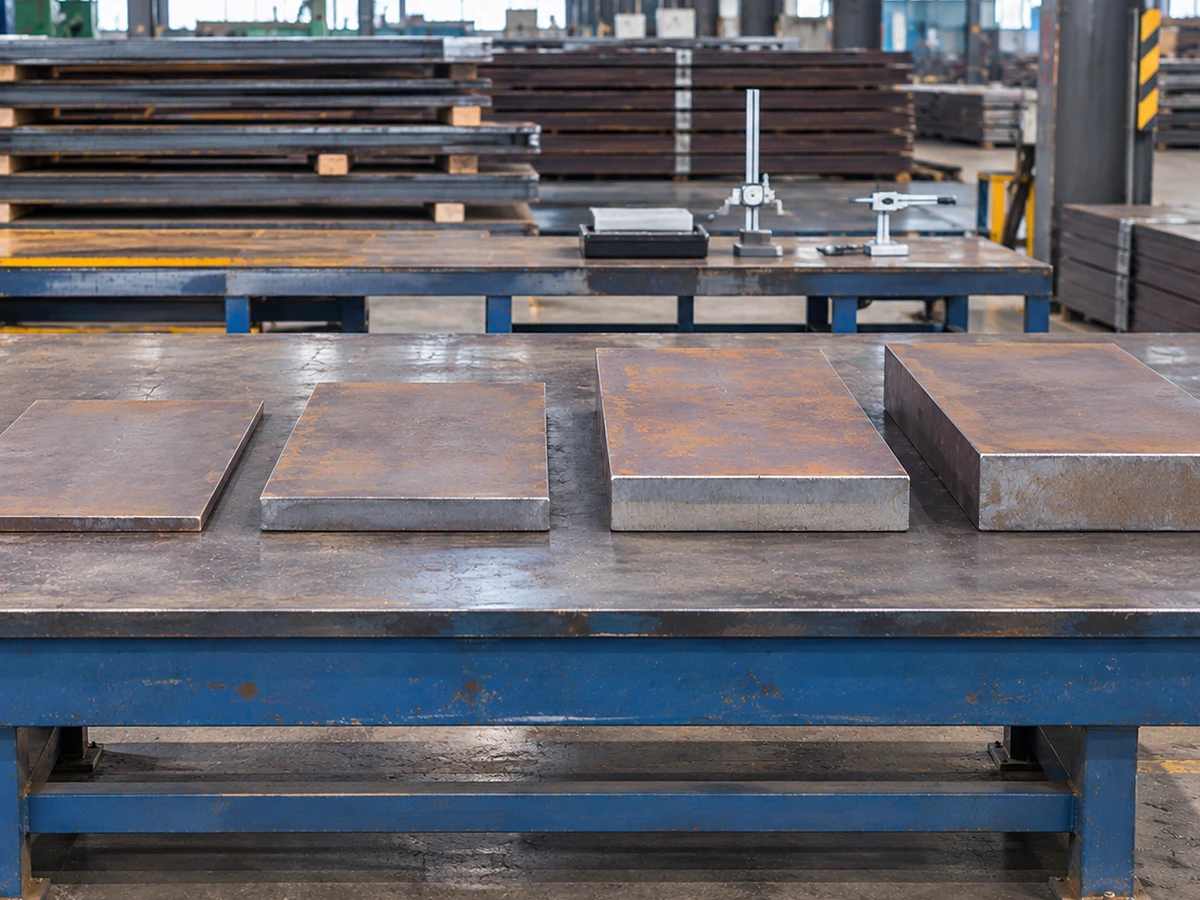
Outdoor structures with alternating wet and dry periods, accessible inspection and suitable detailing are common candidates for weathering-steel design.
Chloride accumulation, stagnant water and repeated long-term wetness can undermine the expected protective behavior. Consider project-specific coating or alternative materials.
Select the material through the governing structural design code and site corrosion assessment, with matching fabrication and inspection requirements.
Girder webs, diaphragms, support stiffeners and structural plates where the design authority approves Q355NH, its test quality and relevant structural requirements.
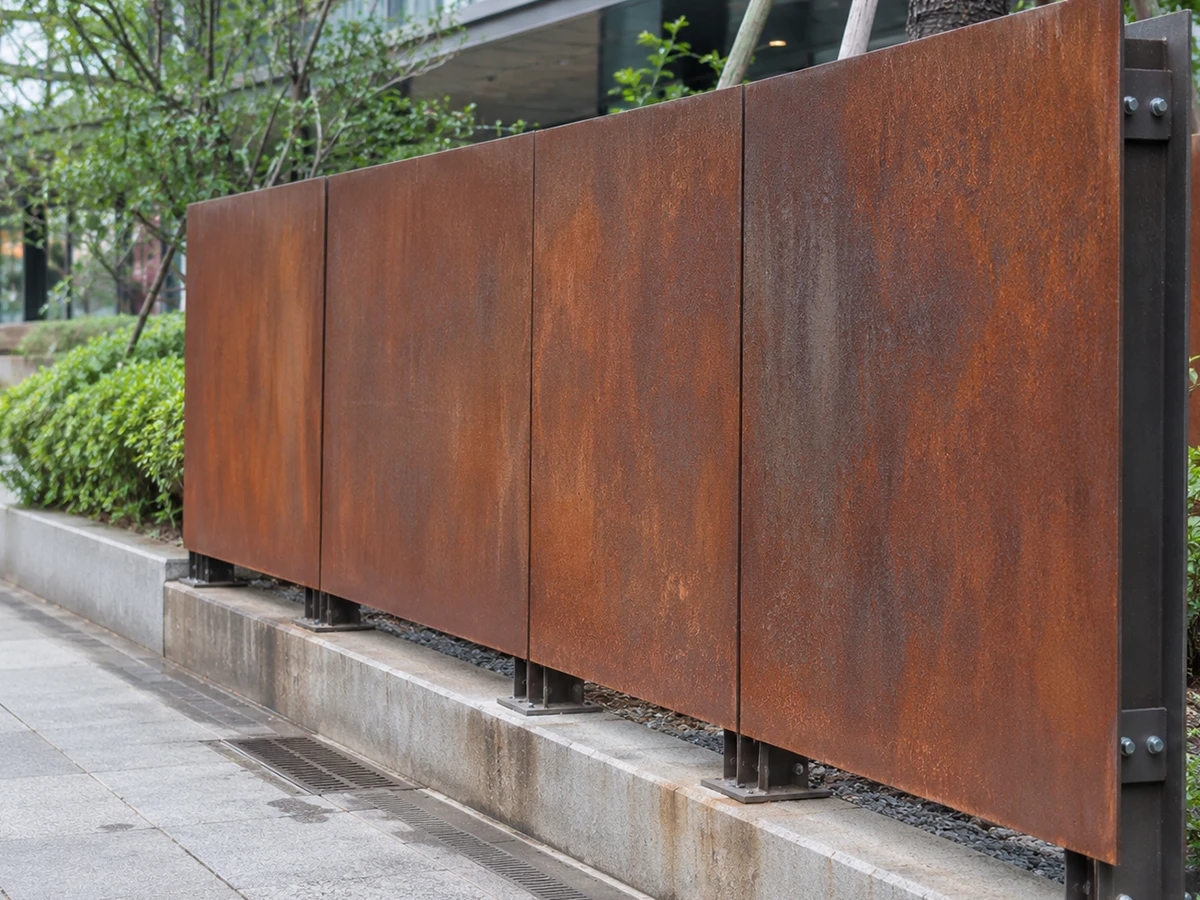
Exterior panels, public structures, screens and art components with defined color expectations, structural support, runoff management and appropriate finish specification.
Outdoor structural parts and fabrication blanks subject to load and environmental assessment.
Exposed brackets, support plates and built-up sections with specified connection details and test records.
Platforms and fabricated frames requiring traceable steel chemistry, mechanical properties and welding qualification.
Panels, structural frames and exterior components where the purchaser accepts the grade and dimensions.
A material-grade callout does not automatically define a finished pre-rusted appearance, paint system or blasted surface.
Mill scale, flatness and edge acceptance are checked against the mill standard and purchase specification.
Quote abrasive blasting and coating separately with surface cleanliness and profile requirements.
If offered, define treatment process, visual acceptance and protective handling instead of assuming a uniform patina.
Use project-approved welding consumables and qualified procedures compatible with plate thickness, actual chemistry and intended exposure.
A Q355NH MTC supports material identity; it does not replace WPS/PQR qualification, weld inspection or the project’s structural code acceptance. Visible joints may require compatible weld-metal weathering behavior.
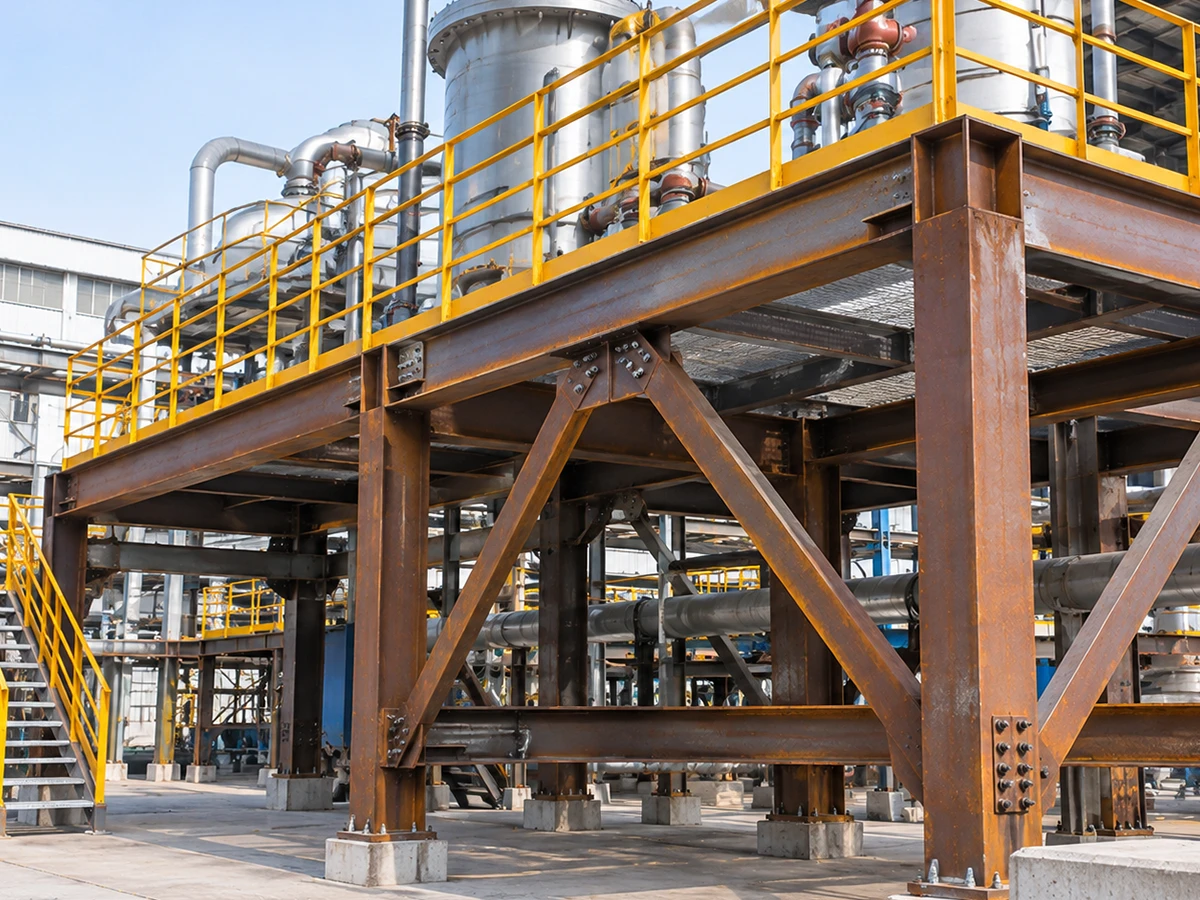
Always verify the named quality class and any impact requirement after thermal cutting and welding. A588 and S355J2W use other acceptance standards and are not automatic replacements.
Source verification, practical order planning and export coordination matter as much as price on a multi-size plate project.
Request Q355NH grade, quality class, mill source and heat or batch identification before quotation.
Check thickness, width, length, tolerance, piece counts and feasible sizes for each purchase.
Align grade-specific tensile, impact tests, mill certificates and any external inspection milestones.
Arrange material markings, packing lists, loading plans and freight terms suited to the actual steel.
BAOSTEEL METAL company-wide operating figures: approximately 8 million MT annual steel output, 1 million MT regular inventory, 500,000 m² operating area and 1,000+ employees. These describe the wider business, not dedicated Q355NH production capacity or on-hand stock.
A proposed grade or size does not prove immediate inventory. Verify the mill rolling plan, exact chemistry and quality class before allocation.
Send one purchasing list showing thickness, width, length, quality class and required quantities. We can evaluate approved mill options, any stock allocation, cutting scope and timing against the actual materials available.
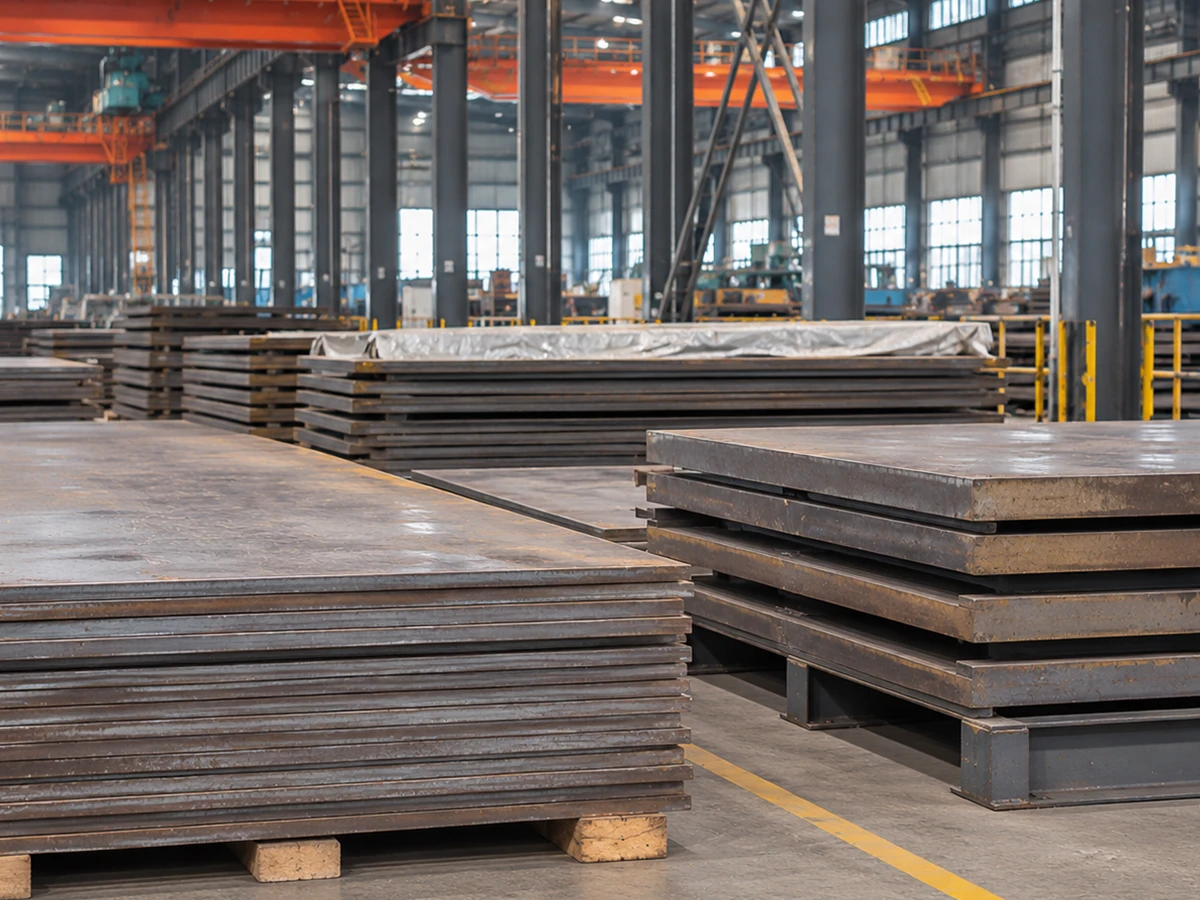
Documentation needs to identify the actual steel heat, mechanical properties and requested quality designation.
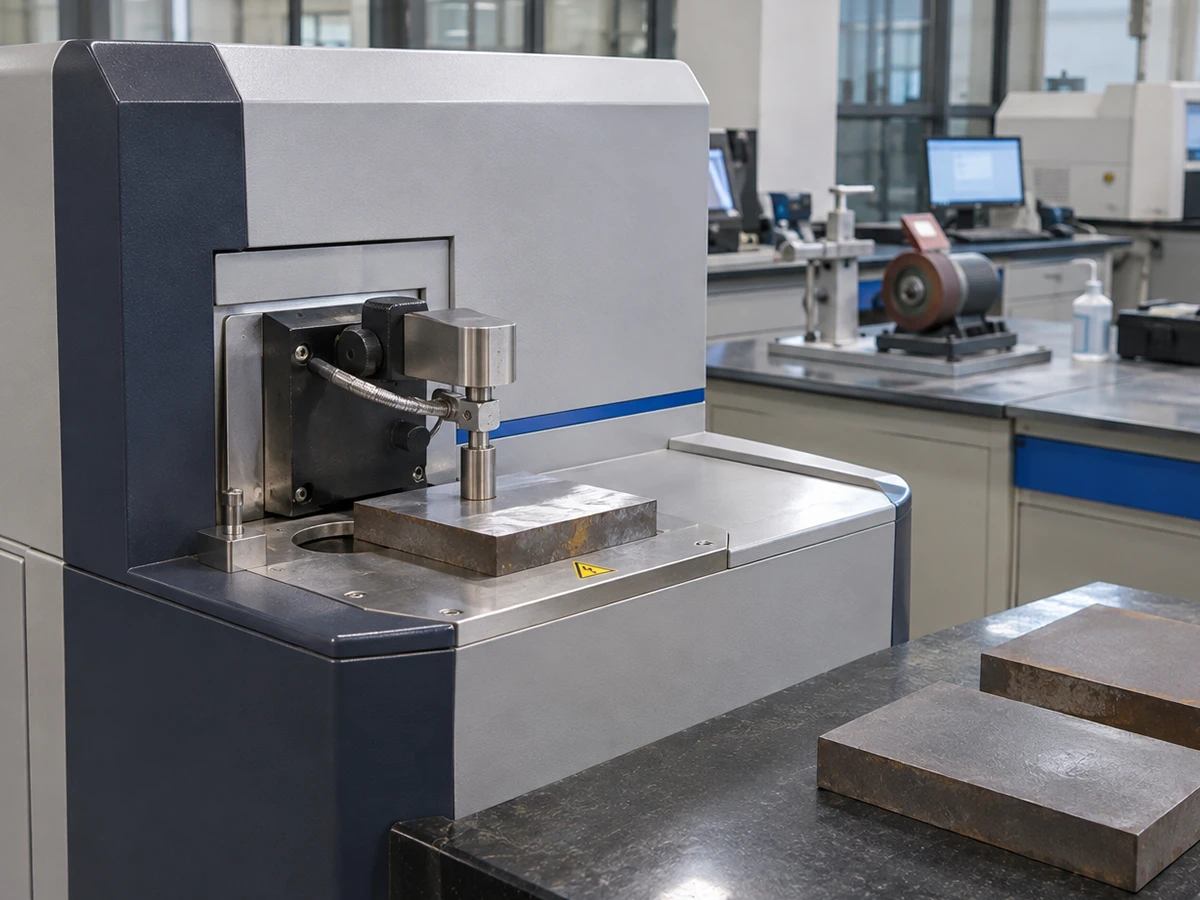
Estimate procurement tonnage from dimensions in millimetres and plate quantity. The calculation uses 7,850 kg/m³ as a nominal carbon and low-alloy steel density.
Formula: thickness × width × length (mm³) × 7.85 × 10⁻⁶ = approximate kilograms per plate. The 100 mm cap reflects the standard Q355NH plate scope, not confirmed mill availability.
Optional cutting is quoted based on available workshop capacity, plate gauge, approved cutting drawings and heat-traceability controls.
Plasma cutting where compatible with gauge, contour accuracy and heat-affected-edge acceptance.
Flame profiles and coarse blanks subject to thickness, tolerance and edge-preparation requirements.
Quote drilling, bevels and part identification to approved cut lists where offered.
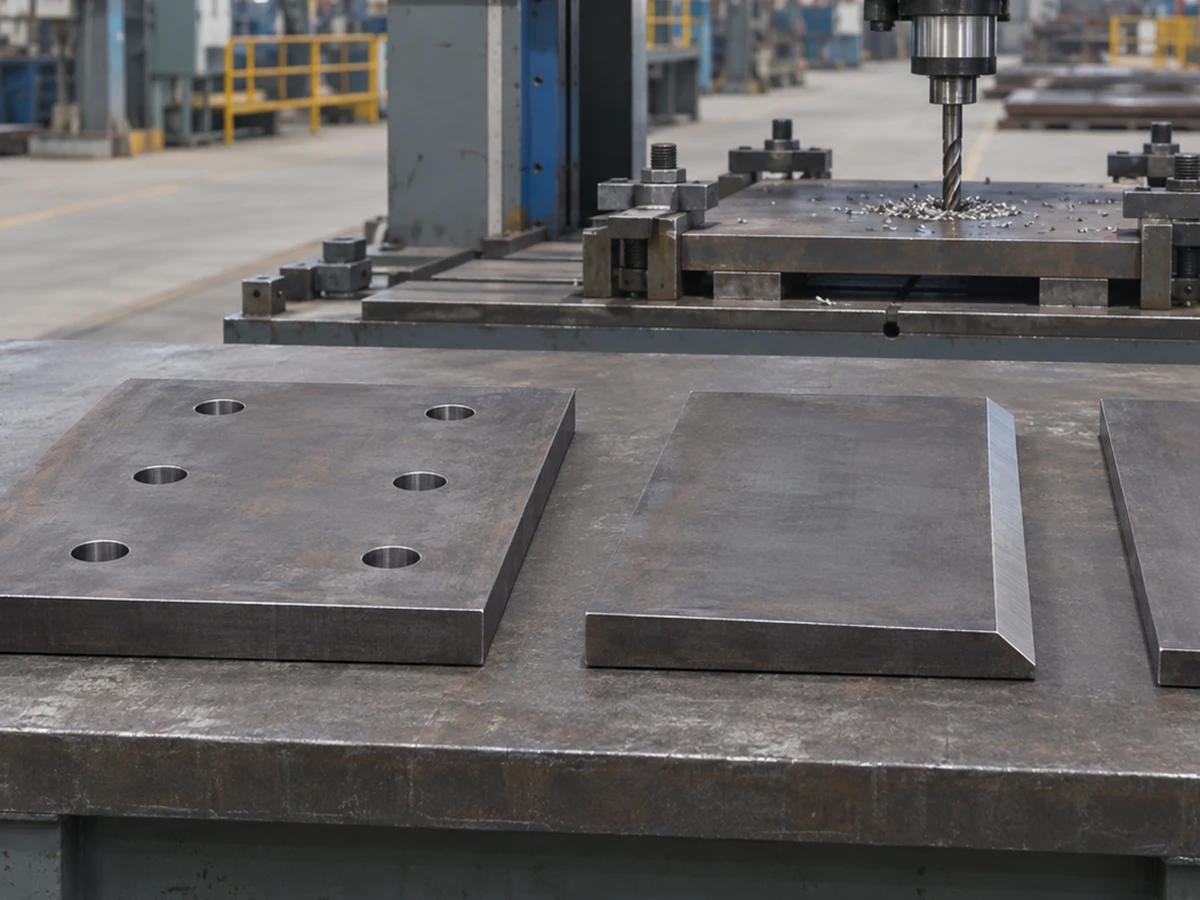
Cut-to-size service is optional and must be confirmed. Preserve heat traceability and agree visible edge condition for exposed weathering components.
Export preparation balances plate flatness, traceability, bundle weights and the ordered surface finish.
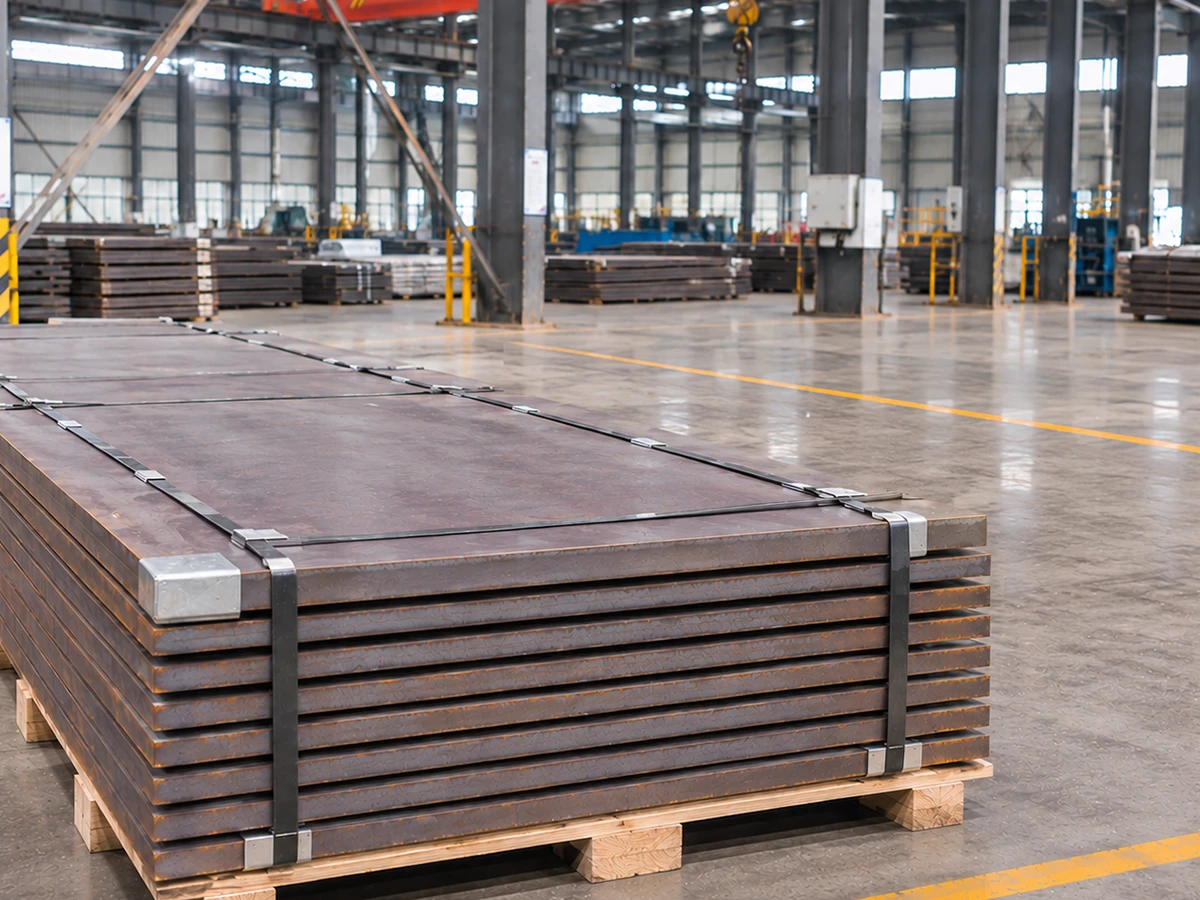
Plate and cut-piece packing can be arranged with suitable supports, secure strapping, corrosion and handling protection where specified, and clear identifiers tied to the ordered heat numbers.
Material comparison is for procurement screening. Engineering approval is required before changing standards, strength class, quality grade or corrosion requirements.
ASTM weathering structural plate with different chemistry and ASTM acceptance rules.
EN 10025-5 weathering structural steel; J2 impact and European certification are separate requirements.
High-weathering GB/T 4171 grade with different composition and delivery range; do not confuse with Q355NH.
Lower-yield GB/T 4171 weathering steel option, subject to structural redesign.
Conventional HSLA structural grade without the same Q355NH weathering alloy requirement.
Structural steel commonly used in other projects; not an automatic outdoor-corrosion substitute.
Internal product links should be added only after the corresponding WordPress pages are published. The Weathering Steel Plate category page is intentionally skipped in the current build sequence.
Choose the quality grade and product thickness first. Our response can then check supply routes, certification and export preparation.
It is a weldable atmospheric corrosion-resisting structural steel plate covered by GB/T 4171-2008. Strength requirements depend on thickness, and impact acceptance depends on the selected quality class.
GB/T 4171-2008 specifies 355 MPa through 16 mm, 345 MPa above 16–40 mm, 335 MPa above 40–60 mm and 325 MPa above 60–100 mm.
Only when the correct quality designation is specified. For example, Grade D requires longitudinal Charpy ≥34 J at −20°C; Grade C instead uses ≥34 J at 0°C.
Both appear in GB/T 4171, but Q355NH is the weldable-weathering grade and Q355GNH the high-weathering route with different chemical limits and product coverage.
No. Mill-delivered plate may carry ordinary hot-rolled scale; natural patina forms with appropriate outdoor wet/dry exposure, while a preweathered finish is a separately specified processing service.
Chloride exposure, prolonged moisture, drainage and structural detailing require a project assessment. Some conditions call for coating or a different material.
They are not automatically equivalent. The design engineer must review the exact standards, properties, quality class, corrosion behavior, welding and test requirements.
GB/T 4171 permits relevant hot-rolled, controlled-rolled or normalized routes for hot-rolled steel; specify the delivery condition in the order and MTC.
Ask for a mill test certificate listing the full grade and quality class, heat number, chemistry, thickness-dependent tensile values and the required impact test results, with any supplementary inspection agreed in advance.
Send the exact quality designation, thickness/width/length, quantity, finish, exposure conditions, delivery state, required tests, destination and Incoterm.
Send GB/T 4171-2008, the full impact quality class, plate sizes and quantity, finish, MTC requirements, project exposure and destination. We will review material source, processing options and quotation details.
Send your required grade, dimensions, quantity and destination. Our team will review the inquiry.