Global Steel Supply & Processing
Deformed Carbon Steel Reinforcing Bar · Grade 60 [420] · ASTM A615/A615M-26
Source ASTM A615 Grade 60 deformed rebar for concrete reinforcement. Specify bar designation, cut length, tonnage, required mill test documentation and destination for a precise quotation.
Check ASTM bar sizes and weights ↓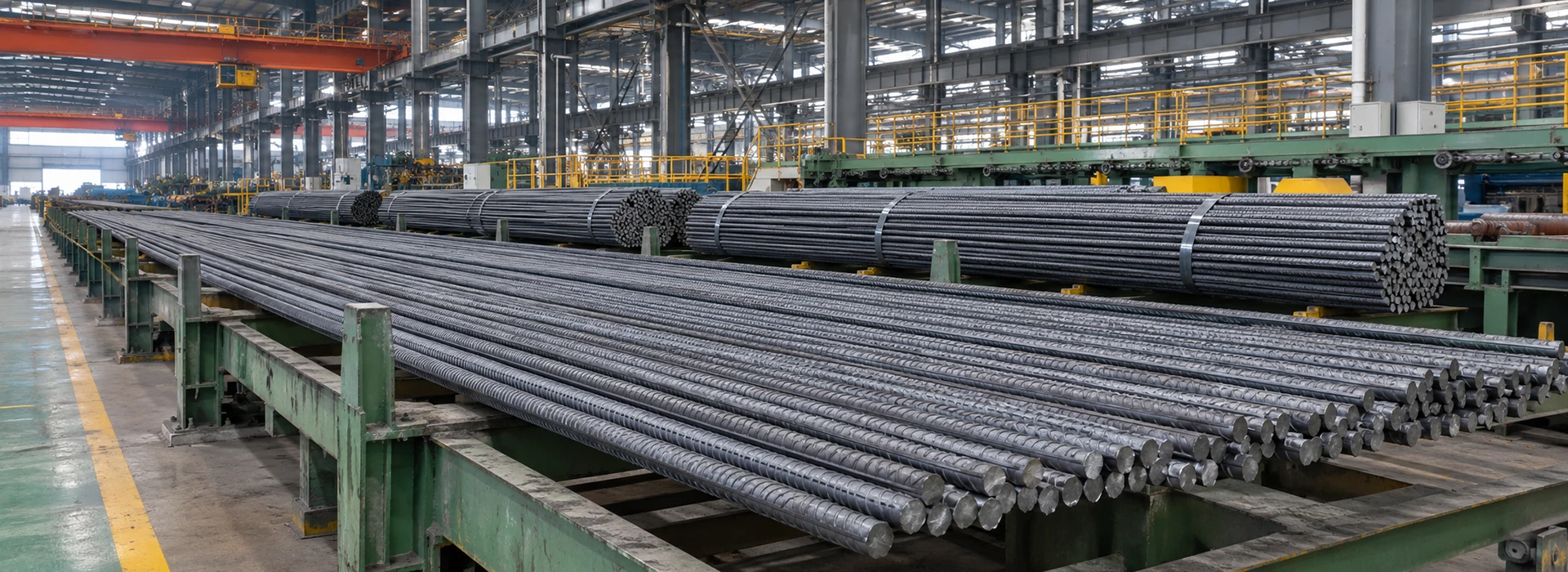
Identify the specified rebar type and strength grade before confirming sizes, lengths, bending and documentation requirements.
Standard deformed reinforcing bars in straight lengths or suitable coil forms, ordered by bar size, grade and finished length. Availability, packing and testing scope are confirmed for each enquiry.
Bar number (for example, #4 / No. 13), Grade 60, quantity in metric tons or number of bars, cut length, intended delivery port, mill test certificate and any special bend or marking requirements.
Use these fields to compare offers across mills and prevent confusion between grade, bar size, surface condition and delivery format.
| Product | Deformed carbon-steel reinforcing bar for concrete |
| Grade | ASTM A615 Grade 60 [420] |
| Current ASTM Edition | ASTM A615/A615M-26; contract edition to be confirmed |
| Bar Designation | #3 through #11; #14 and #18 by enquiry; other applicable sizes subject to confirmation |
| Surface | Ribbed / deformed, mill finish |
| Supply Form | Cut straight lengths; coils for suitable sizes subject to availability |
| Length | 6 m, 9 m, 12 m or project-specific lengths by agreement |
| Nominal Mass | Based on ASTM bar size designation and table values |
| Quality Documents | Heat traceability, MTC and inspection scope as required by contract |
| Quotation Basis | Exact size / length / tonnage / port / delivery term |
Deformed bars are identified by ASTM nominal bar sizes. The quoted nominal diameter is an equivalent round-bar diameter, while the transverse ribs project beyond the base surface.
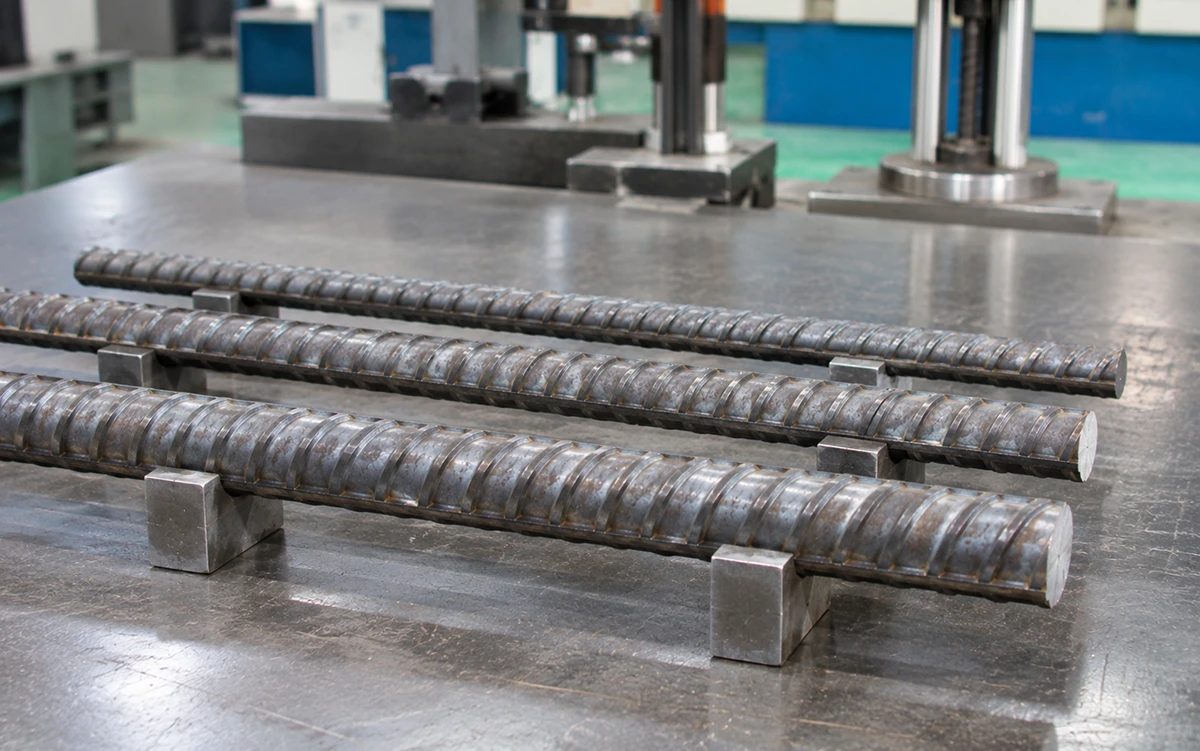
Compare common inch-pound rebar numbers with nominal diameter, cross-sectional area and reference mass. The calculator below uses the table's nominal mass.
| ASTM Bar No. | SI Designation | Nominal Diameter (in) | Approx. Diameter (mm) | Area (in²) | Nominal Weight (lb/ft) | Approx. Mass (kg/m) |
|---|---|---|---|---|---|---|
| #3 | No. 10 | 0.375 | 9.5 | 0.11 | 0.376 | 0.560 |
| #4 | No. 13 | 0.500 | 12.7 | 0.20 | 0.668 | 0.994 |
| #5 | No. 16 | 0.625 | 15.9 | 0.31 | 1.043 | 1.552 |
| #6 | No. 19 | 0.750 | 19.1 | 0.44 | 1.502 | 2.235 |
| #7 | No. 22 | 0.875 | 22.2 | 0.60 | 2.044 | 3.042 |
| #8 | No. 25 | 1.000 | 25.4 | 0.79 | 2.670 | 3.973 |
| #9 | No. 29 | 1.128 | 28.7 | 1.00 | 3.400 | 5.060 |
| #10 | No. 32 | 1.270 | 32.3 | 1.27 | 4.303 | 6.404 |
| #11 | No. 36 | 1.410 | 35.8 | 1.56 | 5.313 | 7.906 |
| #14 | No. 43 | 1.693 | 43.0 | 2.25 | 7.650 | 11.383 |
| #18 | No. 57 | 2.257 | 57.3 | 4.00 | 13.600 | 20.240 |
Approximate metric dimensions and weights are shown for procurement planning; select one ASTM unit system for contractual conformance. Nominal diameter is not the measured outside diameter over the deformations. Larger sizes may require special order confirmation.
Provide bar designation, length, piece count or tonnage for each line item.
Structural rebar is purchased by specified grade and test criteria. These are reference minimum values from recent ASTM A615 editions; verify the exact requirements of the ordered edition.
| Bar Designation | Reference Minimum Elongation in 8 in. | Applicable Condition |
|---|---|---|
| #3–#6 | 9% | Grade 60 reference requirement |
| #7–#8 | 8% | Grade 60 reference requirement |
| #9–#18 | 7% | Grade 60 reference requirement |
State Grade 60, the contract's ASTM A615/A615M edition and any project-specific tests. Mill test reports should identify the heat and appropriate tensile, yield and elongation results.
Deformations, bend performance and identification matter for receiving inspection as well as the concrete reinforcement schedule.
| Bar Size | Reference Pin Diameter |
|---|---|
| #3–#5 | 3.5 × nominal bar diameter |
| #6–#8 | 5 × nominal bar diameter |
| #9–#11 | 7 × nominal bar diameter |
| #14–#18 | 9 × nominal bar diameter |
Representative bend-test pin ratios from a published ASTM A615 edition; bend angle and any changes in the ordered edition must be confirmed. These are laboratory test conditions, not automatic field bend instructions.
Rebar is commonly identified by producing mill, bar size, steel type and grade. An “S” denotes ASTM A615 carbon-steel rebar; a “W” denotes ASTM A706 low-alloy material. Check markings alongside the supplied documents.
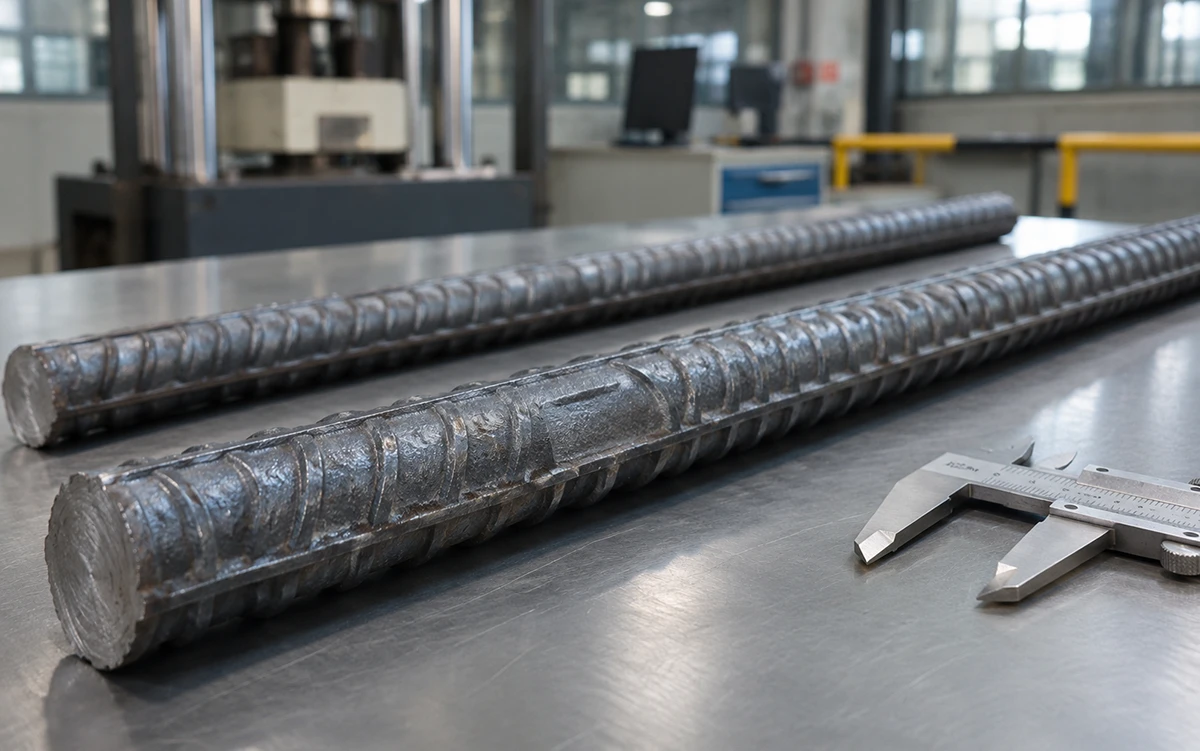
Grade 60 can use a numerical designation or the applicable longitudinal grade line. Receiving teams should match the product marking, bar tags and MTC.
Include bend-test documentation, deformation tolerances and marking requirements in the purchase enquiry.
Specify straight lengths or coils with the bar designation and confirm acceptable packing for your site or stockholding operation.
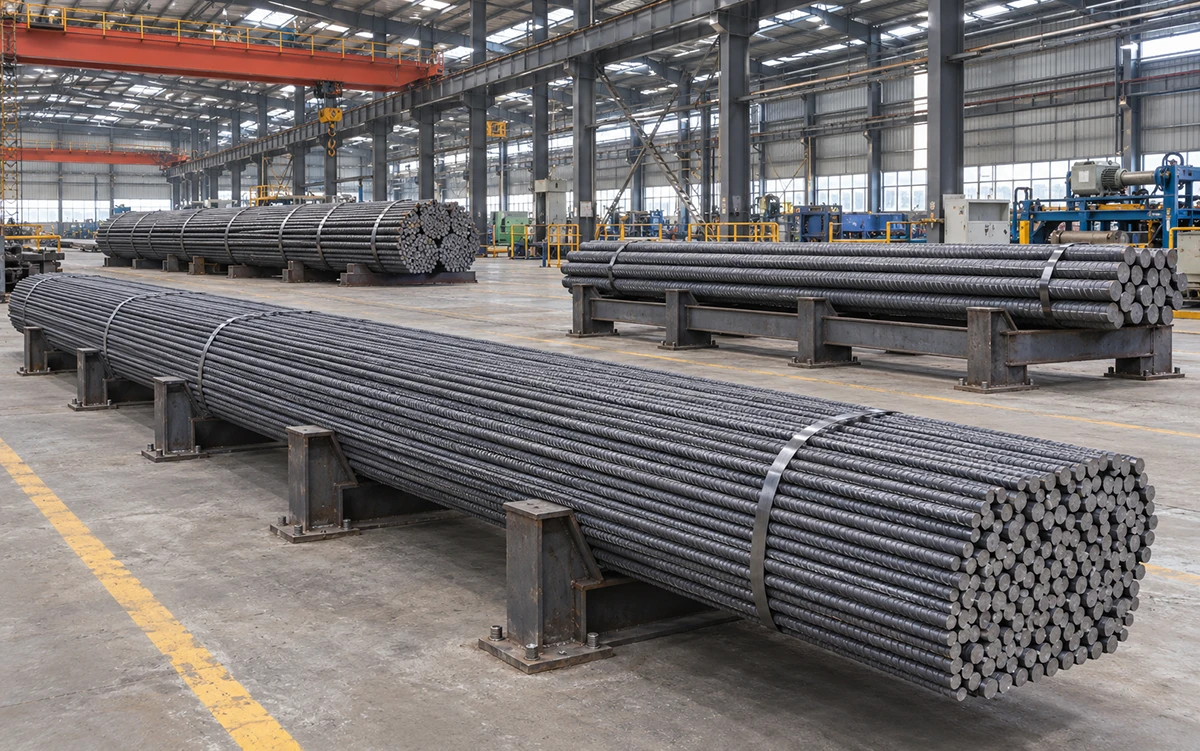
Cut-length deformed bars for reinforcement schedules, fabrication shops and reinforcement stockists.
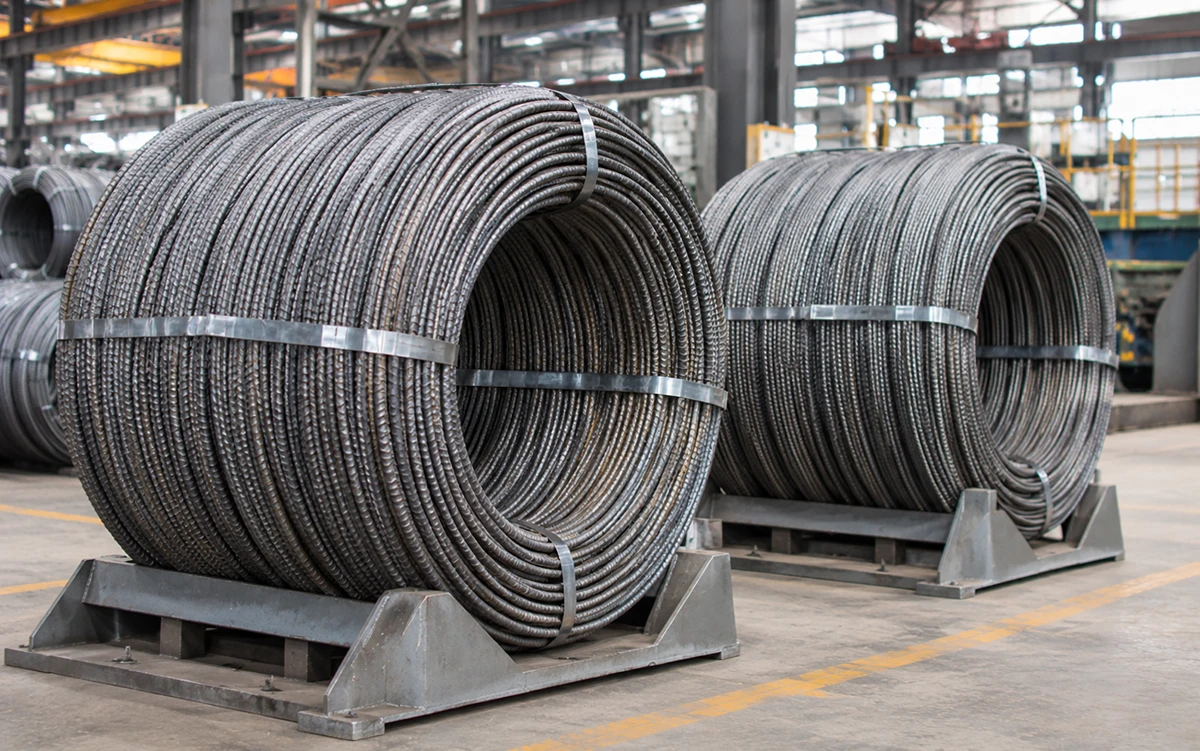
Coils may suit certain smaller bar sizes and fabrication methods. Confirm size and supply feasibility before ordering.
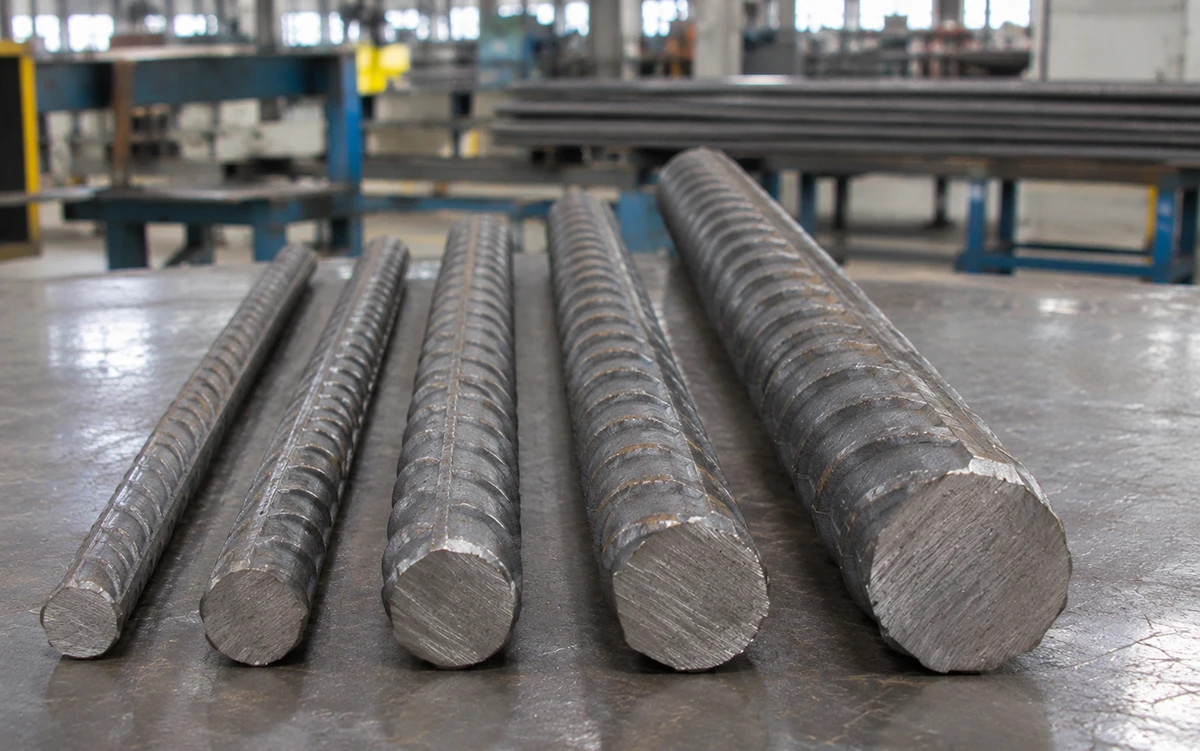
Deformations are controlled by the material specification; inspect end condition, markings and overall bar quality.
Mixed-size orders can be reviewed for bundling and shipment planning.
Deformed bars reinforce structural concrete in projects where the engineer of record specifies the applicable grade, design provisions and detailing.
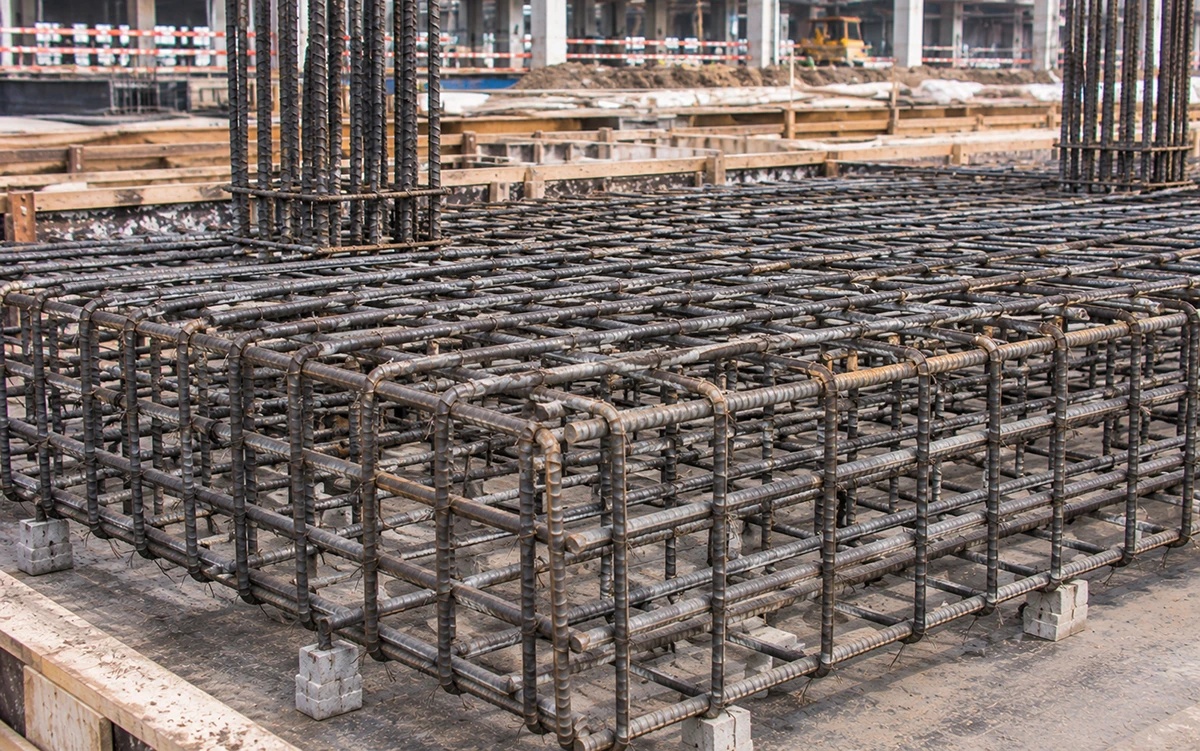
Rebar mats and cages for reinforced-concrete foundation systems.
Concrete bridge elements where project specifications permit Grade 60 reinforcement.
Scheduled longitudinal and transverse reinforcement for designed members.
Bar placement according to engineered lap, cover and confinement details.
Factory-prepared reinforcing arrangements for approved precast products.
Reinforcement schedules for infrastructure and equipment foundations.
Final rebar grade, placement, anchorage, field bending, seismic detailing and weldability must follow engineering documents and governing construction codes.
Compare the purchasing intent rather than treating grade names as interchangeable certificates or fabrication permissions.
Carbon-steel deformed reinforcing bar with a 60 ksi minimum specified yield level. General structural use as permitted by the project design and governing standards.
See Grade 60 sizes ↗Legacy Grade 75 [520] material appears in older specifications. Confirm the project-required edition and an acceptable current grade designation before ordering.
Review Grade 75 requirements ↗Low-alloy reinforcing bars with more controlled chemistry and tensile properties for applications requiring enhanced weldability or specified deformation behavior.
Compare A706 Grade 60 ↗The current ASTM A615/A615M-26 scope lists Grades 40, 60, 80 and 100, rather than legacy Grade 75. Check the engineering specification before procuring a Grade 75-labelled product under a newer edition.
Scale, order coordination and documented requirements help support contractors, fabricators and international steel distributors.
Actual annual steel production across the wider business; specific rebar supply is confirmed against the requested standard and sizes.
Company-wide steel inventory across product families, with current rebar sizes and grades checked for each enquiry.
Agree grade, heat traceability, chemical analysis, tensile and bend acceptance with the purchase order.
Coordinate bundle lengths, marking, packing lists and shipping terms for project and distributor requirements.
Ask our sales team to review your rebar schedule and delivery destination.
Estimate order tonnage by selected ASTM bar number. The tool uses reference nominal kg/m values, not the measured ribbed outer diameter.
Nominal planning value; rounding and tolerances mean dispatch mass can differ. Confirm contractual unit system, bundle counts and weighbridge or certified weights as required.
Mass per metre × bar length × number of bars = total kilograms. Divide by 1,000 for metric tons. The mass per metre is selected from the reference ASTM bar-size table.
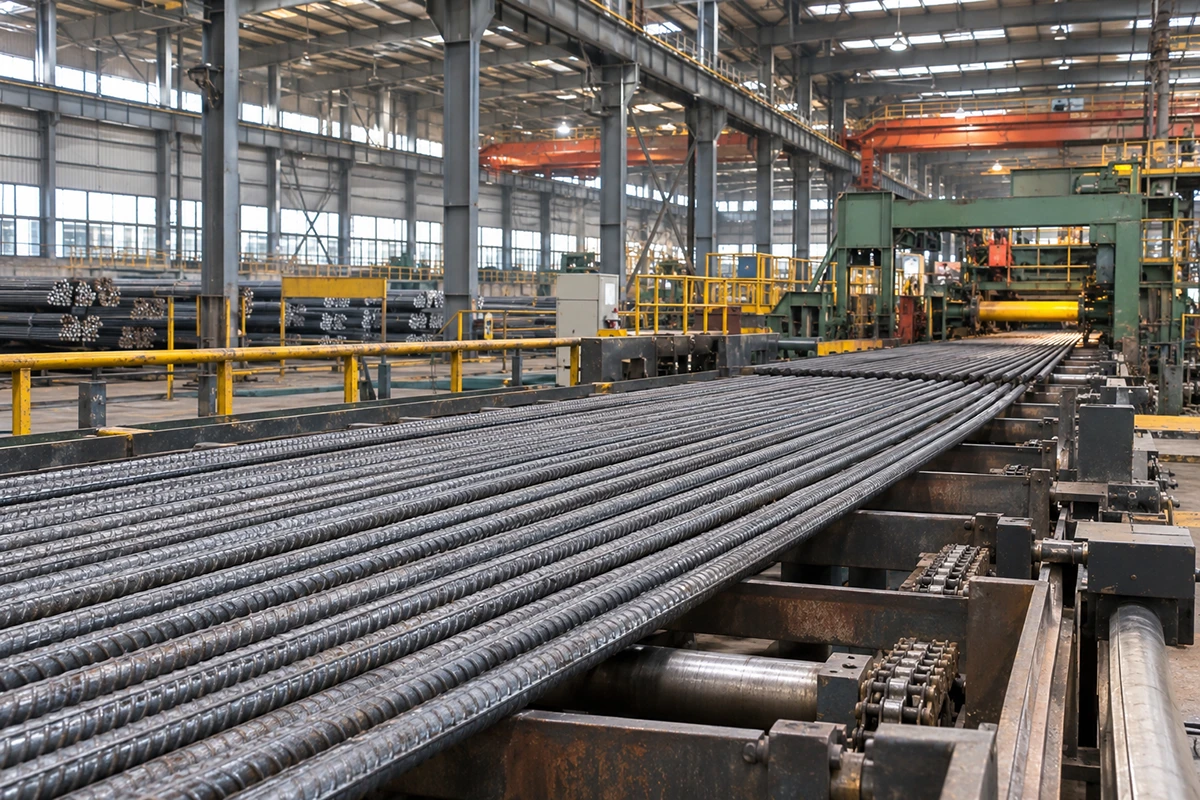
Deformed reinforcement bars are hot rolled, finished and grouped for shipment to order requirements. Confirm the standard and size before mill scheduling or warehouse allocation.
BAOSTEEL METAL maintains 1 million metric tons of regular steel inventory across its combined product categories. Specific ASTM A615 Grade 60 rebar availability depends on bar size, length and requested quantity.
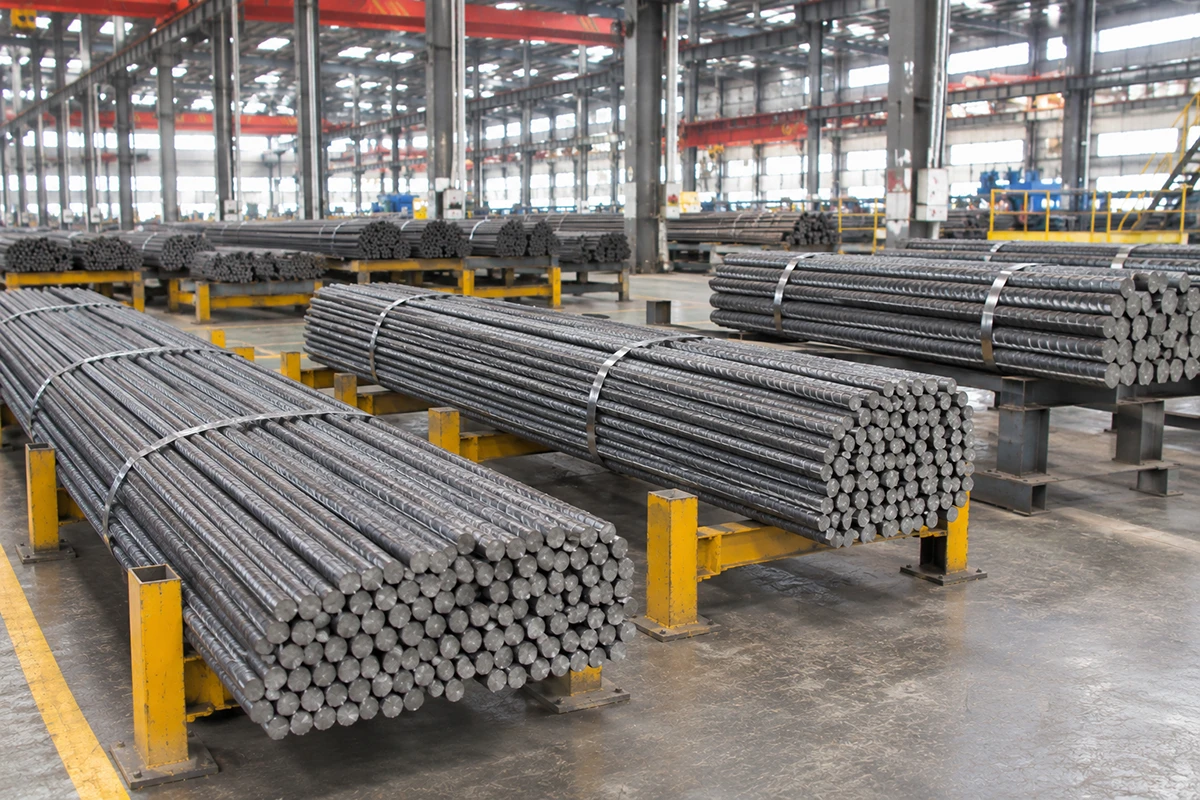
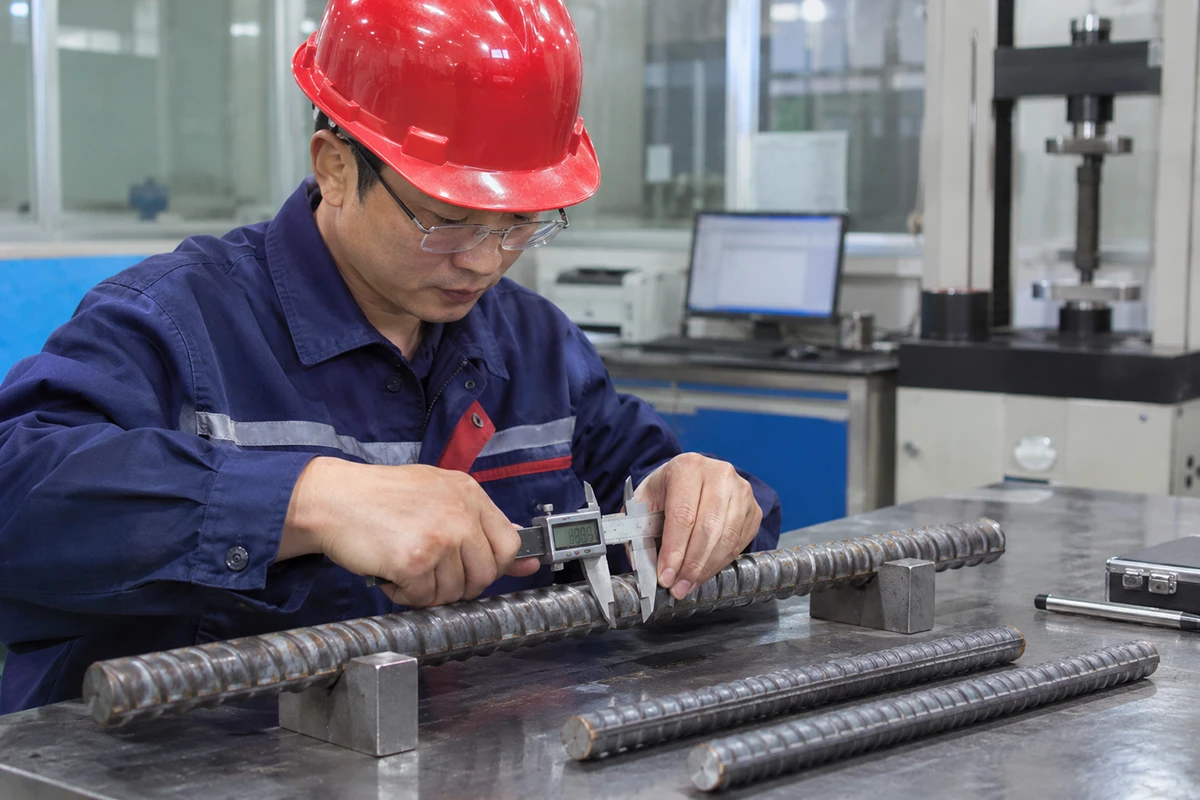
Agree the mill test certificate and inspection scope before shipment. Relevant records can include the specified ASTM edition, bar identification and heat-specific testing data.
Where required, send bar schedules and approved construction drawings with the quotation. Processing options are confirmed by bar size, specification and order scope.
Review straight bar cut lengths and bundle segmentation for transport and site handling.
Fabrication bends may be arranged only against approved bar-bending schedules, engineering details and applicable bend rules.
Bundle identification by bar number, heat or schedule item to simplify receiving and fabrication operations.
Site bending and welding require engineer-approved methods and governing code compliance. ASTM A615 Grade 60 does not carry the same controlled weldability provisions as ASTM A706; do not assume the two grades are interchangeable.
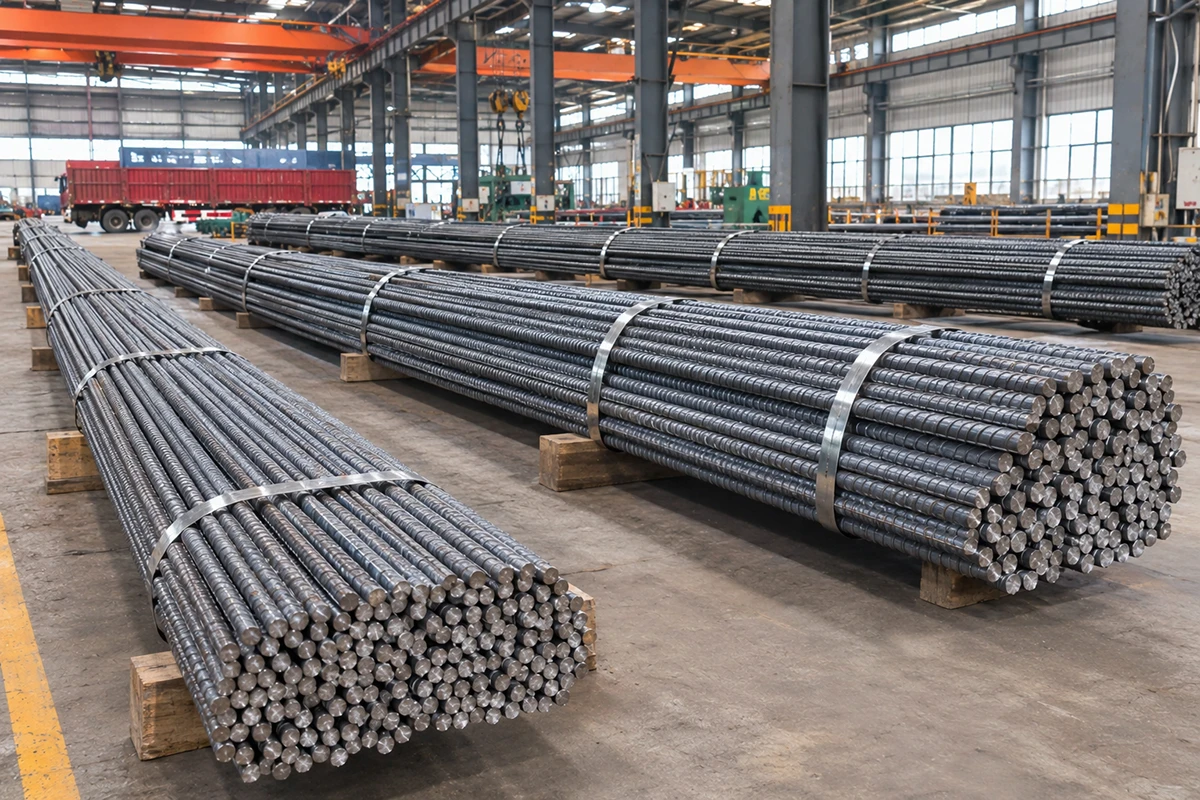
Reinforcing bars can be organized by size, length and heat information for project receiving. Packing is selected according to bundle weight, loading method, transport constraints and contract terms.
Review another reinforcement specification or return to the broader steel product families.
Practical answers for distributors, civil contractors and reinforcing bar fabricators.
Grade 60 is designated by a specified minimum yield strength of 60,000 psi, corresponding to Grade 420 in the SI designation system. Check the contracted ASTM edition for complete acceptance requirements.
They are ASTM nominal rebar size designations. #4 has a nominal diameter of 0.500 in and approximate mass of 0.994 kg/m; #5 has a nominal diameter of 0.625 in and approximate mass of 1.552 kg/m. Ribbed outside dimensions differ from the nominal diameter.
No. Both share a 60 ksi minimum specified yield designation, but A706 includes controlled chemistry and additional mechanical requirements to support specified weldability and ductility applications. Follow the engineered project specification.
Weldability is not guaranteed solely by the A615 designation. Welding requires a reviewed procedure, suitable chemistry data, applicable welding rules and engineer approval. For weldability-focused projects, evaluate ASTM A706 Grade 60.
Select the ASTM bar number and multiply nominal mass in kg/m by bar length in metres and the number of bars. Divide the resulting kilograms by 1,000 to estimate metric tons. The on-page calculator automates this.
Send the ASTM standard edition, Grade 60, exact # bar designation, length, required tonnage or piece count, MTC and inspection requirements, delivery port and preferred delivery time.
Send your required grade, dimensions, quantity and destination. Our team will review the inquiry.