BAOSTEEL METAL / SEISMIC-GRADE REINFORCEMENT

HRB400E Steel Rebar

HOT-ROLLED RIBBED REBAR · GB 1499.2-2024 · E-GRADE DUCTILITY CONTROLS

GB 1499.2-2024HRB400E / 4E markingNominal Ø6–50 mm*MTC by Heat / Lot
Seismic-performance rebar gradeProject & bulk supply
REINFORCEMENT FOR SPECIFIED PROJECT REQUIREMENTS

Verify seismic-grade properties before procurement.

Source HRB400E deformed reinforcement with specified 400 MPa minimum yield strength, controlled actual strength ratios and at least 9% total elongation at maximum force. Send your bar schedule, delivery location and inspection requirements for a grade-specific quotation.

WhatsAppEmail
Review E-Grade Mechanical Criteria ↓
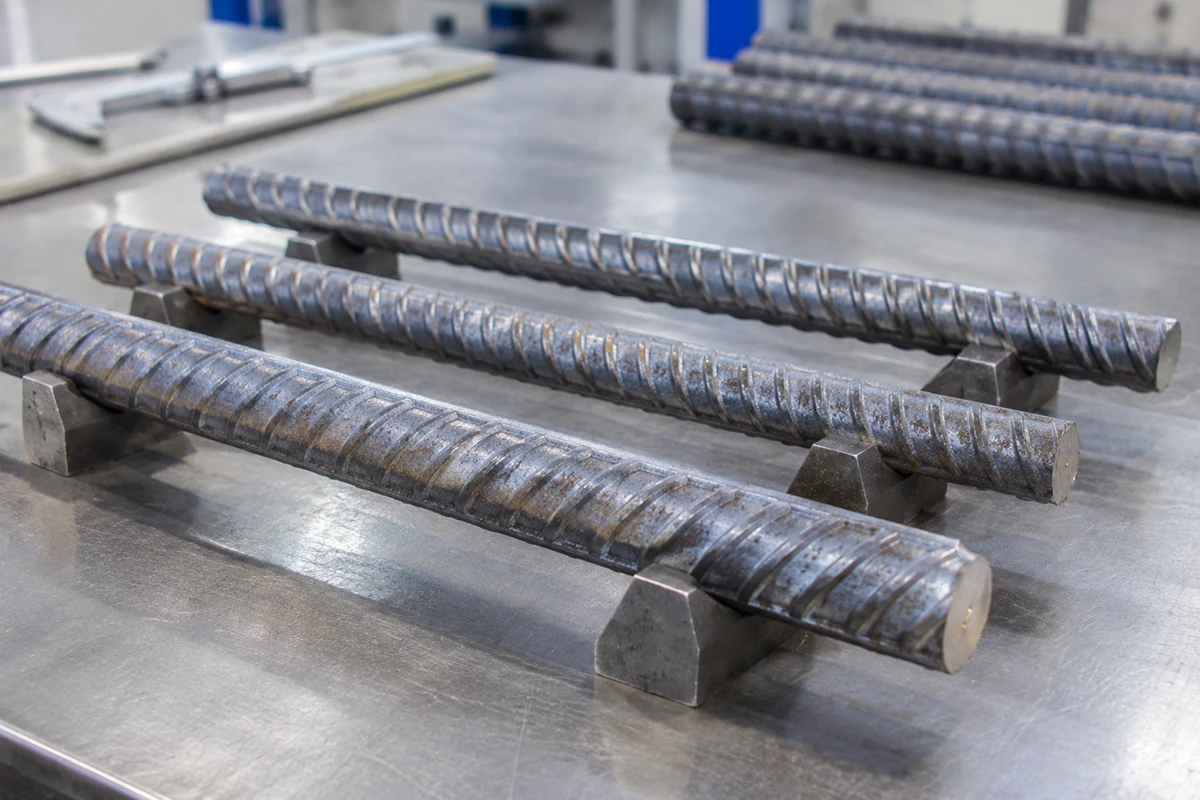
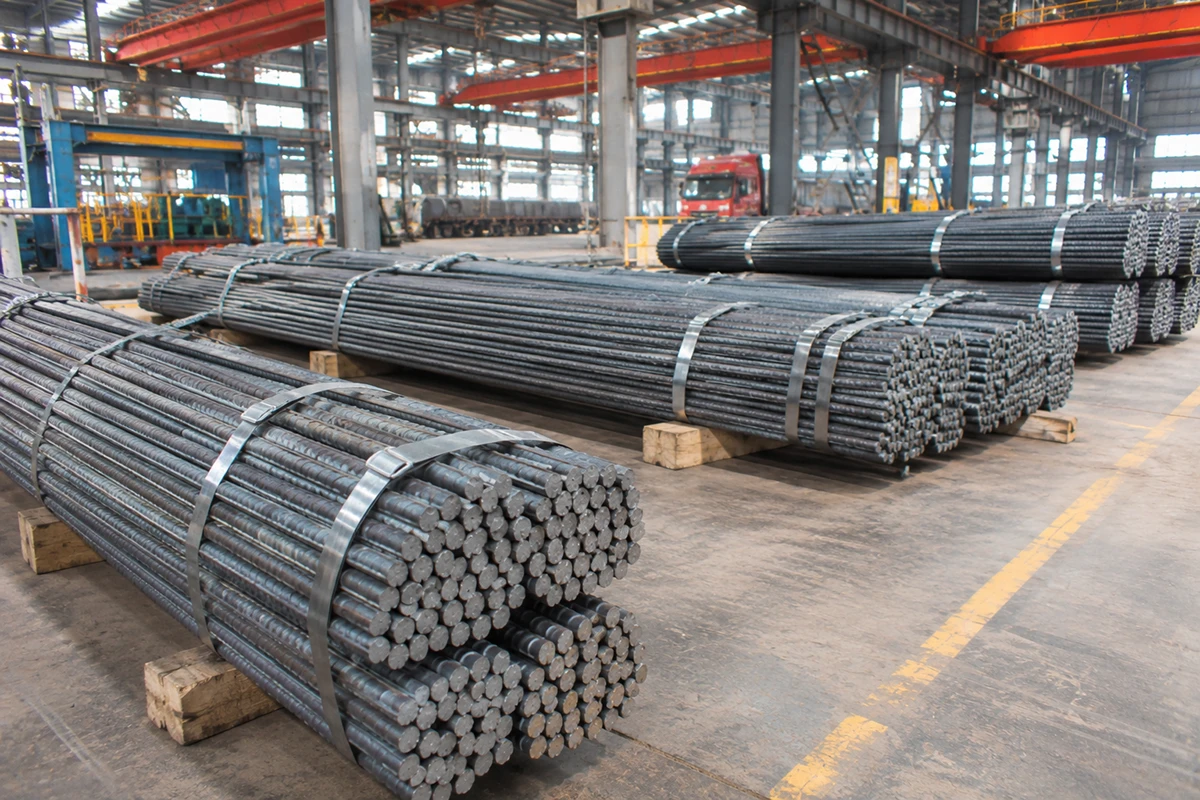
Authentic ribbed HRB400E steel rebar bundles for seismic grade reinforcement procurement

* Standard nominal diameter range; each diameter, straight-bar or coil format and volume are subject to actual supply confirmation.

8 Million MTActual annual steel output across product categories
1 Million MTCombined regular steel inventory across product categories
500,000 m²Factory area
1,000+Employees supporting manufacturing operations
E-GRADE REINFORCEMENT

What Makes HRB400E Steel Rebar Different?

The “E” designation adds specified ductility, actual strength-ratio controls and reverse-bend testing to the 400 MPa grade.

HRB400E Under GB 1499.2-2024

HRB400E is a hot-rolled ribbed reinforcing steel bar with 400 MPa minimum lower yield strength and extra E-grade performance requirements under the current compulsory Chinese standard. Its specified actual tensile-to-yield ratio, actual-to-characteristic yield ratio and elongation at maximum force are procurement acceptance criteria verified by batch testing.

Current standard: GB 1499.2-2024, effective 25 September 2024, replaced GB/T 1499.2-2018. Project drawings and local design codes determine the permitted rebar grade and connections.

Three Controls to Check on the MTC

Grade name alone is insufficient for E-grade verification. Request the actual yield, ultimate tensile and elongation data, and check the required ratios against the specified standard.

≥1.25Measured tensile strength ÷ measured yield strength
≤1.30Measured yield strength ÷ 400 MPa grade value
≥9.0%Total elongation at maximum force, Agt
Ordering rebar for an engineered seismic application?

Submit the approved grade, diameter-by-diameter schedule, MTC scope and applicable design requirements.

PROCUREMENT SPECIFICATION

HRB400E Steel Rebar Specifications

Confirm the E-grade designation, GB 1499.2-2024 edition and testing requirements in purchase documents.

ItemHRB400E reference
ProductHot-rolled ribbed reinforcing steel bar, E-grade
Main standardGB 1499.2-2024
Full gradeHRB400E (not HRB400 or HRBF400E)
Surface grade mark4E, with producer identification and nominal bar diameter
Nominal diameters6–50 mm in standard; confirm each diameter before ordering
Reference supply formStraight bars; coils only in eligible sizes subject to production confirmation
Bar lengthsLength by contract; specify cut lengths and tolerances
SurfaceAs-rolled ribbed bar, without coating unless separately agreed
InspectionTensile, actual strength ratios, Agt, bend, reverse-bend, chemical and dimension/mass checks
Material documentsHeat/lot-traceable mill test certificate; additional inspections by contract
LogisticsBundled and tagged by grade and diameter; order-specific shipping plan

What to Include in Your RFQ

  • Specify HRB400E to GB 1499.2-2024 and any additional project code.
  • Provide all nominal diameters, bar lengths, quantities and bundle requirements.
  • Request 4E rolled markings and traceable test records for the agreed lots.
  • Specify the E-grade ratio checks, Agt values and bend / reverse-bend acceptance.
  • Confirm destination, delivery terms, required inspection witness and shipping schedule.
Avoid substituting HRB400, HRBF400E, ASTM A615 or ASTM A706 solely on nominal yield-strength similarity. Obtain the design engineer’s written approval for any alternate grade.
Close-up of HRB400E steel reinforcing bar transverse ribs and genuine rolled surface
DIMENSIONS & THEORETICAL MASS

HRB400E Rebar Size & Weight Chart

Nominal bar size is used for theoretical mass and purchasing calculations. Rib geometry means the measured external diameter is different from the nominal diameter.

Nominal Ø (mm)Nominal area (mm²)Theoretical mass (kg/m)12 m bar (kg)*Supply
Ø628.270.2222.664Verify availability
Ø850.270.3954.740Verify availability
Ø1078.540.6177.404Verify availability
Ø12113.10.88810.656Verify availability
Ø14153.91.2114.520Verify availability
Ø16201.11.5818.960Verify availability
Ø18254.52.0024.000Verify availability
Ø20314.22.4729.640Verify availability
Ø22380.12.9835.760Verify availability
Ø25490.93.8546.200Verify availability
Ø28615.84.8357.960Verify availability
Ø32804.26.3175.720Verify availability
Ø3610187.9995.880Verify availability
Ø4012579.87118.440Verify availability
Ø50196415.42185.040Verify availability

The theoretical weights follow the GB 1499.2-2024 nominal-mass series based on a reference density of 7.85 g/cm³. *12 m values are arithmetic estimates, not a stock-length commitment. Actual mass, tolerances and quantity acceptance follow the signed order and applicable standard.

Ordering multiple diameters?

Send one line per diameter, length and tonnage for a clearer factory quotation.

E-GRADE MECHANICAL CONTROL

HRB400E Mechanical & Seismic Performance

GB 1499.2-2024 defines the minimum strengths, elongation requirement and limits based on actual test results.

Swipe the table sideways to see test requirements and verification notes →

CriterionSymbol / calculationGB 1499.2-2024 requirementVerification note
Lower yield strengthReL≥400 MPaFor no distinct yield, use permitted proof strength Rp0.2.
Tensile strengthRm≥540 MPaMinimum specified ultimate tensile strength.
Total elongation at maximum forceAgt≥9.0%E-grade ductility check; referee testing uses Agt.
Measured tensile / measured yield ratioR0m / R0eL≥1.25Use actual test values, not 540 ÷ 400.
Measured yield / standard yield ratioR0eL / 400≤1.30Controls excessive actual yield relative to the 400 MPa specified grade.
Elongation after fractureANo separate numeric E-grade minimum in 2024 Table 6A and Agt are different measures; verify test reporting per standard and order.

Interpretation: These are GB 1499.2-2024 reference acceptance values, not test data for a specific heat. Check the MTC, batch identification and any tighter structural-design requirements. The 1.25 ratio is evaluated using the two measured strengths; it cannot be inferred simply from the minimum specified strengths.

400 MPa

Minimum specified yield

540 MPa

Minimum specified tensile

9.0%

Minimum Agt for E grade

1.25 / 1.30

Lower / upper measured-strength ratio limits

HEAT ANALYSIS

HRB400E Chemical Composition & Carbon Equivalent

Chemical limits in GB 1499.2-2024 apply to the HRB400E grade group and support grade traceability.

Element or calculationHeat analysis maximum
Carbon, C0.25%
Silicon, Si0.80%
Manganese, Mn1.60%
Phosphorus, P0.045%
Sulfur, S0.045%
Carbon equivalent, Ceq0.54%

Maximums refer to heat analysis in the standard. Product-analysis deviations are governed by the applicable clauses; tighter purchaser limits must be agreed in writing.

Inspection and Connection Planning

Supply documents should connect the heat or batch chemical-analysis results to the delivered 4E-marked rebar. The specified carbon-equivalent calculation is:

Ceq = C + Mn/6 + (Cr + V + Mo)/5 + (Cu + Ni)/15

Connection suitability is controlled by approved construction procedures, not by the chemical composition table alone. The applicable design and the requirements for welded or mechanical splices must be followed.

  • Confirm the material analysis from the relevant production heat.
  • Check tensile ratios, Agt and reverse-bend tests in addition to chemistry.
  • Specify any supplementary weld or splice tests in the project contract.
IDENTIFICATION & BEND TESTING

Bend, Reverse-Bend & 4E Mill Markings

The reverse-bend requirement is an important part of verifying HRB400E as an E-grade bar.

Diameter-Specific Laboratory Mandrels

Nominal bar diameter180° bend mandrelReverse-bend mandrel
Ø6–25 mm4d5d
Ø28–40 mm5d6d
Ø>40–50 mm6d7d

d means nominal bar diameter. For E grades, the specified reverse-bend mandrel is one nominal diameter larger than the matching 180° bend-test mandrel. No surface cracks are permitted after the prescribed standard tests. These values describe laboratory tests, not field bending schedules.

Look for the 4E Surface Grade Mark

GB 1499.2-2024 identifies HRB400E with the rolled grade mark 4E, alongside the producer identifier and nominal diameter. Compare the actual rolled mark with the bundle tag and the MTC.

Actual 4E HRB400E rebar rolled grade marking with mill identification and nominal diameter

Use genuine mill-marking photography; do not place artificial grade lettering or graphics on the image.

BULK SUPPLY FORMATS

HRB400E Rebar Forms & Practical Handling

Reinforcing bar format affects unloading, bending schedules, storage, freight capacity and site preparation.

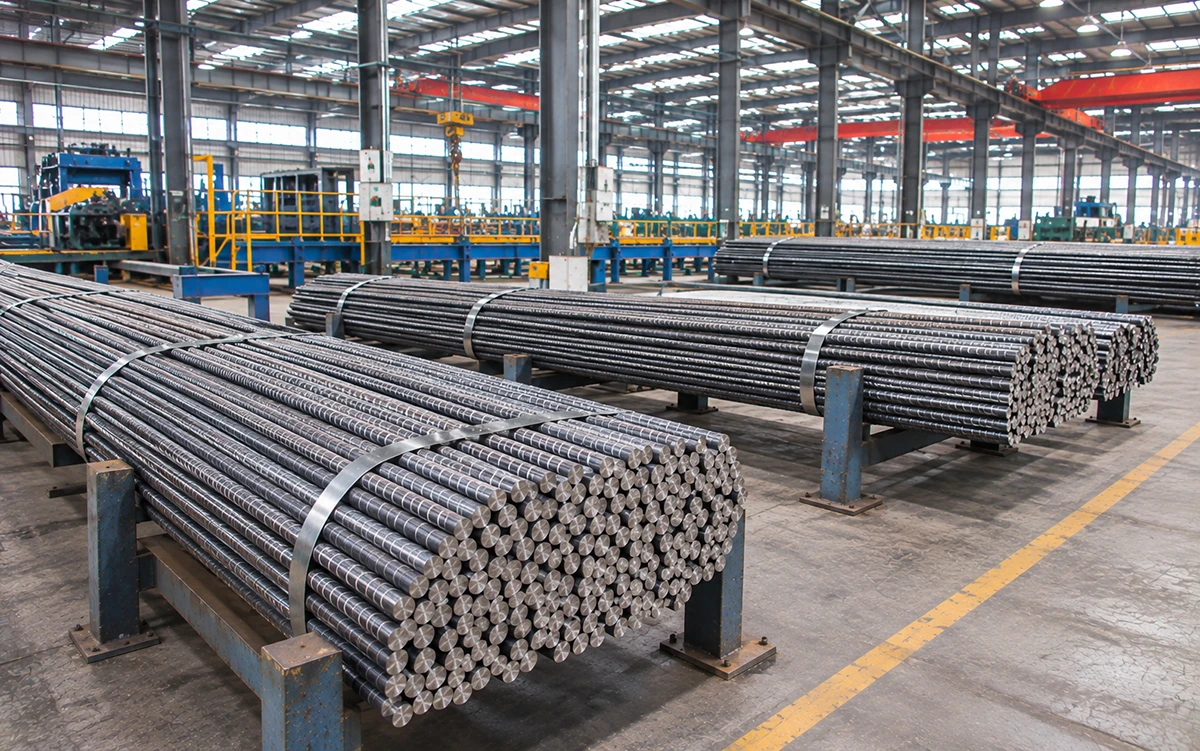
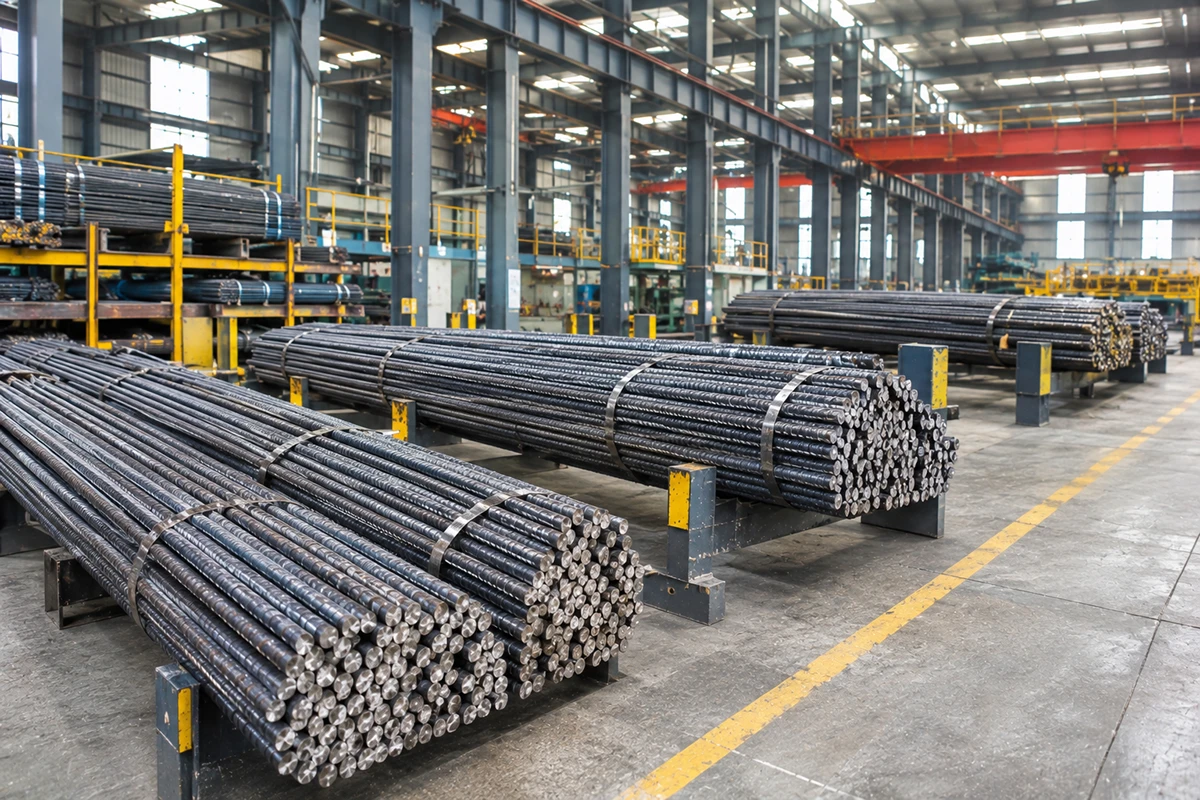
Straight lengths of HRB400E seismic grade ribbed steel reinforcement in strapped industrial bundles

Straight Rebar

Straight bars for cut-and-bend schedules, concrete foundations, columns and other site reinforcement work. Confirm fixed lengths and diameter-specific bundles.

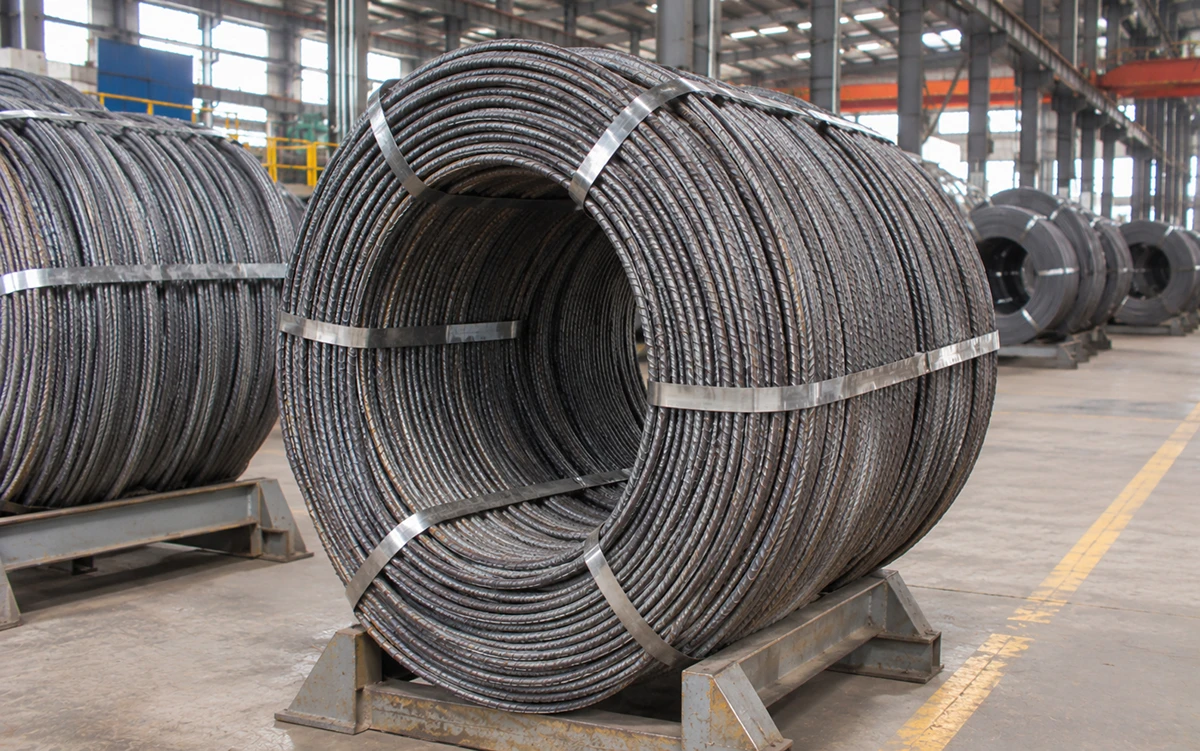
Coiled hot rolled ribbed steel reinforcing bar in an industrial mill storage yard, eligible sizes only

Coils, Where Applicable

Coiled material can support continuous processing or automated straightening on eligible sizes. Coil capability, size range and handling rules must be checked by enquiry.

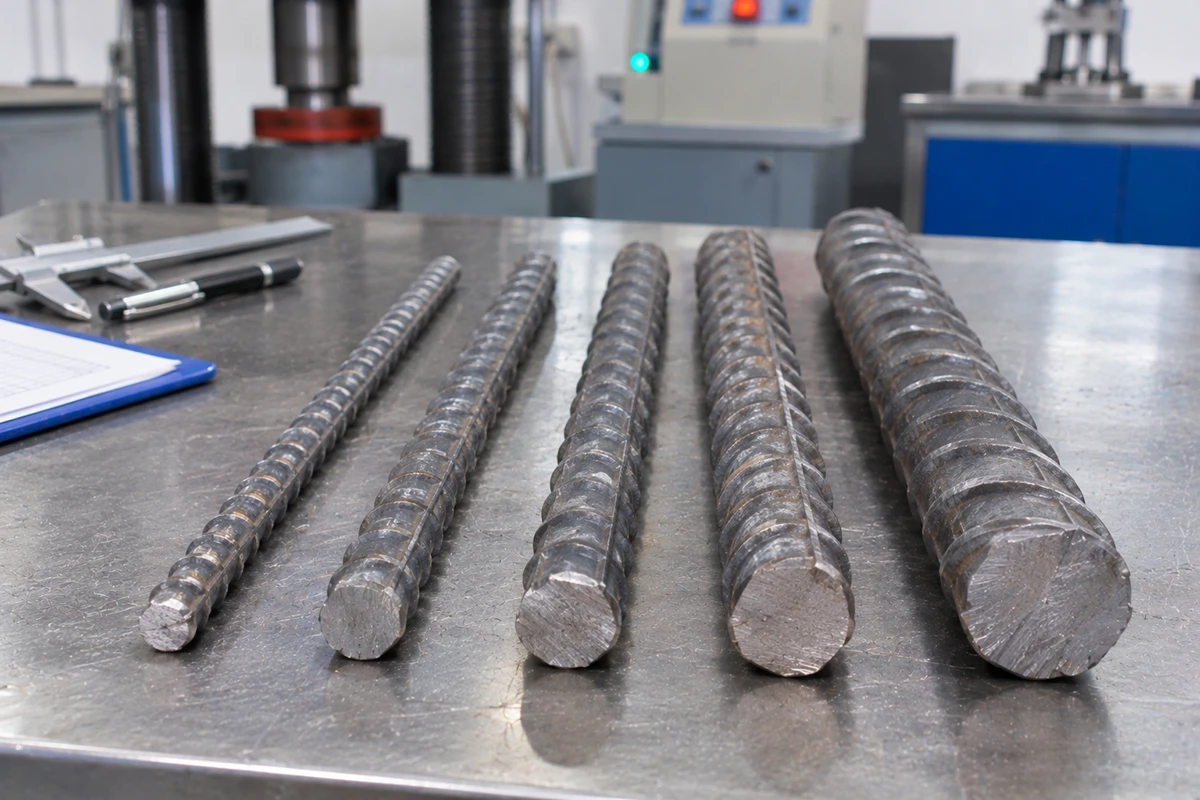
True cross sections and rib profile of hot rolled E grade deformed steel reinforcement

Rib Profile & Bar Ends

Deformations, bar ends, nominal-mass compliance and rolled marking are among the physical characteristics checked when receiving steel reinforcement.

ENGINEERED USE

Where HRB400E Rebar Is Specified

Use in seismic-designated reinforcement depends on local codes, structural design, detailing and verified lot acceptance.

01 / STRUCTURAL FRAMES

Reinforced Concrete Frames

Longitudinal reinforcement for concrete beams, columns and frame elements where the design specifies an E-grade bar.

02 / CONNECTION ZONES

Beam–Column Joints

Bar schedules for reinforced concrete frame connections and other designed ductility-critical regions.

03 / WALL SYSTEMS

Shear Walls & Cores

Vertical and horizontal reinforcement details for engineered wall systems, subject to structural drawings.

04 / PRECAST WORKS

Precast Rebar Cages

Cut, bundled and traceable E-grade reinforcement for prefabricated concrete assemblies.

05 / CIVIL ENGINEERING

Specified Infrastructure

Infrastructure concrete members where HRB400E grade and testing are required by project documents.

06 / DISTRIBUTION

Project Steel Distribution

Grade-separated, clearly marked diameter-based deliveries for contractors and steel distributors.

Engineering Acceptance Comes First

HRB400E has E-grade material requirements, but structural seismic performance also depends on proper member design, reinforcement placement, anchorage, joints and construction quality. Match each item to the engineer’s approved schedule.

This supplier page provides material procurement information; it is not a design approval or site-fabrication instruction.
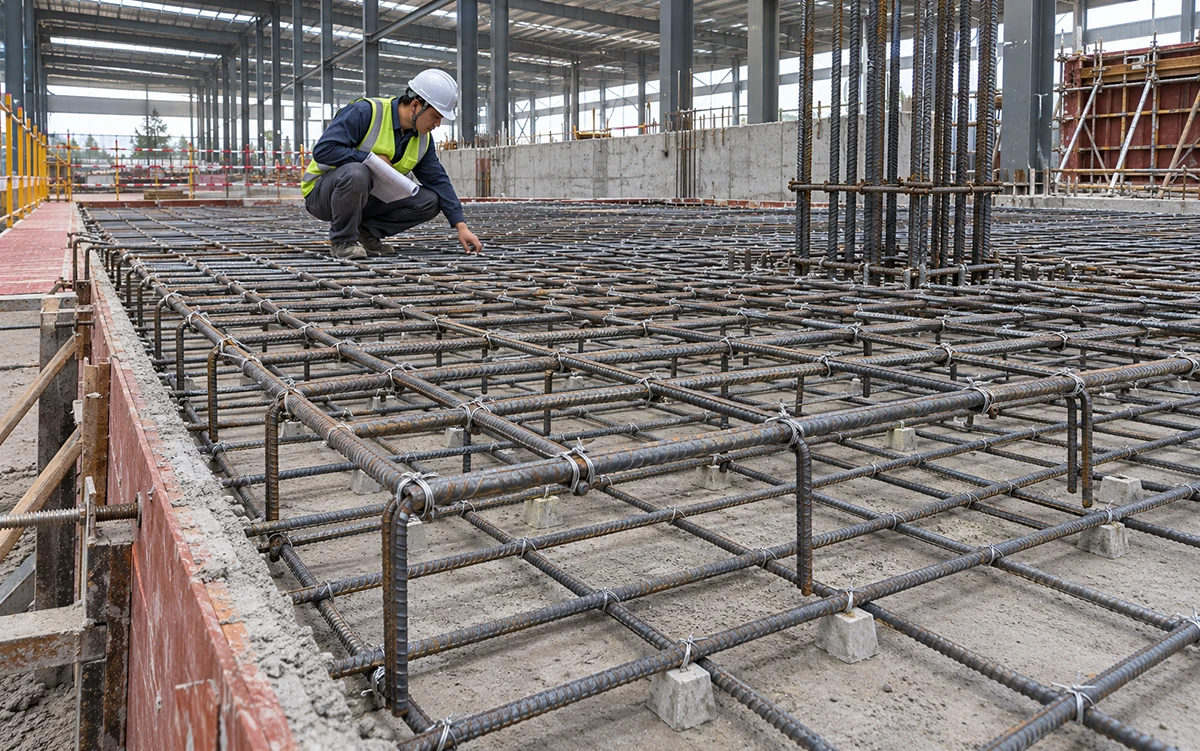
Ribbed steel rebar arranged in engineered concrete reinforcement for an approved seismic design
GRADE SELECTION

HRB400E vs HRB400 vs HRB500E

Distinguish E-grade test criteria from the nominal yield-strength grade, and confirm each grade against structural drawings.

01 / THIS PRODUCT

HRB400E Steel Rebar

400 MPa minimum specified yield, Agt ≥9%, measured strength ratios ≥1.25 and ≤1.30, plus reverse-bend testing.

400 MPa / E grade
02 / STANDARD GRADE

HRB400 Steel Rebar

Also 400 MPa specified yield, but minimum Agt 7.5% without HRB400E-specific measured strength-ratio and reverse-bend conditions.

400 MPa / standard grade
View Grade & Specifications ↗
03 / HIGHER E GRADE

HRB500E Steel Rebar

500 MPa minimum specified yield, tensile strength ≥630 MPa and separate E-grade ductility, ratio and bend criteria.

500 MPa / E grade
View Grade & Specifications ↗
Substitution approval: HRB400, HRB400E, HRB500E, ASTM A615 and ASTM A706 are not automatically interchangeable. Confirm grade, design code and test documentation with the structural engineer.
WHY BAOSTEEL METAL

Factory-Based Reinforcement Supply

Four company-wide capabilities supporting large steel purchasing programmes—not product-specific immediate stock promises.

01 / CAPACITY

Industrial Manufacturing Scale

Annual steel output of 8 million metric tons across the company’s overall product lines to support bulk sourcing.

02 / INVENTORY

Coordinated Availability

Combined regular inventory of 1 million metric tons across categories; HRB400E sizes and tonnage are checked per enquiry.

03 / QUALITY

Order-Specific Inspection

Grade, ratio, elongation, chemical and reverse-bend requirements, traceability and certificate options are reviewed with the order.

04 / EXPORT

Project-Focused Logistics

Bar lengths, bundle weights, port handling, staged dispatches and export documentation can be planned around your shipment.

Buying for a construction project or steel distribution?

Provide a grade-by-size schedule for technical and commercial review.

PLANNING TONNAGE

HRB400E Rebar Weight Calculator

Estimate bar mass by nominal GB rebar diameter, per-bar length and number of pieces. Useful for bulk enquiries and shipment planning.

Enter Your Bar Schedule

2.964 MTEstimated total theoretical weight
29.640 kgEstimated weight per bar
100 barsNumber of pieces entered

How the Calculation Works

The tool uses the nominal mass-per-metre table in GB 1499.2-2024 rather than measuring a rib-to-rib outside diameter and applying a smooth round-bar formula.

Total MT = nominal kg/m × bar length (m) × quantity ÷ 1,000

Example: Ø20 mm has a nominal mass of 2.47 kg/m. For 12 m bars and 100 pieces, the theoretical total is 2.964 metric tons.

Calculated mass is an estimate for quotation planning. The actual contracted weight, accepted mass tolerance, bundle count, cutting loss and loading plan are determined separately.

HOT-ROLLED E-GRADE SUPPLY

Rebar Manufacturing & Supply Coordination

Reinforcing bars are hot rolled to the required grade and rib profile, finished, inspected, bundled and prepared for shipment under the agreed purchase specification.

  • Confirm GB 1499.2-2024, 4E marking and the required E-grade test results before mill allocation.
  • Review requested diameter, shape, length, mass and bundle arrangement.
  • Identify heat-specific tensile, Agt, ratio and reverse-bend records for ordered material.
  • Coordinate dispatch and export documents according to delivery terms.
Our Manufacturing Capability ↗
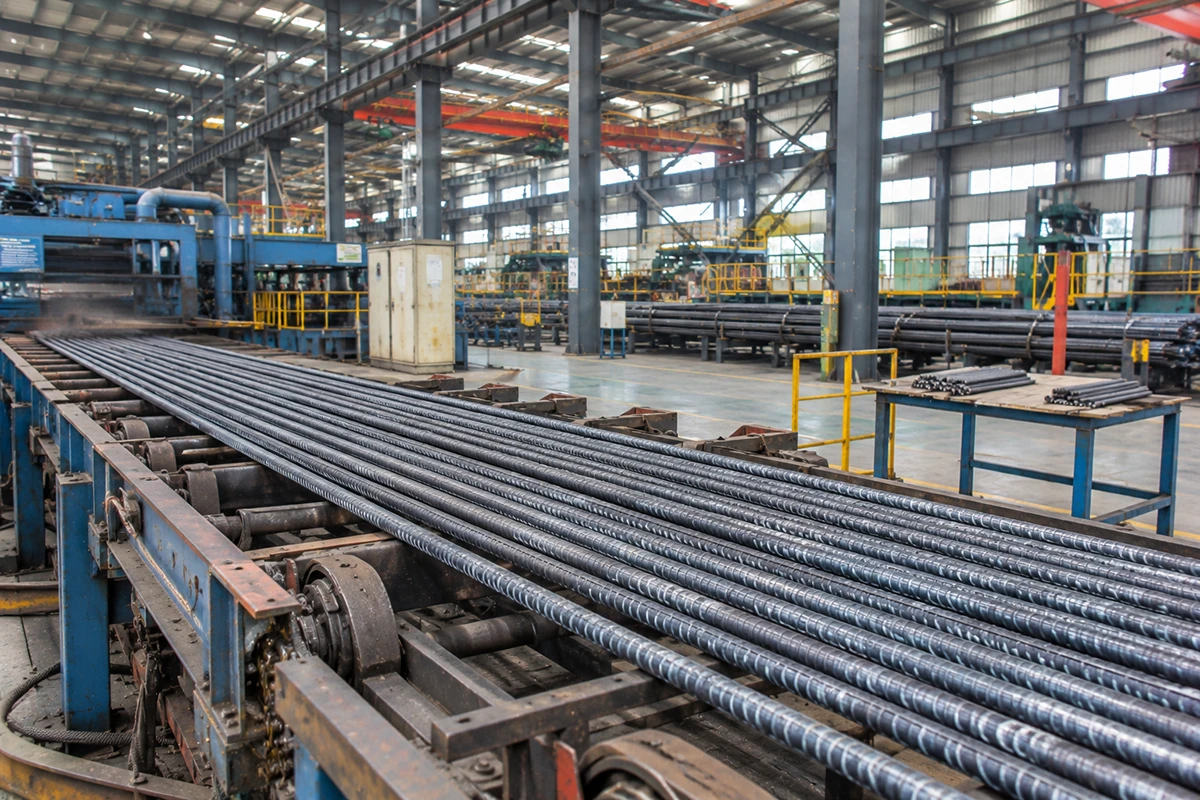
Industrial hot rolling mill producing hot ribbed steel concrete reinforcing bar with real production equipment
Orderly warehouse of tagged ribbed steel rebar bundles arranged by diameter and grade
AVAILABILITY BY ENQUIRY

Check HRB400E Rebar Sizes & Lead Times

BAOSTEEL METAL holds 1 million metric tons of regular inventory across its combined steel categories. Availability of individual HRB400E diameters, cut lengths, bundles and shipment quantities is verified for each enquiry.

  • Specify each nominal diameter and the weight or number of pieces.
  • State straight-bar lengths, coil needs if applicable, and acceptable alternatives.
  • Include inspection scope, destination port and project schedule.
  • Confirm delivery terms and purchase-order certificate wording.
E-GRADE TRACEABILITY

HRB400E Quality Inspection & MTC

For project acceptance, match the delivered bars and 4E markings to the appropriate test results and traceability records.

Minimum Purchasing Checklist

  • Product grade HRB400E, standard edition GB 1499.2-2024 and verified rolled 4E marking.
  • Heat / lot identification, chemical analysis and carbon equivalent.
  • Measured yield and tensile strength plus both 1.25 and 1.30 ratio checks.
  • Total elongation at maximum force Agt and the applicable test report.
  • 180° bend and mandatory E-grade reverse-bend test compliance.
  • Nominal dimensions, rib geometry, mass tolerances and shipment bundle identity.
  • Additional inspections or reports for fatigue-sensitive applications only where the project specification requires them.

Confirm agreed inspection method, witness testing, report format and traceability with the commercial offer. Certificates are provided according to the purchased lot and contract, not as generic grade promises.

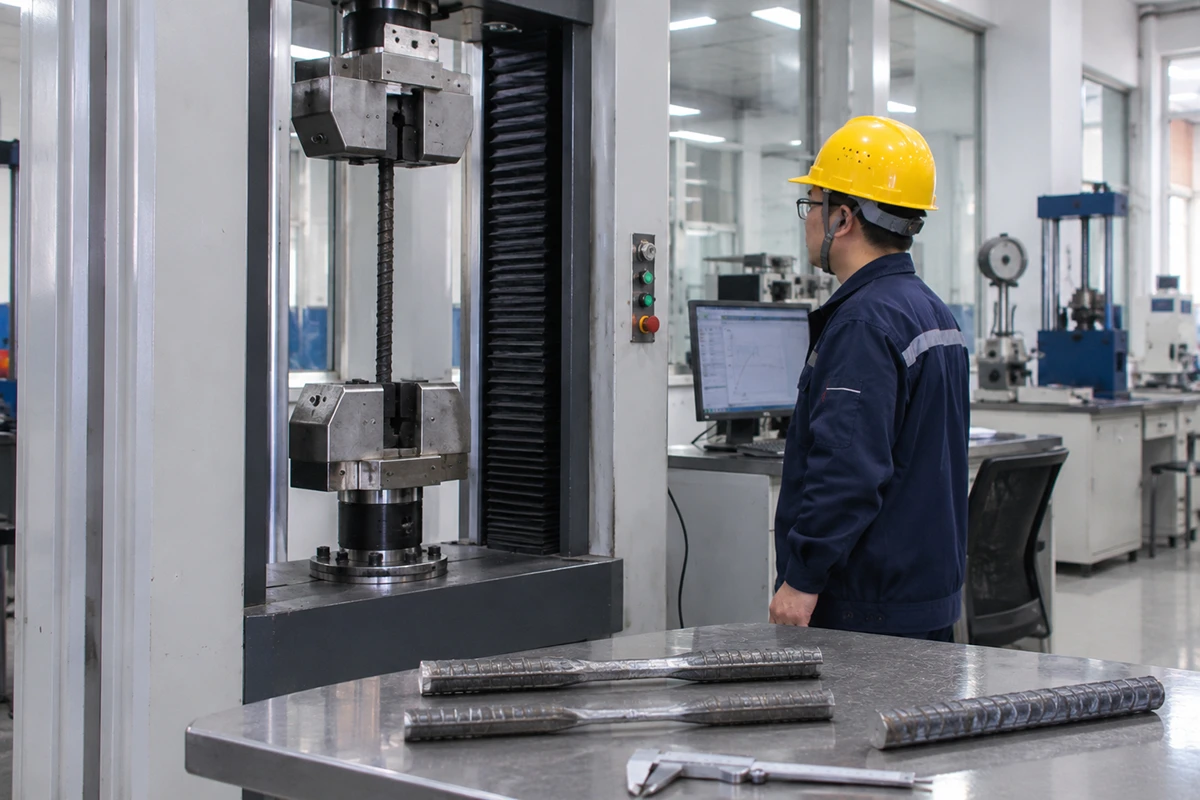
Quality inspector measuring deformed rebar and checking traceable tensile and bend test records
ORDER-BASED OPTIONS

Cut Lengths, Fabrication Schedules & Handling

Project bars may need further cutting, bending or segregation. The scope is agreed before scheduling and quotation.

01 / CUTTING

Cut-to-Length Supply

Straight bar cut lengths can be reviewed against material diameter and approved bill of quantities; commercial minimums depend on order volume.

02 / FABRICATION

Bending by Approved Schedule

Fabrication bending should follow the project’s approved bending schedules, detailing, minimum bend radii and governing site code.

03 / LOGISTICS

Marking & Sorting

Segregate reinforcement bundles by grade, diameter, heat or construction schedule line for efficient receiving and traceability.

On-site welding, re-bending and mechanical joining are governed by engineering design and applicable construction standards. Confirm process suitability and approved procedures before fabrication.
Export length bundles of ribbed steel reinforcing bar tied securely and tagged for loading
PACKING & SHIPPING

Rebar Export Packing & Delivery

Loading and packaging options are set by bar diameter, length, bundle weight, destination and transport method. Ordered items are identified for receiving and certificate traceability.

  • Steel-tied bundles grouped by diameter and agreed bar length.
  • Bundle tags aligned with grade, heat and quantity documents.
  • Support and lifting provisions appropriate for long steel products.
  • Packing lists and shipping paperwork according to sale terms.
BUYER FAQ

HRB400E Steel Rebar Questions

Grade selection, test ratios, nominal weights, markings and procurement documentation.

What does HRB400E mean?

HRB identifies hot-rolled ribbed steel reinforcement; 400 is the specified minimum lower yield strength in MPa; E identifies additional seismic-related material performance controls under GB 1499.2-2024.

Which national standard applies to HRB400E steel rebar?

The current standard is GB 1499.2-2024, effective from 25 September 2024. It replaced GB/T 1499.2-2018. Cite the correct edition in your purchase order.

What is the difference between HRB400E and HRB400?

Both specify a 400 MPa minimum yield strength. HRB400E additionally requires Agt ≥9%, actual tensile-to-yield ratio ≥1.25, actual yield to 400 MPa ratio ≤1.30 and reverse-bend testing.

Is an Agt result the same as elongation after fracture (A)?

No. Agt measures total elongation at maximum force; A measures elongation after fracture. GB 1499.2-2024 Table 6 lists Agt ≥9.0% for HRB400E and does not state a separate numeric E-grade minimum for A in that table.

How are the HRB400E strength ratios calculated?

Use measured tensile strength divided by measured lower yield strength (at least 1.25), and measured lower yield strength divided by the 400 MPa specified grade value (not more than 1.30). Both require actual tensile-test results.

How is HRB400E marked on the steel bar?

The surface-grade mark is 4E, together with the producer identifier and nominal diameter under GB 1499.2-2024. Verify the rolled mark, bundle labels and mill test certificate together.

Does HRB400E require reverse-bend testing?

Yes. The E grade requires reverse-bend testing with no surface cracks after the specified test. The reverse-bend mandrel is one nominal diameter larger than the corresponding 180° bend-test mandrel.

Which nominal diameters and theoretical masses apply?

The standard nominal diameter range is 6–50 mm. For example, Ø20 mm is 2.47 kg/m and Ø25 mm is 3.85 kg/m. Use the nominal-weight table rather than the measured outer rib diameter.

Can HRB400E be welded or mechanically spliced?

Welding and mechanical-connection procedures must comply with the applicable engineering specifications and connection standards, such as JGJ 18 and JGJ 107 where required. The E grade alone is not a connection approval.

What information is needed to quote HRB400E in bulk?

Send GB 1499.2-2024 / HRB400E, each diameter, length, bar or tonnage quantity, inspection and MTC requirements, destination and delivery terms. Availability, processing and shipment plans will be verified for the specific order.

BAOSTEEL METAL / HRB400E REINFORCEMENT

Request Your HRB400E Steel Rebar Quote

Send GB 1499.2-2024, bar diameters, lengths, quantities, MTC / inspection requirements and destination. We will check order-specific supply and quotation terms.

WhatsAppEmail